According to federal data, the average number of safety incidents on public transportation averaged 55.2 per 100,000 people across all states between 2010 and 2023. Which states came in well above the national average?


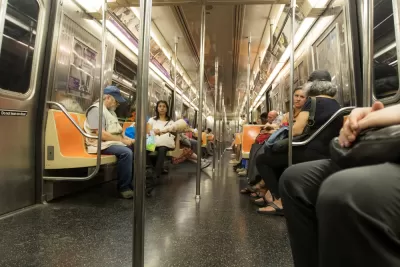
Rider safety on public transportation has been a huge topic in the news of late, from bus and train collisions to transit agencies grappling with violence in stations and on vehicles. Property Casualty 360 reported recent data analysis by H&P law that ranked states according to safety risk to riders. The data, which came from the U.S. Bureau of Transportation Statistics, showed the average number of incidents (combined fatalities, collisions, and injuries) on transportation vehicles across all U.S. states was 55.2 per 100,00 people from 2010 to 2023.
According to the analysis, here are the 10 states where riders face the most risk:
- New York: 45,732 total incidents; 230.3 incidents per 100,000 residents; 317% above national average (NA)
- Illinois: 20,910 total incidents; 64.8 incidents per 100,000 residents; 198% above NA
- Delaware: 1,607 total incidents; 159.9 incidents per 100,000 residents; 189% above NA
- Pennsylvania: 17,725 total incidents; 136.2 incidents per 100,000 residents; 147% above NA
- Maryland: 7,448 total incidents; 120.6 incidents per 100,000 residents; 18.4% above NA
- Massachusetts: 7,749 total incidents; 110.8 incidents per 100,000 residents; 101% above NA
- b 9,221 total incidents; 99.5 incidents per 100,000 residents; 80% above NA
- Missouri: 5,463 total incidents; 88.5 incidents per 100,000 residents; 60% above NA
- Hawaii: 1,269 total incidents; 87.7 incidents per 100,000 residents; 59% above NA
- Connecticut: 3,138 total incidents; 87.1 incidents per 100,000 residents; 58% above NA
It’s an interesting data snapshot to be sure. However, the numbers don’t seem to reflect the fact that public transportation access and availability vary by state, even between states with comparable populations. Of course states with larger, more robust transit networks will have more transit-related incidents per capita than states with fewer and smaller transit offerings. Perhaps an analysis of incidents per 100,000 rides (rather than per 100,000 people) would paint a more accurate picture.
FULL STORY: These states have the most public transit incidents

Chicago Transit Recovery Trails Behind Other Major US Cities
Sluggish ridership rates and staffing shortages are dampening recovery. Looming budget gaps could make things even worse.
Safety Concerns Driving Riders Away From Transit
Public transit systems in major U.S. cities are struggling to restore their image after rising crime rates led to heightened security concerns among riders.
Voters Approved 100 Percent of Pro-Transit Ballot Measures This Year
In 2021, public transit-related ballot measures passed with strong support across the country.

Planetizen Federal Action Tracker
A weekly monitor of how Trump’s orders and actions are impacting planners and planning in America.

The state-sanctioned urbicide of Austin
People don’t kill cities. Freeways do.

US to reduce Colorado River water deliveries to Mexico
A new Colorado Treaty amendment reduces Mexico’s Colorado River water allocation by 250,000 acre feet.

Mamdani overhauls NYC's Vision Zero plan with 100 new policy goals
The overhaul aims to reduce traffic deaths and make streets safer for pedestrians, cyclists and drivers through lower speed limits, new safety infrastructure and more.

Amtrak not solely to blame for New Jersey commuter rail's unreliability, report finds
A new study from the Garden State Initiative found that NJ Transit’s budget grew 20% across a 4 year period, but reliability declined significantly over the same period.

EPA erases limits on planet-warming pollution from power plants
Under Monday’s plan, power plants would still have some limits on how much mercury, arsenic and other contaminants they can emit.

FREE Course: Walkable City 1: Why Walkability?
After describing his path towards focusing on walkability as the essence of good planning, Jeff Speck marches through his five principal reasons for making more walkable places.
Reinventing Malls: Planning Alchemy—Turning Gray Fields Into Gold
The course focuses on the opportunities and imperatives that shape reinvention of mall sites.

Eagle County Government
Harvard University Graduate School of Design
Nashville Planning Department
The Architects Foundation
University of Cincinnati Online
The Pocatello Development Authority
The Urban Renewal Agency of the City of Pocatello
Journal of the American Planning Association