Policies that punish and fine unhoused people for sheltering outdoors, even when other shelter is not available, are the most visible but least efficient ways to reduce homelessness.


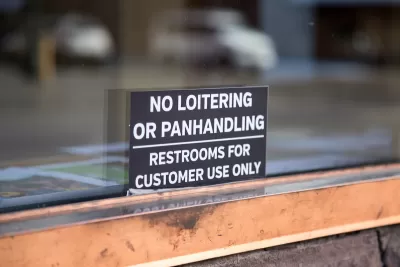
In an opinion piece for Bloomberg Law, Will Knight argues that “using jailing sentences and criminal fines to address homelessness is ineffective and fundamentally unjust,” calling criminalization an “expensive and shortsighted” policy.
Knight makes the argument in anticipation of the U.S. Supreme Court’s imminent decision on Grants Pass v. Johnson, a case that will decide whether states and cities can criminalize unhoused people that stems in Grants Pass, Oregon, where the city issued $300 fines to people sleeping outside even though housing is practically unavailable and there is no emergency shelter.
“Although evidence shows criminalization to be the most expensive and least effective method, it remains the preferred policy. The hidden costs of this approach—policing, jailing, and clogging courts, not to mention the barriers it creates for individuals seeking housing due to fines or criminal records—are substantial.”
For Knight, “A Supreme Court ruling affirming that people shouldn’t be punished for trying to survive could encourage lawmakers to prioritize actual long-lasting solutions. These solutions should focus on ensuring housing is safe and affordable, rather than rely on punitive measures that don’t address the underlying issues.”
FULL STORY: The US Supreme Court Should End Criminalization of Homelessness


Grants Pass to Provide 150 Camping Spaces, $60k in Services After Disability Rights Suit
The city previously made headlines for the U.S. Supreme Court case allowing penalties for camping prohibited by local ordinances.

Albuquerque Moves to Close Alleyways to Deter Unhoused People
Cities around the country are enacting more restrictive regulations after the Supreme Court’s ruling in favor of local governments in Grants Pass v. Johnson.

Albuquerque Bookstore Owner Sues City to Continue Housing Homeless Neighbors
A bookstore owner who was fined for letting unhoused people camp on his property is asserting that the city’s actions are unconstitutional.

Planetizen Federal Action Tracker
A weekly monitor of how Trump’s orders and actions are impacting planners and planning in America.

The state-sanctioned urbicide of Austin
People don’t kill cities. Freeways do.

US to reduce Colorado River water deliveries to Mexico
A new Colorado Treaty amendment reduces Mexico’s Colorado River water allocation by 250,000 acre feet.

5 New England states march closer to 800 megawatt wind energy project
Securing federal approval for the project may be complicated under the Trump administration, which has historically been hostile towards domestic wind power.

Baltimore to break ground on $50 million Transit Priority Project
The project will bring faster bus trips, safer streets and better bike connections to Baltimore.

Airbnb launches $250 million 'last-dollar financing' housing accelerator, makes first investment in Austin
The company will put $6.4 million towards affordable housing development in Texas’ capital.

FREE Course: Walkable City 1: Why Walkability?
After describing his path towards focusing on walkability as the essence of good planning, Jeff Speck marches through his five principal reasons for making more walkable places.
Reinventing Malls: Planning Alchemy—Turning Gray Fields Into Gold
The course focuses on the opportunities and imperatives that shape reinvention of mall sites.

Eagle County Government
Harvard University Graduate School of Design
Nashville Planning Department
The Architects Foundation
University of Cincinnati Online
The Pocatello Development Authority
The Urban Renewal Agency of the City of Pocatello
Journal of the American Planning Association