The new exhibit explores the hidden network that allows heritage coast live oak trees to communicate with one another.


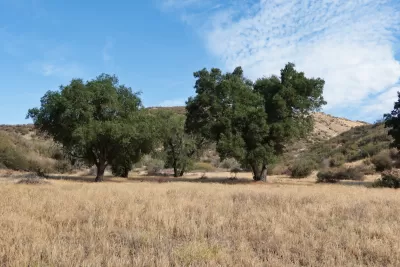
Focusing on Descanso Gardens’ heritage coast live oaks (Quercus agrifolia), Trees Talk explores the hidden network that allows trees to communicate with one another. Some centuries old, the oaks are magnificent giants that can grow up to 100 feet tall and are what remains of a forest that once blanketed the region. This exhibition showcases touchable and interactive elements, drawing on actual wood taken from oaks that tragically fell during a severe storm last year. Visitors can also examine acorn sprouts that show how roots develop as an oak tree grows. Trees Talk is open at the Sturt Haaga Gallery from March 16 to June 2.
The coast live oak is known as a “keystone species,” meaning that the tree supports the existence of hundreds of other species, including mammals, birds, insects, fungi, plants, reptiles, and amphibians. The Tongva people were the first people to live on the land where Descanso Gardens is today. They relied on coast live oak acorns as one of their most important plant foods due to its high nutritional value, abundance, and versatility. Acorns remain sacred to the Tongva community and are a staple in traditional meals. The importance of the coast live oak in the interconnected web of life cannot be overstated.
Los Angeles County is home to numerous public gardens, including the 150-acre Descanso Gardens which is one of four botanic gardens and arboreta in the county's park system. Development at the Gardens is guided by a Master Plan that was adopted by the L.A. County Board of Supervisors in 2020. The Master Plan seeks to implement the mission of the Gardens, which is "to practice exemplary stewardship of Descanso’s distinctive character and assets; offer people an experience close to nature; and cultivate understanding of the natural world and people’s place in it through inspiration, education and example."
FULL STORY: Descanso Gardens Hosting ‘Trees Talk’

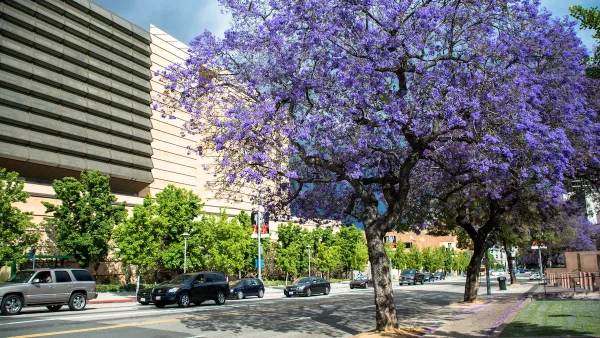
Addressing Tree Canopy Disparity in South Los Angeles
A new study highlights the complex challenge of addressing tree canopy disparities in South L.A., where historical environmental injustices, budget constraints, and competing community priorities hinder efforts to increase equitable tree coverage.
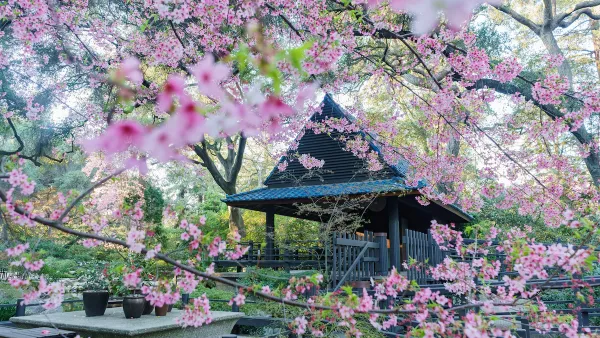
The Importance of Botanical Gardens
Southern California is home to some of the best botanical gardens around. TimeOut just released its list of the top Japanese and botanical gardens, mansion and institution gardens, and urban and hidden gardens.

Planning for Trees in Los Angeles
The County and City of Los Angeles are working together on community engagement efforts for their Urban Forest Management Plans (UFMPs).

Planetizen Federal Action Tracker
A weekly monitor of how Trump’s orders and actions are impacting planners and planning in America.

The state-sanctioned urbicide of Austin
People don’t kill cities. Freeways do.

US to reduce Colorado River water deliveries to Mexico
A new Colorado Treaty amendment reduces Mexico’s Colorado River water allocation by 250,000 acre feet.

Mamdani overhauls NYC's Vision Zero plan with 100 new policy goals
The overhaul aims to reduce traffic deaths and make streets safer for pedestrians, cyclists and drivers through lower speed limits, new safety infrastructure and more.

Amtrak not solely to blame for New Jersey commuter rail's unreliability, report finds
A new study from the Garden State Initiative found that NJ Transit’s budget grew 20% across a 4 year period, but reliability declined significantly over the same period.

EPA erases limits on planet-warming pollution from power plants
Under Monday’s plan, power plants would still have some limits on how much mercury, arsenic and other contaminants they can emit.

FREE Course: Walkable City 1: Why Walkability?
After describing his path towards focusing on walkability as the essence of good planning, Jeff Speck marches through his five principal reasons for making more walkable places.
Reinventing Malls: Planning Alchemy—Turning Gray Fields Into Gold
The course focuses on the opportunities and imperatives that shape reinvention of mall sites.

Eagle County Government
Harvard University Graduate School of Design
Nashville Planning Department
The Architects Foundation
University of Cincinnati Online
The Pocatello Development Authority
The Urban Renewal Agency of the City of Pocatello
Journal of the American Planning Association