A train operator has entered into formal negotiations with Union Pacific to move the project forward with a projected launch date of 2025.


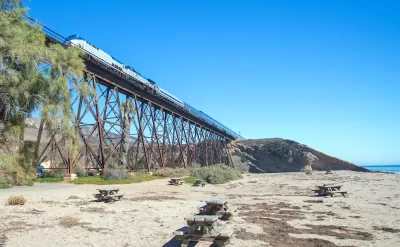
According to an article by Bill Buchanan in SFGate, Dreamstar Lines of Newport Beach signed a memorandum of understanding (MOU) with Union Pacific, paving the way for the first Los Angeles-to-San Francisco night train since 1983. “Most U.S. travelers abandoned trains for driving or flying decades ago, but Dreamstar believes congested roads and the hassles and environmental cost of air travel create an opening for its service.”
As Buchanan explains, “Union Pacific owns most of the 470-mile route. To complete the link between San Francisco and Los Angeles, Dreamstar also needs agreements to use tracks owned by regional transit operators Caltrain and Metrolink.”
Union Pacific acknowledged that it “entered into formal negotiations” regarding the line. Currently, the only rail service between the Bay Area and Los Angeles is Amtrak’s daytime Coast Starlight service.
FULL STORY: Dreamstar's SF-LA night train signs 'collaboration' with Union Pacific

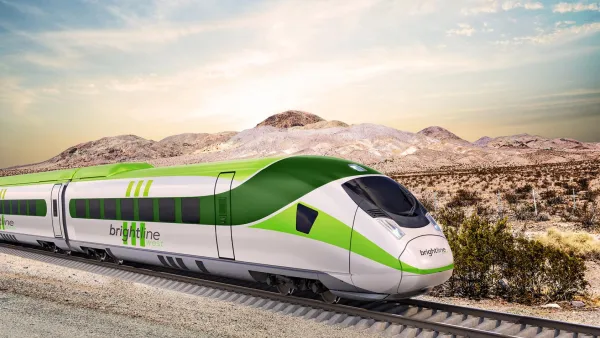
Brightline West Breaks Ground
The high-speed rail line will link Las Vegas and the Los Angeles area.
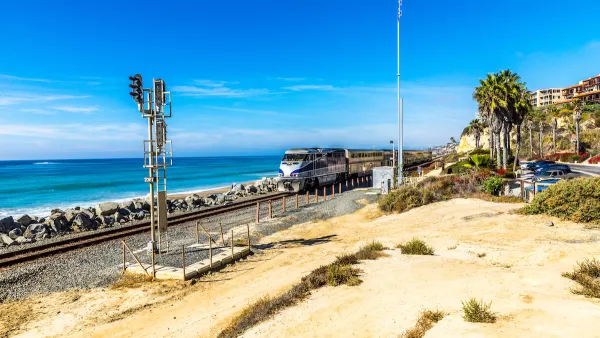
Storms Sever California Rail Line—Again
The coast-hugging rail corridor linking Los Angeles and San Diego faces an uncertain future as mudslides once again force part of the line to close.
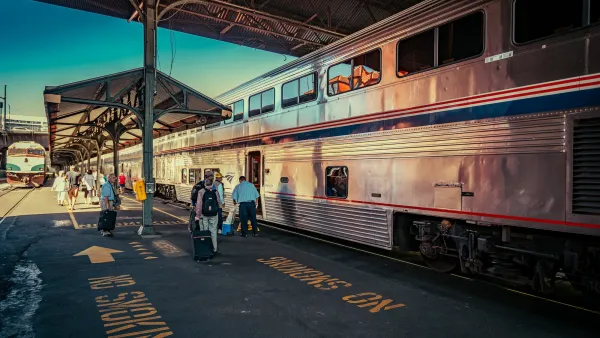
Amtrak unveils proposal to restructure, split into 3 divisions
Agency officials say the new structure would offer more transparency and accountability.

Planetizen Federal Action Tracker
A weekly monitor of how Trump’s orders and actions are impacting planners and planning in America.

The state-sanctioned urbicide of Austin
People don’t kill cities. Freeways do.

US to reduce Colorado River water deliveries to Mexico
A new Colorado Treaty amendment reduces Mexico’s Colorado River water allocation by 250,000 acre feet.

5 New England states march closer to 800 megawatt wind energy project
Securing federal approval for the project may be complicated under the Trump administration, which has historically been hostile towards domestic wind power.

Baltimore to break ground on $50 million Transit Priority Project
The project will bring faster bus trips, safer streets and better bike connections to Baltimore.

Airbnb launches $250 million 'last-dollar financing' housing accelerator, makes first investment in Austin
The company will put $6.4 million towards affordable housing development in Texas’ capital.

FREE Course: Walkable City 1: Why Walkability?
After describing his path towards focusing on walkability as the essence of good planning, Jeff Speck marches through his five principal reasons for making more walkable places.
Reinventing Malls: Planning Alchemy—Turning Gray Fields Into Gold
The course focuses on the opportunities and imperatives that shape reinvention of mall sites.

Eagle County Government
Harvard University Graduate School of Design
Nashville Planning Department
The Architects Foundation
University of Cincinnati Online
The Pocatello Development Authority
The Urban Renewal Agency of the City of Pocatello
Journal of the American Planning Association