The regional authority is asking the city to add dedicated bus lanes to a bridge over the Chicago River that serves a high number of bus commuters.


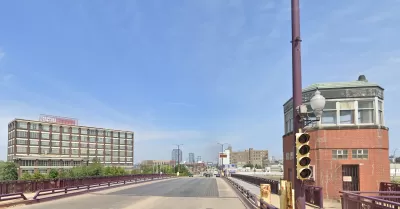
The Regional Transportation Authority is calling on the Chicago Department of Transportation to include bus lanes in a major intersection project.
As Steven Vance reports in Streetsblog Chicago, “The RTA, the state agency that oversees the CTA, Metra, and Pace, sent a letter to the Chicago Department of Transportation last week asking the City to collaborate on the redesign of the Chicago Avenue / Halsted Street intersection and viaduct.”
Vance details the history of the project, which will replace the Chicago Avenue bridge and rebuild a key viaduct. When first proposed, “The Active Transportation Alliance and other walk/bike/transit advocates criticized the plan as a half-measure. They noted that it included few accommodations for the many bus and bike riders who use these streets, and little proposed to reduce the number of traffic crashes.” The design also goes against the city’s Complete Streets law.
According to the RTA’s letter, “The latest proposed design that contains minimal bus priority treatments is not sufficient to result in meaningful service improvements and does not align with our shared vision to improve travel times on high-ridership bus routes.”
Read the full story: A stroke of good fortune: RTA asks CDOT to include bus lanes in the Bally’s Casino viaduct reconstruction

Chicago Transit Leaders Call for $1.5B Funding Package
Public transit across the Chicagoland region could suffer massive cuts without additional funding.

Proposed Legislation Would Consolidate Chicago Transit Agencies
State lawmakers say the move could cut down on competition and make regional transit more efficient for riders.
Chicagoland Transit Agencies Call for State Funding as Budget Shortfall Looms
Illinois transit agencies want to see changes to a law requiring them to collect half of their revenue from transit fares, arguing that low ridership and staffing shortages will lead to a massive budget gap without intervention.

Planetizen Federal Action Tracker
A weekly monitor of how Trump’s orders and actions are impacting planners and planning in America.

California plans to bury El Niño’s downpour
If the state plays its cards right, it may be able to store a billion acre-feet of El Niño’s water in aquifers.

Desperate measures: Advocates weigh draining Lake Powell to fill Colorado River
Draining the reservoir could reduce evaporation losses by a couple hundred thousand acre-feet.

Metra may invest $9.1 billion in regional rail
The agency released a draft of a study examining potential ways to offer more frequent train service.

California city breaks ground on transit connector
The project includes three mobility hubs and a pedestrian bridge.

After public outcry, Massachusetts city releases housing development tracker
Cambridge’s tracker currently shows 250 housing projects in various stages of development.

FREE Course: Walkable City 1: Why Walkability?
After describing his path towards focusing on walkability as the essence of good planning, Jeff Speck marches through his five principal reasons for making more walkable places.
Reinventing Malls: Planning Alchemy—Turning Gray Fields Into Gold
The course focuses on the opportunities and imperatives that shape reinvention of mall sites.

City of Rosemead
Rutgers University, Edward J. Bloustein School of Planning and Public Policy
One Hundred Miles
Hunter College, City University of New York (CUNY)
The Architects Foundation
University of Cincinnati Online
City of Cambridge
Montrose County
The Pocatello Development Authority