Pilot programs in the two states aimed to make transit information more accessible for riders in rural areas, where on-demand and microtransit services make trip planning more complex.


According to an article by H. Jiahong Pan in The Daily Yonder, “Transportation planners in Vermont and Minnesota are working to bring rural transit riders the same app features that urbanites have been enjoying for almost a decade.”
The two states are developing trip planning websites to help residents navigate the “variable and underappreciated” rural transit systems that often rely on on-demand transit and other less traditional options. “In building trip planners, both Vermont and Minnesota worked with Trillium Transit to compile the start, end, travel times, and paths of every trip their dial-a-ride systems have completed. These trips were, and continue to be, analyzed by web and mobile apps like Transit to calculate itineraries.”
The programs aren’t perfectly streamlined: some can’t calculate long-distance trips, and riders still need to make a phone call to schedule many rural dial-a-ride services. In some cases, “Lack of internet access also seems to affect how one can plan a trip on public transit.”
FULL STORY: Popular in cities, transit trip planning and payment apps are slowly coming to rural communities

How Rural Transit Systems Are Doing More With Less
With limited resources and dispersed service areas, rural transit systems are turning to technology to provide on-demand service and improve transit options for residents.
Public Transit Isn't Just for Big Cities
Funding cuts and uneven investment in rural areas have left millions of Americans trapped without adequate transportation.
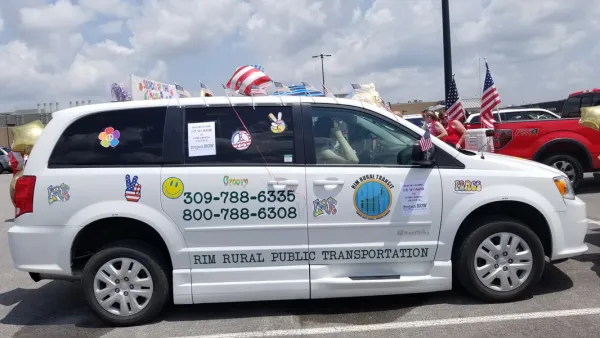
Rural Illinois Transit Brings $4 in Economic Benefits for Every Dollar Spent
Chronically underfunded rural public transit systems are key lifelines are economic engines for rural communities.

Planetizen Federal Action Tracker
A weekly monitor of how Trump’s orders and actions are impacting planners and planning in America.

The state-sanctioned urbicide of Austin
People don’t kill cities. Freeways do.

US to reduce Colorado River water deliveries to Mexico
A new Colorado Treaty amendment reduces Mexico’s Colorado River water allocation by 250,000 acre feet.

Mamdani overhauls NYC's Vision Zero plan with 100 new policy goals
The overhaul aims to reduce traffic deaths and make streets safer for pedestrians, cyclists and drivers through lower speed limits, new safety infrastructure and more.

Amtrak not solely to blame for New Jersey commuter rail's unreliability, report finds
A new study from the Garden State Initiative found that NJ Transit’s budget grew 20% across a 4 year period, but reliability declined significantly over the same period.

EPA erases limits on planet-warming pollution from power plants
Under Monday’s plan, power plants would still have some limits on how much mercury, arsenic and other contaminants they can emit.

FREE Course: Walkable City 1: Why Walkability?
After describing his path towards focusing on walkability as the essence of good planning, Jeff Speck marches through his five principal reasons for making more walkable places.
Reinventing Malls: Planning Alchemy—Turning Gray Fields Into Gold
The course focuses on the opportunities and imperatives that shape reinvention of mall sites.

Eagle County Government
Harvard University Graduate School of Design
Nashville Planning Department
The Architects Foundation
University of Cincinnati Online
The Pocatello Development Authority
The Urban Renewal Agency of the City of Pocatello
Journal of the American Planning Association