OATS Transit offers low-cost rides to primarily elderly rural residents with little or no access to other transportation options.


A nonprofit transportation provider in Missouri offers a lifeline for many rural residents who use the service to get to medical appointments and other daily needs.
In a piece for The Daily Yonder, Kaitlyn McConnell describes the history of OATS Transit, which started over half a century ago and offers low-cost, on-demand transportation subsidized by grants, private donations, and government funding. “When its first three buses rolled out in 1971, its focus was older adults, but many years ago the service opened to all: The original name Older Americans Transportation Service shifted to the current Operating Above the Standard.”
More than just mobility, the program offers community: “By having providers like OATS, riders not only have the chance to visit places where they can find connections, like at the senior center, but also build friendships with fellow riders,” McConnell writes.
Now, state funding for the program, which keeps fares within the county under $5, could be in jeopardy. Next year’s proposed state budget would reduce funding for the program by $5 million. Dorothy Yeager, executive director of OATS Transit, says the funding is “a good investment” that helps bring in additional federal funding.
McConnell points out that “Whatever happens with the state budget, the bottom line is that rural options for transportation are important. They provide a crucial resource if we want to help keep people at home in rural parts of the country, whether that’s the Ozarks or another region.”
FULL STORY: Missouri OATS Transit Offers Transit and Social Connection for Rural Residents

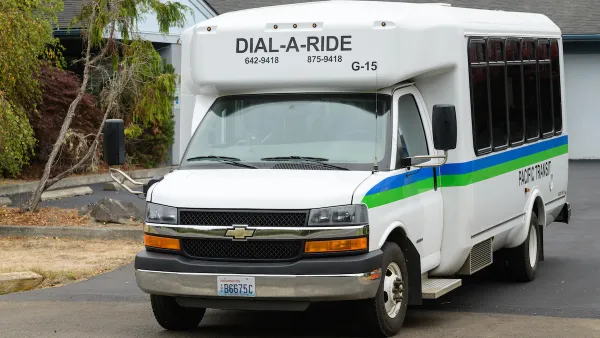
Opinion: Microtransit Isn’t the Answer to Transit Woes
On-demand services can’t scale successfully without massive government subsidies, and could obscure the impacts of car-centric sprawl.
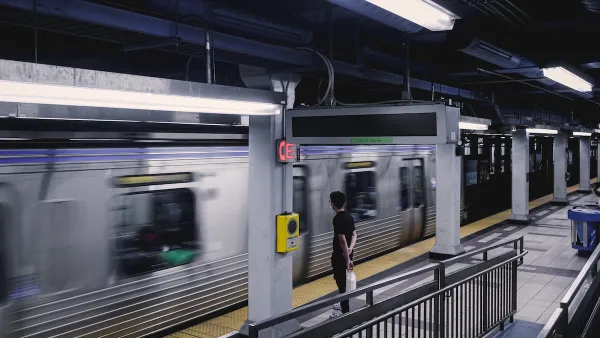
The Wave of Transit ‘Fiscal Cliffs,’ Explained
Covid and inflation played a role. But for many agencies, the crisis goes much deeper.

A Brief History of Kansas City’s Microtransit
The city’s costly experiment with on-demand transit is yielding to more strategic investment.

Planetizen Federal Action Tracker
A weekly monitor of how Trump’s orders and actions are impacting planners and planning in America.

The state-sanctioned urbicide of Austin
People don’t kill cities. Freeways do.

US to reduce Colorado River water deliveries to Mexico
A new Colorado Treaty amendment reduces Mexico’s Colorado River water allocation by 250,000 acre feet.

5 New England states march closer to 800 megawatt wind energy project
Securing federal approval for the project may be complicated under the Trump administration, which has historically been hostile towards domestic wind power.

Baltimore to break ground on $50 million Transit Priority Project
The project will bring faster bus trips, safer streets and better bike connections to Baltimore.

Airbnb launches $250 million 'last-dollar financing' housing accelerator, makes first investment in Austin
The company will put $6.4 million towards affordable housing development in Texas’ capital.

FREE Course: Walkable City 1: Why Walkability?
After describing his path towards focusing on walkability as the essence of good planning, Jeff Speck marches through his five principal reasons for making more walkable places.
Reinventing Malls: Planning Alchemy—Turning Gray Fields Into Gold
The course focuses on the opportunities and imperatives that shape reinvention of mall sites.

Eagle County Government
Harvard University Graduate School of Design
Nashville Planning Department
The Architects Foundation
University of Cincinnati Online
The Pocatello Development Authority
The Urban Renewal Agency of the City of Pocatello
Journal of the American Planning Association