Brendan O’Brien, author of “Homesick,” talks with us about his new book and what he's learned about the effects of short-term rentals in communities like Flagstaff, Arizona; Bozeman, Montana; and St. George, Utah.



Proponents of supply-side solutions to housing typically refer to high housing vacancy rates as a good thing. In theory, more vacant apartments mean more options for renters and competition between landlords for renters. But a look at vacancy rates across the country reveal a more confusing picture: The rate does not track closely with overall affordability.
There are a few reasons for this, but one of the most alarming is the trend of short-term rentals. Since they emerged in the mid-1990s and were supercharged in the 2010s, it’s become common for homeowners who have a little bit of extra money to buy a second home as an investment so they can make “passive” income. In some cases, single owners have sprouted mini-empires of entire apartments being rented out on these services. Units being rented out short-term are listed as vacant in census surveys, but they are not available to renters—at least, not for anyone but tourists.
These units pock the landscape of large, coastal cities and persist despite drawing down regulatory hammers. But in some towns, vacation homes and Airbnbs have been given free rein to transform the landscape more fully, crowding working people to the margins.
In his book Homesick, Brendan O’Brien looks at the intersecting issues of second homes, investment properties and short-term rental companies like Airbnb, VRBO and Homeaway. Specifically, he looks at Flagstaff, Arizona; Bozeman, Montana; and St. George, Utah, where these companies have been allowed to run rampant, hollowing out communities and fraying the social fabric. Arizona even passed a law in 2016 making it illegal to regulate short-term rentals at the local level (the restrictions were loosened somewhat in 2022). The following interview has been abridged and edited for clarity.
Airbnb says it’s just helping people with mortgages earn some extra income. What do you think about that argument?
Short-term rentals as they were originally marketed, [the idea] was, you have a spare bedroom, you can rent that out to people and make some extra money. It’s a better use of space when otherwise that room would just go empty. Someone coming into the community as a traveler can get a sense of the landscape because they know someone already. They’re staying with them.
The person who lives there can benefit more directly from tourism, and I still think that’s a great idea. But the way that short-term rentals have transformed over time—using the three [cities] that I studied Flagstaff, Arizona; St. George, Utah; Bozeman, Montana; as examples—it’s upwards of 90 percent of short-term rentals that are the entire home. Most of those are offered up for more than half a year. It’s not someone who’s just in an economically precarious situation, it’s someone who doesn’t live in a place seeing an investment opportunity and buying that up with the express purpose of housing tourists.
I see those very differently. And I think the first one should be protected. I think that’s a great source of income potential, and you can monitor over time [if] maybe that gets abused in some places. But I think that’s very different when you’re renting out a room and you actually actively live in a place versus renting an entire place.
Read the full story: Running Rampant: How Short-Term Rentals Impact Communities With Loose Restrictions


How Much Are Short-Term Rentals to Blame for the Housing Crisis?
Whether and how deeply Airbnb and other short-term rentals affect housing costs depends largely on local conditions and economies.
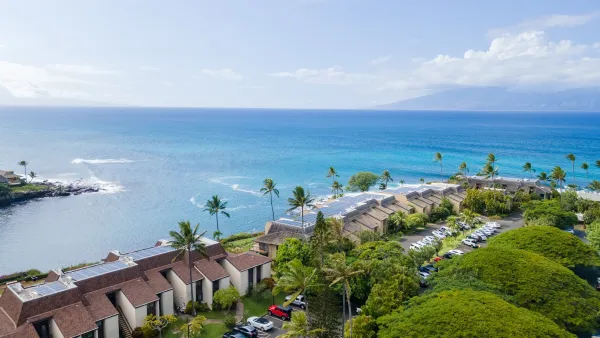
Over 4,000 Maui Short-Term Rentals in Limbo as County Weighs Next Steps
A new bill will phase out roughly 7,000 vacation rentals, but a proposal to exempt as many as 4,500 stalled in the county council.
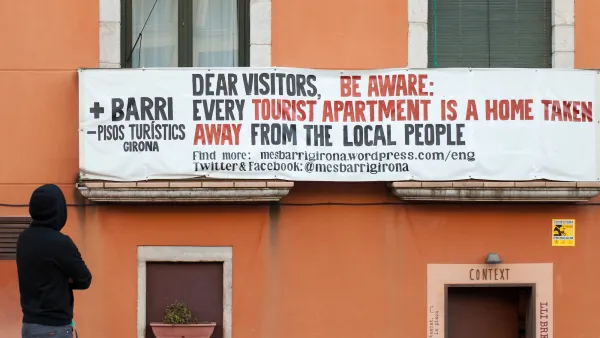
Spain Fines Airbnb $75 Million After Crackdown on Unlicensed Rentals
The government took action after residents in tourist centers protested, blaming tourist rentals for a growing housing crisis.

Planetizen Federal Action Tracker
A weekly monitor of how Trump’s orders and actions are impacting planners and planning in America.

California plans to bury El Niño’s downpour
If the state plays its cards right, it may be able to store a billion acre-feet of El Niño’s water in aquifers.

Chicago breaks ground on $3 billion megadevelopment
The new neighborhood, titled Foundry Park, will one day host 3,700 residences.

Satanic Place Names
From streams and lakes to valleys and canyons, I mapped more than 1,000 places named after the Devil.

California High-Speed Rail Authority CEO resigns after $600,000 scandal
Under Ian Choudri, the authority used taxpayer dollars to fund first class flights and trips to nightclubs.

Want to study the Missouri River? Soon, you may need unanimous approval from 10 states
Legislation would require 10 governors’ permission to study or build projects moving water outside the basin.

FREE Course: Walkable City 1: Why Walkability?
After describing his path towards focusing on walkability as the essence of good planning, Jeff Speck marches through his five principal reasons for making more walkable places.
Reinventing Malls: Planning Alchemy—Turning Gray Fields Into Gold
The course focuses on the opportunities and imperatives that shape reinvention of mall sites.

City of Rosemead
Rutgers University, Edward J. Bloustein School of Planning and Public Policy
One Hundred Miles
Hunter College, City University of New York (CUNY)
The Architects Foundation
University of Cincinnati Online
City of Cambridge
Montrose County
The Pocatello Development Authority