Commuters in Massachusetts communities with worse roads use more gas, with the costs disproportionately impacting low-income households.


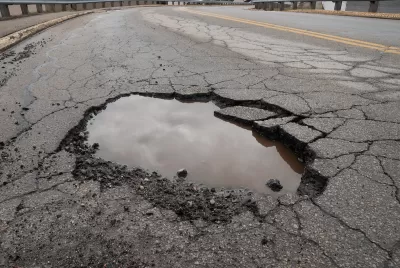
New research from the University of Massachusetts Amherst reveals that ‘environmental justice communities,’ defined by the state of Massachusetts as areas with low incomes and high percentages of minority groups, have poorer road quality, causing residents to use more fuel for their vehicles.
According to the study’s lead author Egemen Okte, “You need roads to go from point A to point B, and depending on what kind of road you live around, it will change your fuel consumption.”
“As for how this impacted fuel use, nearly all Massachusetts drivers use more than 3% excess fuel (compared to driving on perfect road conditions), and most drivers use 5 to 7% excess fuel, regardless of community status.” In EJ communities, 16 percent of commuters fell in the highest tier of excess gas use, “twice the rate of non-EJ commuters.”
Read the full story: Disadvantaged Communities in Massachusetts Twice as Likely to Have Poor Roads—and Pay the Cost in Gas

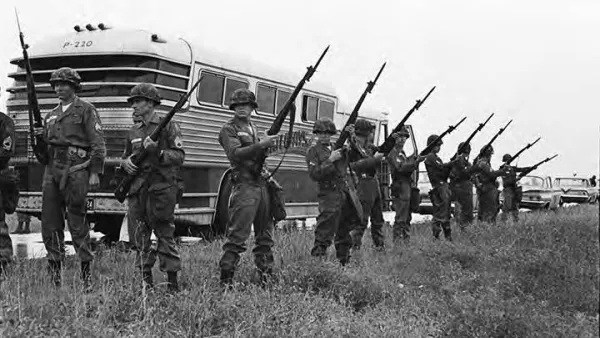
Reclaiming Transportation as a Place of Resistance
The systems that move us are not neutral — and we don’t have to pretend like they are.
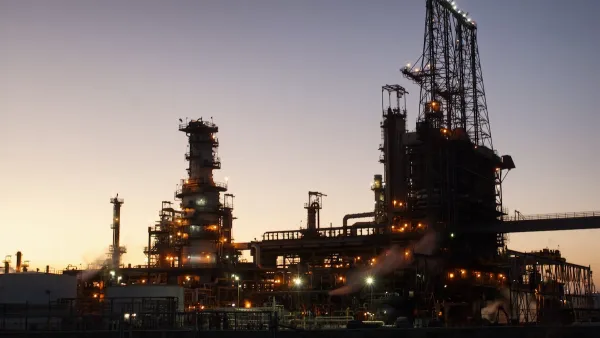
Building a Just Energy Transition
A new book outlines a “four-plus pillars” framework for phasing out fossil fuels while addressing systemic inequities, emphasizing public support, dedicated funding, economic diversification, coalitions, and reforms that dismantle extractive systems.
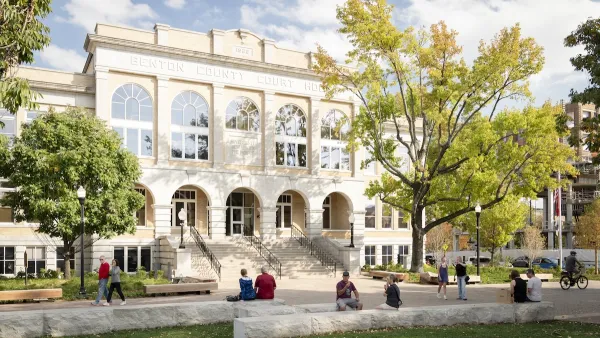
Placekeeping: Setting a New Precedent for City Planners
How a preservation-based approach to redevelopment and urban design can prevent displacement and honor legacy communities.

Planetizen Federal Action Tracker
A weekly monitor of how Trump’s orders and actions are impacting planners and planning in America.

Amtrak, CN end decades-long dispute with eight-year agreement
The new operating agreement establishes an updated framework for the companies to work together, including processes to resolve disputes.

Judges permit Denver to divert 77,000 acre feet from the Colorado River for reservoir expansion
Overuse and climate change have caused the Colorado River’s water levels to plummet.

NYC DOT wants faster, more permanent street upgrades
The city is examining ways to build more concrete infrastructure without getting entangled in 'decades-long' projects.

'Something we’ve never seen before:' rising utility rates could strain city finances nationwide
Data centers, climate change and other factors have caused utility rates in the United States to increase by 38% since 2020.

Trump to overrule local leaders, lease millions of acres of America’s Pacific Island territories’ seafloors to mining companies
International law says that the Indigenous people of America’s territories have a right to prior and informed consent regarding projects that impact their countries.

FREE Course: Walkable City 1: Why Walkability?
After describing his path towards focusing on walkability as the essence of good planning, Jeff Speck marches through his five principal reasons for making more walkable places.
Reinventing Malls: Planning Alchemy—Turning Gray Fields Into Gold
The course focuses on the opportunities and imperatives that shape reinvention of mall sites.

Harvard University Graduate School of Design
KFH Group Inc.
Greater Baltimore Committee
The Architects Foundation
University of Cincinnati Online
The Pocatello Development Authority
The Urban Renewal Agency of the City of Pocatello