Developments near the city’s popular greenway will no longer be subject to minimum parking requirements to make way for more effective development.


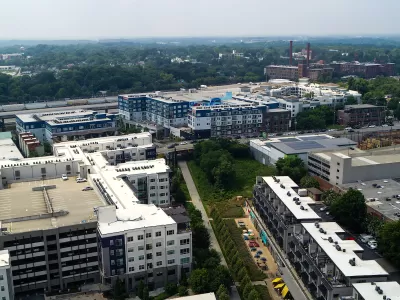
New legislation passed by the Atlanta City Council will remove parking minimums in the BeltLine Overlay District, a half-mile zone on either side of the BeltLine trail and light rail system.
According to an article by Josh Green in Urbanize Atlanta, the new rules, introduced by Council Member Jason Dozier, will also ban new gas stations and drive-throughs.
“The theory goes that less space (and less upfront money from builders) devoted to parking will allow more room for less expensive housing, restaurants, shops, offices, and other vibrant uses, while encouraging neighborhood planning focused on pedestrians, not drivers.”
The BeltLine is a 22-mile trail system built around a former railway corridor that opened its first segment in 2008.
FULL STORY: Atlanta City Council votes to axe parking minimums near BeltLine

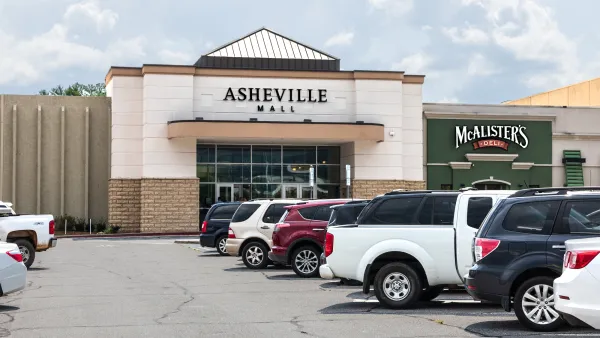
Asheville reconsiders parking minimums as surface parking eats up over a third of downtown real estate
Housing advocates say parking requirements are unnecessary and induce sprawl.
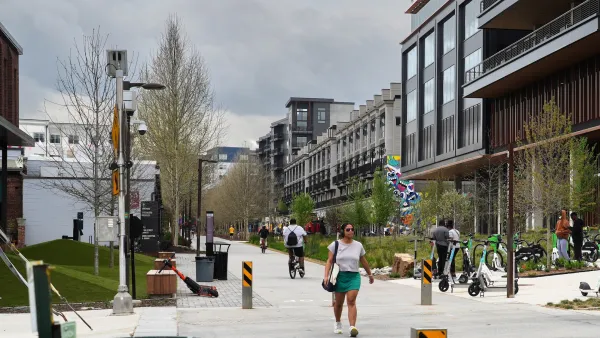
Atlanta's Beltline hits 79% of its affordable housing goal
The walking, biking, and transit corridor set a goal to create 5,600 affordable housing units in the area by 2030.
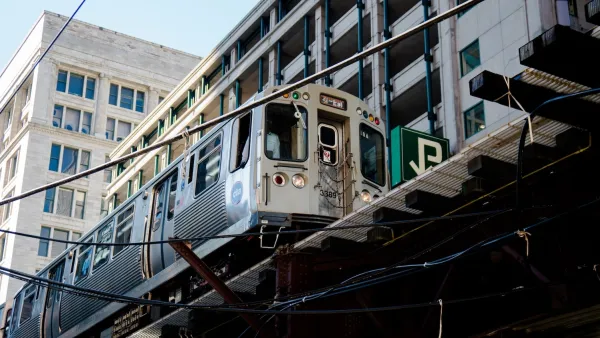
Illinois ‘People Over Parking Act’ Bans Parking Requirements Near Transit
The new law could unlock denser, more affordable housing development near train and bus lines.

Planetizen Federal Action Tracker
A weekly monitor of how Trump’s orders and actions are impacting planners and planning in America.

The state-sanctioned urbicide of Austin
People don’t kill cities. Freeways do.

US to reduce Colorado River water deliveries to Mexico
A new Colorado Treaty amendment reduces Mexico’s Colorado River water allocation by 250,000 acre feet.

5 New England states march closer to 800 megawatt wind energy project
Securing federal approval for the project may be complicated under the Trump administration, which has historically been hostile towards domestic wind power.

Baltimore to break ground on $50 million Transit Priority Project
The project will bring faster bus trips, safer streets and better bike connections to Baltimore.

Airbnb launches $250 million 'last-dollar financing' housing accelerator, makes first investment in Austin
The company will put $6.4 million towards affordable housing development in Texas’ capital.

FREE Course: Walkable City 1: Why Walkability?
After describing his path towards focusing on walkability as the essence of good planning, Jeff Speck marches through his five principal reasons for making more walkable places.
Reinventing Malls: Planning Alchemy—Turning Gray Fields Into Gold
The course focuses on the opportunities and imperatives that shape reinvention of mall sites.

Eagle County Government
Harvard University Graduate School of Design
Nashville Planning Department
The Architects Foundation
University of Cincinnati Online
The Pocatello Development Authority
The Urban Renewal Agency of the City of Pocatello
Journal of the American Planning Association