The new law could unlock denser, more affordable housing development near train and bus lines.


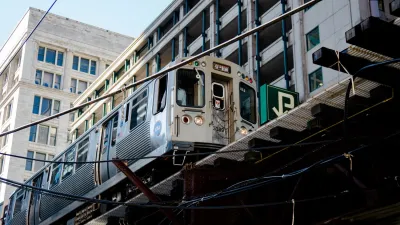
The new Illinois transit bill includes the People Over Parking Act, a law that bars cities from requiring parking near transit, reports Steven Vance in Streetsblog Chicago.
As Vance explains, “Parking requirements, which nearly every municipality in the Chicago metropolitan area has, drive up the cost of construction, create more parking spaces than are needed, add procedural barriers to the building permit process, and make it more difficult to reuse existing buildings, among other issues.” The law applies to new construction or renovation within a half mile of a public transit hub or one eighth of a mile from a public transportation corridor and excludes hotels and other transient lodging.
Under the law, municipalities can set parking requirements for bikes and maximum car parking allowances. “In situations where developments are voluntarily providing car parking, municipalities can impose requirements that reserve space for car share vehicles, that some parking be made available to the public, and that parking must be made available for a charge.”

San Diego wants to limit upzoning law to just 16% of transit-adjacent parcels
The city's planning director says some areas are unfit for immediate upzoning due to a lack of resources or hazards such as wildfire risk.
Chicago eliminates parking requirements near transit
In 2025, Illinois barred cities from mandating parking near train and bus stations.
Maryland unveils plan for 5,000 homes near transit
Gov. Moore announced a plan to activate housing construction on 134 acres of state-owned land near transit stations.

The state-sanctioned urbicide of Austin
People don’t kill cities. Freeways do.

US to reduce Colorado River water deliveries to Mexico
A new Colorado Treaty amendment reduces Mexico’s Colorado River water allocation by 250,000 acre feet.

New Jersey’s second-largest city bans standalone data centers
Jersey City will continue to allow co-location facilities, such as those meant for research institutions that store their own data.

Amtrak not solely to blame for New Jersey commuter rail's unreliability, report finds
A new study from the Garden State Initiative found that NJ Transit’s budget grew 20% across a 4 year period, but reliability declined significantly over the same period.

EPA erases limits on planet-warming pollution from power plants
Under Monday’s plan, power plants would still have some limits on how much mercury, arsenic and other contaminants they can emit.

Phoenix announces new on-demand transit service, more frequent RAPID buses
Both new services will launch in October, and are part of Phoenix's Project Effective Access Solutions for Easing Congestion.

FREE Course: Walkable City 1: Why Walkability?
After describing his path towards focusing on walkability as the essence of good planning, Jeff Speck marches through his five principal reasons for making more walkable places.
Reinventing Malls: Planning Alchemy—Turning Gray Fields Into Gold
The course focuses on the opportunities and imperatives that shape reinvention of mall sites.

Eagle County Government
Harvard University Graduate School of Design
Nashville Planning Department
The Architects Foundation
University of Cincinnati Online
The Pocatello Development Authority
The Urban Renewal Agency of the City of Pocatello
Journal of the American Planning Association