Housing advocates say parking requirements are unnecessary and induce sprawl.


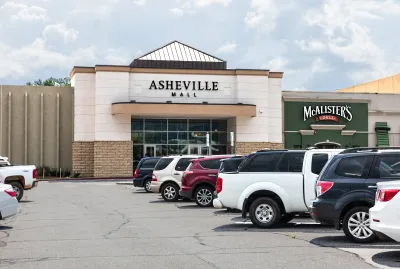
Asheville, North Carolina is weighing a proposal to eliminate minimum parking requirements, reports Dan DeWitt in Asheville Watchdog. A bill in the state's General Assembly would also bar cities from enacting parking requirements in most areas, effectively rendering the proposed city ordinance moot.
According to DeWitt, "The French Broad River Metropolitan Planning Organization estimates 39 percent of the land in downtown Asheville is devoted to surface lots. That’s a higher percentage than in all but three of the 102 cities mapped by the national nonprofit Parking Reform Network." Now, Asheville is starting a multi-year overhaul of its 1997 Unified Development Ordinance, which could include changes to parking minimums and minimum lot sizes. Removing parking requirements is one of three "interim" amendments to the UDO that were scheduled for a city council vote this month, but delayed until July.
According to Stephanie Monson Dahl, the director of the city’s Planning and Urban Design Department, "The proposed amendments to city rules addressing parking, duplexes and accessory dwelling units will come back to the planning commission as separate items at its July 1 meeting."
Read the full story: With as much as 39% of downtown real estate devoted to surface spaces for cars, advocates say it’s time to junk Asheville’s minimum parking requirements

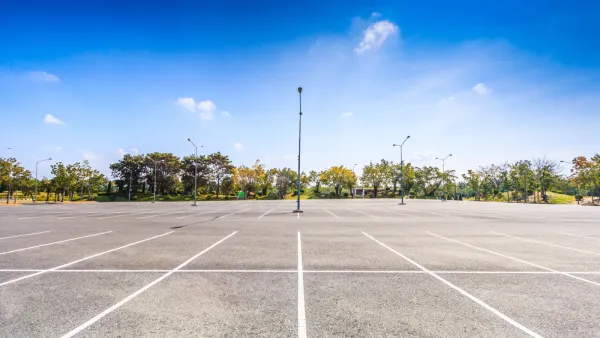
Dallas Considers Nixing Parking Requirements
According to one local official, Dallas projects routinely build 20 to 30 percent more parking than they need, driving up the cost of housing and leading to unsustainable land use patterns.
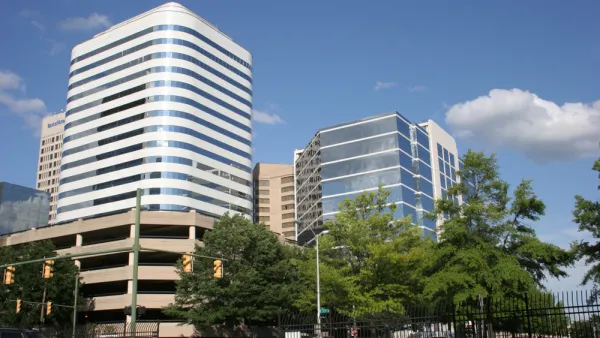
Richmond Poised to Repeal Parking Minimums
The city’s planning commission recommended that the city council eliminate parking mandates that limit housing production and increase housing costs.

Maps: How Much of Your City is Parking?
The percentage of land dedicated to parking in the central districts of major U.S. cities ranges from 4 percent to as much as 42 percent.

Planetizen Federal Action Tracker
A weekly monitor of how Trump’s orders and actions are impacting planners and planning in America.

California plans to bury El Niño’s downpour
If the state plays its cards right, it may be able to store a billion acre-feet of El Niño’s water in aquifers.

Chicago breaks ground on $3 billion megadevelopment
The new neighborhood, titled Foundry Park, will one day host 3,700 residences.

California High-Speed Rail Authority CEO resigns after $600,000 scandal
Under Ian Choudri, the authority used taxpayer dollars to fund first class flights and trips to nightclubs.

Want to study the Missouri River? Soon, you may need unanimous approval from 10 states
Legislation would require 10 governors’ permission to study or build projects moving water outside the basin.

Desperate measures: Advocates weigh draining Lake Powell to fill Colorado River
Draining the reservoir could reduce evaporation losses by a couple hundred thousand acre-feet.

FREE Course: Walkable City 1: Why Walkability?
After describing his path towards focusing on walkability as the essence of good planning, Jeff Speck marches through his five principal reasons for making more walkable places.
Reinventing Malls: Planning Alchemy—Turning Gray Fields Into Gold
The course focuses on the opportunities and imperatives that shape reinvention of mall sites.

City of Rosemead
Rutgers University, Edward J. Bloustein School of Planning and Public Policy
One Hundred Miles
Hunter College, City University of New York (CUNY)
The Architects Foundation
University of Cincinnati Online
City of Cambridge
Montrose County
The Pocatello Development Authority