Insurance data shows a higher rate of crashes and the second highest rate of ‘incidents’ such as DUI citations.


According to an analysis of insurance quotes from LendingTree, Tesla drivers are more likely to be involved in crashes than the drivers of other carmakers, reports Elizabeth Blackstock in Jalopnik. “That study revealed that Tesla drivers have 23.54 accidents per 1,000 drivers; the EV maker is followed by Ram (22.76) and Subaru (20.90).”
When it comes to “incidents” such as drunk driving citations and speeding violations, Tesla drivers narrowly trail Ram drivers, overtaking all other brands in 11 states.
As Blackstock notes, the study was released just as Tesla recalled almost all of its vehicles to make updates to its Autopilot technology. The carmaker has garnered criticism from state and federal regulators for misleading consumers about the capabilities of its ‘self-driving’ features. A prior recall earlier this year affected over 360,000 vehicles when the National Highway Traffic Safety Administration (NHTSA) mandated updates to the company’s ‘Full Self-Driving’ mode.
FULL STORY: Tesla Drivers Have More Car Crashes Than Anyone Else: Study

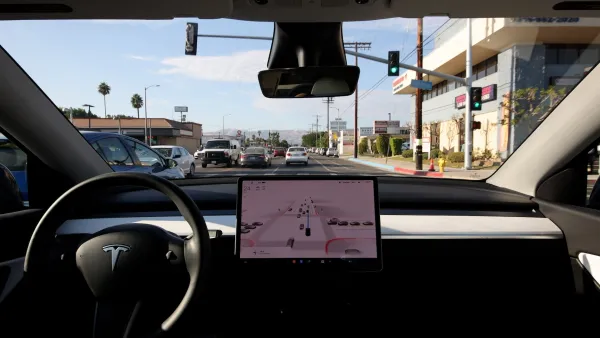
Tesla Launches Unsupervised Robotaxis in Austin
The company has been operating autonomous taxis with human safety drivers in the car in Austin since last June.
Texas Safety Advocates Raise Alarm in Advance of Tesla Robotaxi Launch
The company plans to deploy self-driving taxis in Austin with no oversight from state or local transportation agencies.
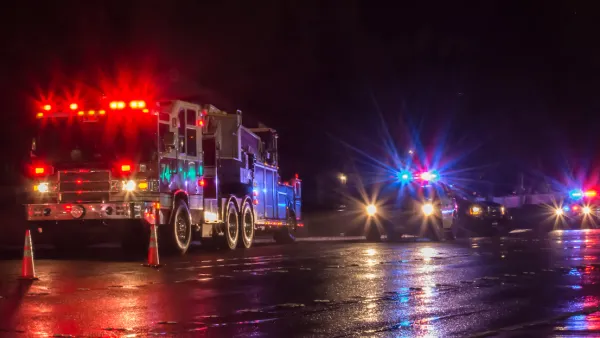
Dashcam Footage Shows Tesla Colliding With First Responder
The car failed to recognize the stopped emergency vehicle until just two seconds before the crash.

Planetizen Federal Action Tracker
A weekly monitor of how Trump’s orders and actions are impacting planners and planning in America.

The state-sanctioned urbicide of Austin
People don’t kill cities. Freeways do.

US to reduce Colorado River water deliveries to Mexico
A new Colorado Treaty amendment reduces Mexico’s Colorado River water allocation by 250,000 acre feet.

LA Metro’s ultimatum: no extra buses for LA28 if federal funding isn’t imminently secured
If Metro does not provide additional buses, LA28 organizers will have to find a new way to manage Olympic traffic. LA28’s budget does not include a line item for transit.

Colorado’s Largest Data Center Could Rise Next to Homes — Without a Public Hearing
The proposed campus would consume 11 times the power of Denver International Airport; as it has across the country, opposition mounts.

5 New England states march closer to 800 megawatt wind energy project
Securing federal approval for the project may be complicated under the Trump administration, which has historically been hostile towards domestic wind power.

FREE Course: Walkable City 1: Why Walkability?
After describing his path towards focusing on walkability as the essence of good planning, Jeff Speck marches through his five principal reasons for making more walkable places.
Reinventing Malls: Planning Alchemy—Turning Gray Fields Into Gold
The course focuses on the opportunities and imperatives that shape reinvention of mall sites.

Eagle County Government
Harvard University Graduate School of Design
Nashville Planning Department
The Architects Foundation
University of Cincinnati Online
The Pocatello Development Authority
The Urban Renewal Agency of the City of Pocatello
Journal of the American Planning Association