Coastal erosion and rising sea levels threaten one of the nation’s most scenic—and strategically important—rail corridors.


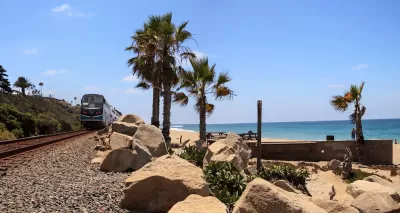
The coastal rail corridor between San Diego and Santa Barbara faces growing risks from coastal erosion and climate change, according to a California Senate Transportation Subcommittee. As Phil Diehl explains in The San Diego Union-Tribune, “Landslides and cliff collapses have periodically stopped the trains in Del Mar and San Clemente, and many other places also need improvements and protection from sea-level rise along the 351-mile Los Angeles-San Diego-San Luis Obispo corridor.” Yet the corridor provides a crucial transportation link for passengers, freight, and military transportation.
According to a Senate report, the cost of making safety improvements to the Los Angeles-San Diego-San Luis Obispo (LOSSAN) corridor could be more than $20 billion. With seven different right-of-way owners, the corridor is a complex system with little precedent in the United States. Researcher Genvieve Giuliano says a long-term solution would be “to create a single statewide agency that would fully integrate the multiple agencies that provide the separate passenger services — Amtrak, Coaster and Metrolink.”
Farther up the coast, the state’s Department of Transportation (Caltrans) recently completed its first erosion mitigation project for a roadway, moving a highway segment 400 feet to protect it from landslides.
FULL STORY: Climate change imperils San Diego County’s coastal rail corridor, panelists say

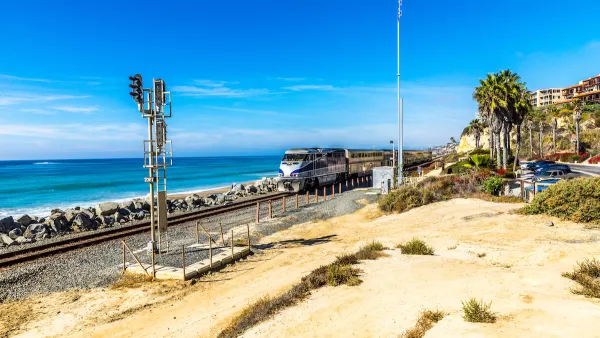
Storms Sever California Rail Line—Again
The coast-hugging rail corridor linking Los Angeles and San Diego faces an uncertain future as mudslides once again force part of the line to close.
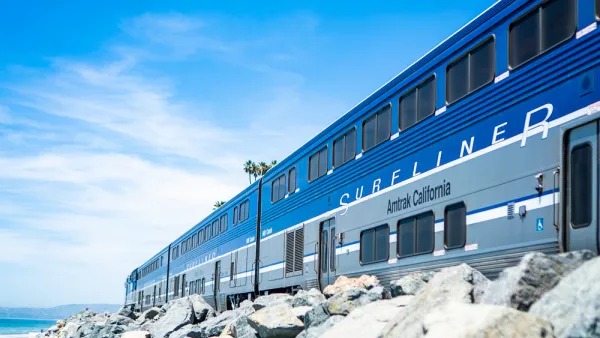
Sea Level Rise Threatens an Iconic California Train
A scenic Southern California line could require relocation as rising sea levels destabilize the coastal soil that supports its tracks.
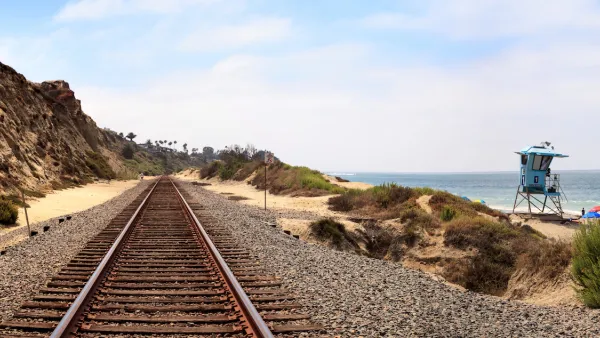
Southern California Rail Service Resumes After Landslide
The corridor has been closed multiple times in the past year as erosion and landslides put coastal rail infrastructure in jeopardy.

The state-sanctioned urbicide of Austin
People don’t kill cities. Freeways do.

US to reduce Colorado River water deliveries to Mexico
A new Colorado Treaty amendment reduces Mexico’s Colorado River water allocation by 250,000 acre feet.

New Jersey’s second-largest city bans standalone data centers
Jersey City will continue to allow co-location facilities, such as those meant for research institutions that store their own data.

Amtrak not solely to blame for New Jersey commuter rail's unreliability, report finds
A new study from the Garden State Initiative found that NJ Transit’s budget grew 20% across a 4 year period, but reliability declined significantly over the same period.

EPA erases limits on planet-warming pollution from power plants
Under Monday’s plan, power plants would still have some limits on how much mercury, arsenic and other contaminants they can emit.

Phoenix announces new on-demand transit service, more frequent RAPID buses
Both new services will launch in October, and are part of Phoenix's Project Effective Access Solutions for Easing Congestion.

FREE Course: Walkable City 1: Why Walkability?
After describing his path towards focusing on walkability as the essence of good planning, Jeff Speck marches through his five principal reasons for making more walkable places.
Reinventing Malls: Planning Alchemy—Turning Gray Fields Into Gold
The course focuses on the opportunities and imperatives that shape reinvention of mall sites.

Eagle County Government
Harvard University Graduate School of Design
Nashville Planning Department
The Architects Foundation
University of Cincinnati Online
The Pocatello Development Authority
The Urban Renewal Agency of the City of Pocatello
Journal of the American Planning Association