Local leaders view the first solar panel-covered water canal in the Western Hemisphere as a ‘major win’ for Indigenous water sovereignty.


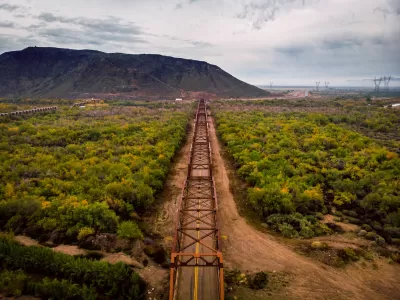
The Gila River Indian Community broke ground on a solar-panel-lined water canal that combines water conservation with renewable energy generation, reports Katie Hawkinson in The Independent.
The group, which has stewarded the Gila River for generations, is the first community in the Western Hemisphere to build this type of project. “The solar panel coverings will reduce water evaporation, while the water in the canals will cool the panels and make them more efficient in producing energy.”
Additionally, “the leaders of this project also say it’s also a major win for Indigenous sovereignty and water rights expansion, and presents an expansion of federal government assistance for green energy projects.” The community is partnering with the U.S. Army Corps of Engineers on the construction phase before the USACE will hand off the project for maintenance by the community.
The project also helps the community preserve land. “Building the panels on top of existing infrastructure allows the community to leave precious land undisturbed while still generating green energy.”
FULL STORY: Native American community breaks ground on historic clean energy project

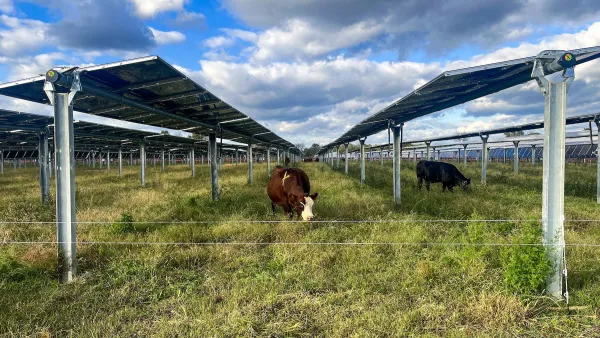
Cows at Tennessee's 'Silicon Ranch' graze under solar panels
The project aims to prove that agriculture and solar energy production can work in tandem.
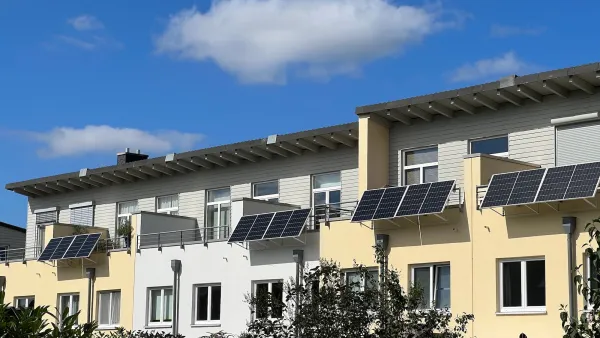
28 States and DC Could Legalize ‘Balcony Solar’
Plug-in solar panels, which are becoming popular across Europe, live in a regulatory gray area in the United States.
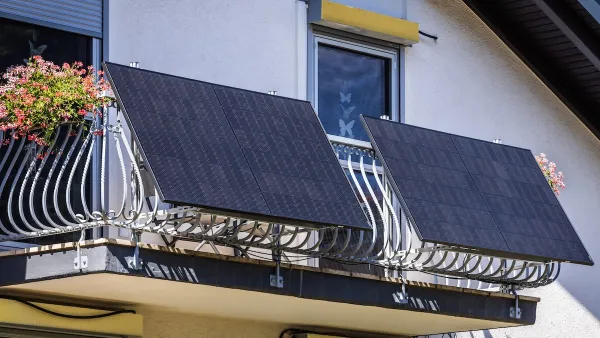
Bay Area Embraces ‘Balcony Solar’
Popular in Germany, wall- or balcony-mounted solar panels come at a lower cost and face fewer regulatory hurdles than rooftop solar, but their legal status in California is murky.

Planetizen Federal Action Tracker
A weekly monitor of how Trump’s orders and actions are impacting planners and planning in America.

The state-sanctioned urbicide of Austin
People don’t kill cities. Freeways do.

US to reduce Colorado River water deliveries to Mexico
A new Colorado Treaty amendment reduces Mexico’s Colorado River water allocation by 250,000 acre feet.

Colorado’s Largest Data Center Could Rise Next to Homes — Without a Public Hearing
The proposed campus would consume 11 times the power of Denver International Airport; as it has across the country, opposition mounts.

5 New England states march closer to 800 megawatt wind energy project
Securing federal approval for the project may be complicated under the Trump administration, which has historically been hostile towards domestic wind power.

Baltimore to break ground on $50 million Transit Priority Project
The project will bring faster bus trips, safer streets and better bike connections to Baltimore.

FREE Course: Walkable City 1: Why Walkability?
After describing his path towards focusing on walkability as the essence of good planning, Jeff Speck marches through his five principal reasons for making more walkable places.
Reinventing Malls: Planning Alchemy—Turning Gray Fields Into Gold
The course focuses on the opportunities and imperatives that shape reinvention of mall sites.

Eagle County Government
Harvard University Graduate School of Design
Nashville Planning Department
The Architects Foundation
University of Cincinnati Online
The Pocatello Development Authority
The Urban Renewal Agency of the City of Pocatello
Journal of the American Planning Association