The zoning amendment, part of the ‘City of Yes’ plan, will make it easier and more affordable to make efficiency retrofits and reduce emissions.



The New York City council passed a portion of Mayor Eric Adams’ proposed ‘City of Yes’ zoning reform plan, the City of Yes for Carbon Neutrality (COYCN) zoning text amendment, announces Peter Aronson in an article for the New York League of Conservation Voters (NYLCV).
“The change will remove hurdles so the city can more easily make green investments for and changes to its infrastructure that will reduce or eliminate greenhouse gas (GHG) emissions from buildings and the transportation sector, the state’s two leading sources,” the article states. The city’s Local Law 97 calls for buildings over 25,000 square feet to comply with new efficiency standards by 2024, while state law requires an 85 percent reduction in greenhouse gas emissions by 2050.
The NYLCV, which supports the amendment, says the changes will pave the way to more rooftop and parking lot solar panels and more accessible EV charging stations, among other changes.
The plan also streamlines the approval process for efficiency retrofits, “Expands bicycle and e-mobility storage and charging uses by creating a new commercial use for public bicycle and e-mobility parking,” and addresses waste and stormwater, expanding the use of permeable pavement and clarifying regulations around composting and recycling.
FULL STORY: City of Yes for Carbon Neutrality Passes NYC City Council


DC energy efficiency rule requires buildings to upgrade their infrastructure or face millions in fines
Building owners and condo co-op members say the upgrades are often prohibitively expensive.
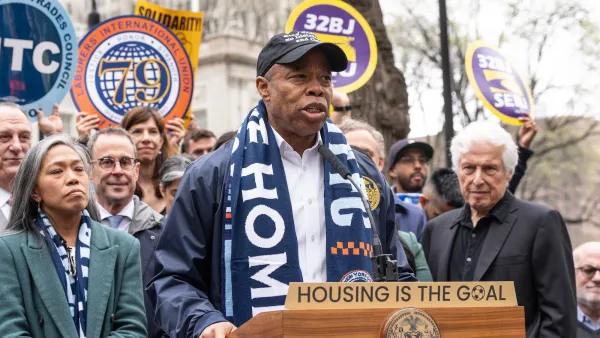
What Actually Got Built Under Eric Adams’ ‘Pro-Housing’ Administration
The outgoing mayor claims credit for hundreds of thousands of new homes. The truth is more complicated.

Staten Island Resists ‘City of Yes’ Zoning Reforms
One year after New York City approved major zoning changes, some residents continue to fight increased density.

The state-sanctioned urbicide of Austin
People don’t kill cities. Freeways do.

US to reduce Colorado River water deliveries to Mexico
A new Colorado Treaty amendment reduces Mexico’s Colorado River water allocation by 250,000 acre feet.

New Jersey’s second-largest city bans standalone data centers
Jersey City will continue to allow co-location facilities, such as those meant for research institutions that store their own data.

Amtrak not solely to blame for New Jersey commuter rail's unreliability, report finds
A new study from the Garden State Initiative found that NJ Transit’s budget grew 20% across a 4 year period, but reliability declined significantly over the same period.

EPA erases limits on planet-warming pollution from power plants
Under Monday’s plan, power plants would still have some limits on how much mercury, arsenic and other contaminants they can emit.

Phoenix announces new on-demand transit service, more frequent RAPID buses
Both new services will launch in October, and are part of Phoenix's Project Effective Access Solutions for Easing Congestion.

FREE Course: Walkable City 1: Why Walkability?
After describing his path towards focusing on walkability as the essence of good planning, Jeff Speck marches through his five principal reasons for making more walkable places.
Reinventing Malls: Planning Alchemy—Turning Gray Fields Into Gold
The course focuses on the opportunities and imperatives that shape reinvention of mall sites.

Eagle County Government
Harvard University Graduate School of Design
Nashville Planning Department
The Architects Foundation
University of Cincinnati Online
The Pocatello Development Authority
The Urban Renewal Agency of the City of Pocatello
Journal of the American Planning Association