A Belgian city is designing public fountains and other design elements to reduce noise pollution in a local park.


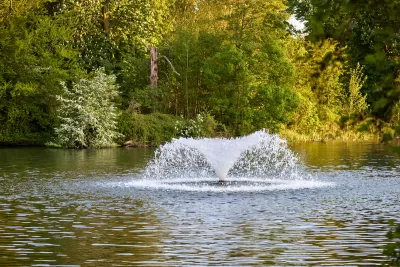
An ‘urban soundscaping’ project in the Belgian city of Antwerp is installing noise-canceling fountains in a city park to mitigate the impacts of road noise and noise pollution. As Adele Peters explains in Fast Company, “The government worked with a researcher at Ghent University who recorded the sounds of several existing fountains in the city, measuring the frequencies, dynamics, tone, and sound levels. That made it possible to design configurations of fountains to help cover the traffic noise.”
The city then solicited public input to narrow down fountain design options. “The city is also making other changes, including adding grooves to the road that can help reduce traffic noise by as much as four decibels. A new noise reduction wall will also help cut noise both in the surrounding neighborhood and the park.”
Like other cities, Antwerp is also working to reduce driving overall and increase the number of trips made by foot, bike, and public transit. “And while a growing number of cars are electric, EVs alone can’t solve the urban noise problem; when cars drive faster than 25 miles an hour, [Raf Verbruggen, Antwerp’s project lead on urban soundscaping] says, the noise from the tires on the pavement is as loud as the engine.”
FULL STORY: These noise-canceling fountains can help mask traffic


‘Quiet Parks’ Highlight Importance of Silence for Public Health
The initiative recognizes parks and other areas that preserve natural quiet in a world full of noise pollution.

Study: Silence Raises Property Values
A Florida study found homes near recently built sound walls saw a rise in value.
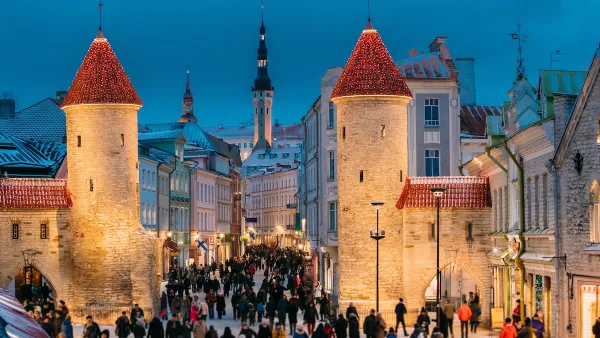
Estonian Capital Launches Noise Reduction Action Plan
European Union cities are required to create ‘noise maps’ and strategic plans for reducing environmental noise.

Planetizen Federal Action Tracker
A weekly monitor of how Trump’s orders and actions are impacting planners and planning in America.

The state-sanctioned urbicide of Austin
People don’t kill cities. Freeways do.

US to reduce Colorado River water deliveries to Mexico
A new Colorado Treaty amendment reduces Mexico’s Colorado River water allocation by 250,000 acre feet.

5 New England states march closer to 800 megawatt wind energy project
Securing federal approval for the project may be complicated under the Trump administration, which has historically been hostile towards domestic wind power.

Baltimore to break ground on $50 million Transit Priority Project
The project will bring faster bus trips, safer streets and better bike connections to Baltimore.

Airbnb launches $250 million 'last-dollar financing' housing accelerator, makes first investment in Austin
The company will put $6.4 million towards affordable housing development in Texas’ capital.

FREE Course: Walkable City 1: Why Walkability?
After describing his path towards focusing on walkability as the essence of good planning, Jeff Speck marches through his five principal reasons for making more walkable places.
Reinventing Malls: Planning Alchemy—Turning Gray Fields Into Gold
The course focuses on the opportunities and imperatives that shape reinvention of mall sites.

Eagle County Government
Harvard University Graduate School of Design
Nashville Planning Department
The Architects Foundation
University of Cincinnati Online
The Pocatello Development Authority
The Urban Renewal Agency of the City of Pocatello
Journal of the American Planning Association