European Union cities are required to create ‘noise maps’ and strategic plans for reducing environmental noise.



Tallinn, Estonia is implementing a “noise reduction action plan” aimed at reducing unwanted noise in public spaces. According to an article in Smart Cities World, “As part of the plan, the city will strengthen its public transport network, build more sidewalks, and expand segregated cycling lanes.”
Close to half of Tallinn’s population experiences excessive noise. “According to a study by the University of Tartu, reducing average road traffic noise below 50 decibels (dB) citywide could prevent 140 stroke cases and 130 cases of ischemic heart disease annually.”
In 2022, the city created a ‘noise map’ indicating the most noise-heavy neighborhoods. The action plan focuses on encouraging more sustainable mobility and reducing the number of large vehicles on the city’s roads. “The city is investing in better roads, tram lines, and public transport corridors while also protecting green areas from noise pollution and improving sound insulation for noise-sensitive buildings.”
European Union cities with populations of over 100,000 are tasked by law with creating noise maps and action plans.
Read the full story: Tallinn implements noise reduction action plan


‘Quiet Parks’ Highlight Importance of Silence for Public Health
The initiative recognizes parks and other areas that preserve natural quiet in a world full of noise pollution.
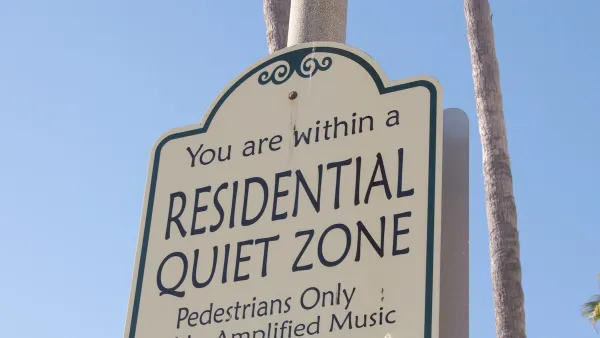
Noise as a Public Health Hazard
New ways of measuring the effects of sound on human health are helping communities fight back against noise pollution.

How To Limit Urban Noise
Environmental noise can pose serious health risks ranging from sleep disruptions to higher blood pressure.

Planetizen Federal Action Tracker
A weekly monitor of how Trump’s orders and actions are impacting planners and planning in America.

California plans to bury El Niño’s downpour
If the state plays its cards right, it may be able to store a billion acre-feet of El Niño’s water in aquifers.

Chicago breaks ground on $3 billion megadevelopment
The new neighborhood, titled Foundry Park, will one day host 3,700 residences.

Satanic Place Names
From streams and lakes to valleys and canyons, I mapped more than 1,000 places named after the Devil.

California High-Speed Rail Authority CEO resigns after $600,000 scandal
Under Ian Choudri, the authority used taxpayer dollars to fund first class flights and trips to nightclubs.

Want to study the Missouri River? Soon, you may need unanimous approval from 10 states
Legislation would require 10 governors’ permission to study or build projects moving water outside the basin.

FREE Course: Walkable City 1: Why Walkability?
After describing his path towards focusing on walkability as the essence of good planning, Jeff Speck marches through his five principal reasons for making more walkable places.
Reinventing Malls: Planning Alchemy—Turning Gray Fields Into Gold
The course focuses on the opportunities and imperatives that shape reinvention of mall sites.

City of Rosemead
Rutgers University, Edward J. Bloustein School of Planning and Public Policy
One Hundred Miles
Hunter College, City University of New York (CUNY)
The Architects Foundation
University of Cincinnati Online
City of Cambridge
Montrose County
The Pocatello Development Authority