Small desert communities are looking for ways to conserve water as their tourist and resident populations grow.


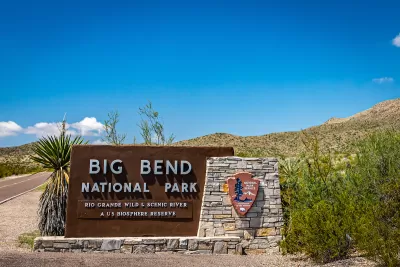
Like southern Utah and other scenic regions of the U.S. Southwest, West Texas is seeing dramatic growth as more people discover its natural beauty, relatively low-cost real estate, and cultural amenities.
This rapid growth is prompting concerns about whether the region’s water supply can keep up, writes Sarah Melotte in The Daily Yonder. “A survey conducted by Big Bend National Park showed that more than half a million people visited the park in 2022, a 12% increase since 2019, the last year the park was open full-time before the pandemic.”
Meanwhile, Brewster County added 4,700 short-term rental units between 2021 and 2023, and more people are moving to the area’s rural communities seeking space and solitude. Melotte points out that rural communities tend to use less water per housing unit than urban areas. However, “For a well to be approved by the Texas Commission on Environmental Quality (TCEQ), it has to be able to produce 40 gallons per minute from every connection,” regardless of its location or the type of housing unit it serves.
Melotte notes that a new assistance program from the Texas Water Development Board, the Texas Water Fund, seeks to help small communities manage their water resources and provide technical assistance for water conservation projects.
FULL STORY: More Folks Are Falling in Love with the West Texas Desert. Will There Be Enough Water to Sustain Them?

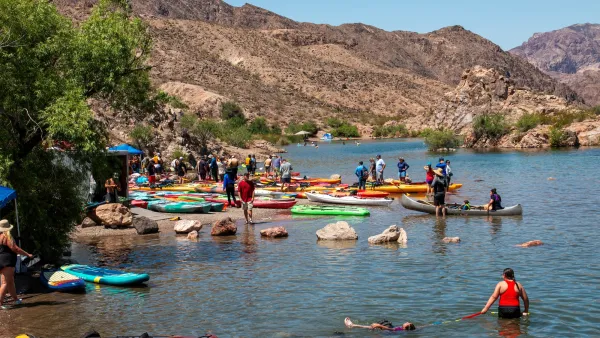
Colorado River States Fail to Strike Deal After ‘Historic Meeting’
The Colorado Basin states have until February 14 to agree on new water conservation measures.
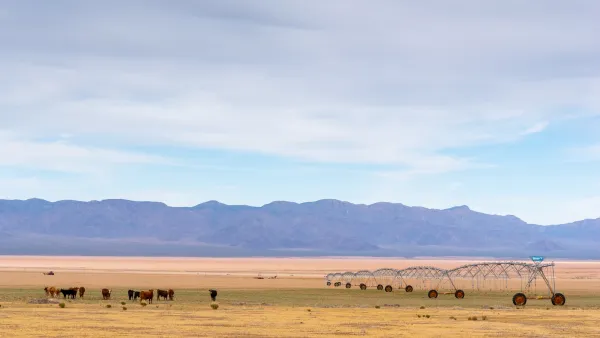
Arizona Tightens Groundwater Restrictions to Rein in Agribusinesses
The state is creating an ‘active management area’ in the western part of the state, where agribusinesses including a Saudi alfalfa exporter have practically free rein over water supplies.
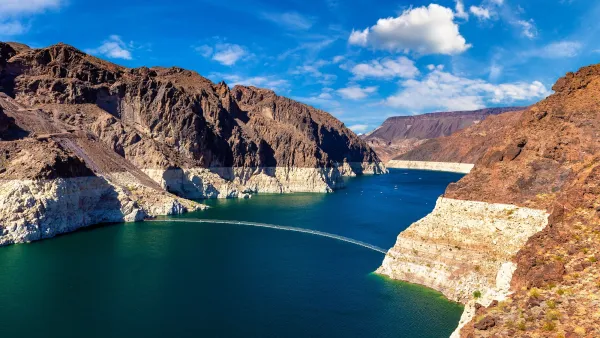
Deadline Nears for Colorado River Water Sharing Agreement
Water officials from the seven Colorado River Basin states are still at odds over how to manage dwindling water resources as current regulations are set to expire in February.

Planetizen Federal Action Tracker
A weekly monitor of how Trump’s orders and actions are impacting planners and planning in America.

The state-sanctioned urbicide of Austin
People don’t kill cities. Freeways do.

US to reduce Colorado River water deliveries to Mexico
A new Colorado Treaty amendment reduces Mexico’s Colorado River water allocation by 250,000 acre feet.

5 New England states march closer to 800 megawatt wind energy project
Securing federal approval for the project may be complicated under the Trump administration, which has historically been hostile towards domestic wind power.

Baltimore to break ground on $50 million Transit Priority Project
The project will bring faster bus trips, safer streets and better bike connections to Baltimore.

Airbnb launches $250 million 'last-dollar financing' housing accelerator, makes first investment in Austin
The company will put $6.4 million towards affordable housing development in Texas’ capital.

FREE Course: Walkable City 1: Why Walkability?
After describing his path towards focusing on walkability as the essence of good planning, Jeff Speck marches through his five principal reasons for making more walkable places.
Reinventing Malls: Planning Alchemy—Turning Gray Fields Into Gold
The course focuses on the opportunities and imperatives that shape reinvention of mall sites.

Eagle County Government
Harvard University Graduate School of Design
Nashville Planning Department
The Architects Foundation
University of Cincinnati Online
The Pocatello Development Authority
The Urban Renewal Agency of the City of Pocatello
Journal of the American Planning Association