The pandemic highlighted the importance of parks and public spaces for maintaining both the physical and mental health of urban residents.


Update November 20, 2023: The source article was incorrectly attributed to Scot Lehigh. the author of the article is Aaron Greiner.
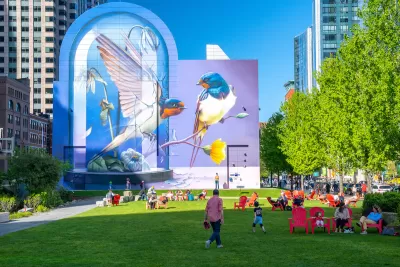
Writing in The Boston Globe, Aaron Greiner argues that “Public spaces, which served as a lifeline for people during the pandemic, can be more thoughtfully designed to better foster human connection and combat loneliness.”
As Greiner points out, “A growing body of research, including a 2021 study that found that frequent visits to green spaces decreased people’s use of depression medication, points to the many ways a dose of public space can improve people’s well-being.” For Greiner, this means planners and city leaders must consciously build places that foster wellbeing and “invite people to stop, stay, and connect.” Greiner calls places that do this successfully—“make people feel welcome, represented, and connected to their neighborhoods, and this, in turn, builds social connections between visitors”—‘sticky.’
Greiner adds that “Social infrastructure, like physical infrastructure, requires upkeep, investment, and adaptation”—and should be similarly prioritized by cities long after the pandemic.
Read the full story: Urban planners should prioritize community spaces to help combat loneliness

Report: The State of Public Spaces
A 50-year-old institution takes stock of placemaking in the public realm today.
Nature Essential to Counteract Modern Life
Richard Louv says we're drowning in a "sea of circuitry" and in desperate need to reconnect with greenery and nature in our living spaces to sooth our souls.
Planning for Love, Part 1: The link between urban form and dating
A brief exploration of dating through history highlights how the spaces in which we live and move shape our social lives and relationships.

Planetizen Federal Action Tracker
A weekly monitor of how Trump’s orders and actions are impacting planners and planning in America.

California plans to bury El Niño’s downpour
If the state plays its cards right, it may be able to store a billion acre-feet of El Niño’s water in aquifers.

Desperate measures: Advocates weigh draining Lake Powell to fill Colorado River
Draining the reservoir could reduce evaporation losses by a couple hundred thousand acre-feet.

40 years after approval, Chicago breaks ground on new park
The park honors Jean Baptiste Point du Sable, the city’s first permanent non-native settler.

‘Hoodwinked:’ New Mexico bill aimed at microgrids paves way for data center development
In an interview with High Country News, Padilla said the legislation “ignited” New Mexico's economy.

California’s ‘unrecognizable’ water plan may go down the drain
After four years of regulatory processes, water agencies say the plan to overhaul how cities and farms take water from the Sacramento-San Joaquin Delta has changed dramatically.

FREE Course: Walkable City 1: Why Walkability?
After describing his path towards focusing on walkability as the essence of good planning, Jeff Speck marches through his five principal reasons for making more walkable places.
Reinventing Malls: Planning Alchemy—Turning Gray Fields Into Gold
The course focuses on the opportunities and imperatives that shape reinvention of mall sites.

City of Rosemead
Rutgers University, Edward J. Bloustein School of Planning and Public Policy
One Hundred Miles
Hunter College, City University of New York (CUNY)
The Architects Foundation
University of Cincinnati Online
City of Cambridge
Montrose County
The Pocatello Development Authority