Despite not having fully dedicated bus lanes, Portland’s new ‘light’ bus rapid transit line is significantly reducing travel times.


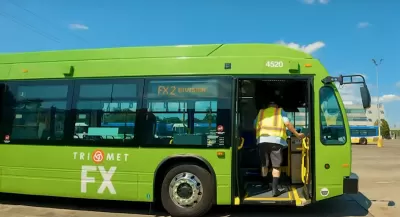
In a Human Transit blog post, Jarrett Walker outlines some positive results from Portland, Oregon’s ‘light bus rapid transit’ project, which employs some elements of traditional BRT while adjusting the system to streets that are too narrow for bus lanes.
The project extended stop spacing to half a mile in some cases, increased frequency to every 12 minutes, and added signal priority for buses along the line, among other changes. “But it’s still in mixed traffic on the narrow and congested inner segment,” Walker adds.
Despite that, “Overall travel times are up to 20% shorter.” According to Walker, “Ridership is up dramatically as a result, almost 40% for the first year of operation (September 2022 – August 2023) compared to the year before.”
Read the full story: Portland: Good Outcomes from “BRT-Lite”

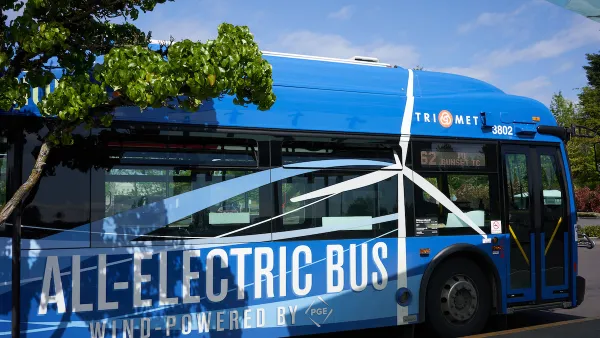
TriMet Ridership Grows Thanks to Realignment, Schedule Changes
The agency’s response to post-pandemic changes in travel behavior is paying off.
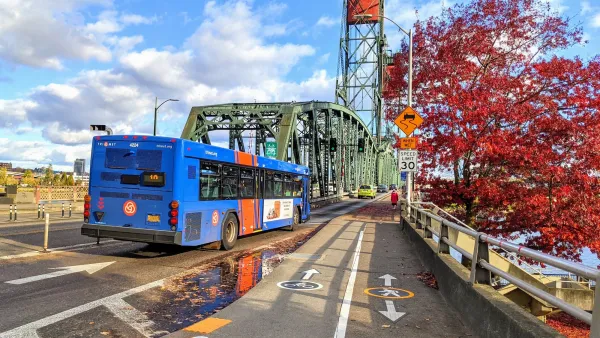
Trimet Slashes Bus Service in First of Three Rounds of Cuts
Oregon’s largest transit agency plans to cut 10% of its services in the next year.
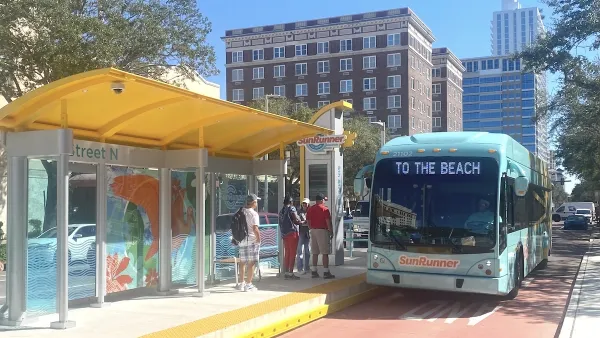
Florida Law Could Eliminate Dedicated Bus Lanes
A new law calls for a minimum ridership of 6,000 passengers in the first year for new bus rapid transit lines. To date, no bus lines in the Tampa Bay region come close.

Planetizen Federal Action Tracker
A weekly monitor of how Trump’s orders and actions are impacting planners and planning in America.

California plans to bury El Niño’s downpour
If the state plays its cards right, it may be able to store a billion acre-feet of El Niño’s water in aquifers.

Chicago breaks ground on $3 billion megadevelopment
The new neighborhood, titled Foundry Park, will one day host 3,700 residences.

California High-Speed Rail Authority CEO resigns after $600,000 scandal
Under Ian Choudri, the authority used taxpayer dollars to fund first class flights and trips to nightclubs.

Want to study the Missouri River? Soon, you may need unanimous approval from 10 states
Legislation would require 10 governors’ permission to study or build projects moving water outside the basin.

Desperate measures: Advocates weigh draining Lake Powell to fill Colorado River
Draining the reservoir could reduce evaporation losses by a couple hundred thousand acre-feet.

FREE Course: Walkable City 1: Why Walkability?
After describing his path towards focusing on walkability as the essence of good planning, Jeff Speck marches through his five principal reasons for making more walkable places.
Reinventing Malls: Planning Alchemy—Turning Gray Fields Into Gold
The course focuses on the opportunities and imperatives that shape reinvention of mall sites.

City of Rosemead
Rutgers University, Edward J. Bloustein School of Planning and Public Policy
One Hundred Miles
Hunter College, City University of New York (CUNY)
The Architects Foundation
University of Cincinnati Online
City of Cambridge
Montrose County
The Pocatello Development Authority