The Highway Trust Fund, the nation's source of road and bridge funding, went bankrupt in 2008 and has since relied on transfers from the General Fund to supplement fuel taxes. Republican Senators have proposed a new funding source: an EV fee.


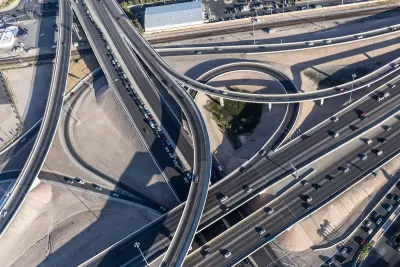
“Sponsored by Sen. Deb Fischer (R-Neb.), the Stop EV Freeloading Act is meant to guarantee that electric vehicles support the federal Highway Trust Fund,” reports Transport Topics, a trucking and logistics online publication. “Currently, electric vehicles, or EVs, do not contribute to the fund, which is an account backed by revenue from federal taxes on gas and diesel fuel.”
Per background the senators provided, the bill would require EVs to contribute to the fund through a fee system. This would include a one-time fee of $1,000 on EVs at the point of sale.
“If the Biden administration plans to continue pushing EVs on the American people, the least Congress can do is require EVs to support the upkeep of our nation’s infrastructure,” Fischer, a member of the Commerce Committee on freight policy, said Sept. 25.
The bill, S. 2882, co-sponsored by Sens. Pete Ricketts (Neb.); John Cornyn (Tex.), and Cynthia M. Lummis (Wyo.), all Republicans, includes an exception for plug-in hybrid electric vehicles, such as the Toyota Prius Prime.
“The Highway Trust Fund [HTF] is used to pay for repairs and maintenance on federal highways and right now EVs are contributing to wear and tear on these roads without contributing to this important upkeep,” Lummis said...
In fact, that ‘EV contribution’ may be disproportionate, according to Fischer's press release dated Sep 25 2023:
The average EV is significantly heavier than its gas-powered counterpart because of the weight of large EV batteries. This legislation would require additional investment in the HTF from heavy EVs that can damage the road and increase maintenance costs.
A comparison of one EV to its internal combustion counterpart found that the difference can be 30% to 63% heavier.
“Every car that drives on our federal highways is responsible for paying into the Highway Trust Fund, and electric vehicles should be no exception,” Cornyn emphasized. “This legislation would ensure EVs pay their fair share and can’t cheat the system.”
Status of the Highway Trust Fund
As noted above, the Highway Trust Fund went bust in 2008, surviving on general fund transfers authorized by Congress and signed by presidents since George W. Bush.
“Rather than raise gas taxes, reduce spending, or identify new financing, lawmakers have relied on nearly $155 billion of general revenue transfers [pdf] to close this gap and keep the trust fund solvent,” states a Feb. 3, 2022 blog post from the Committee for a Responsible Federal Budget, a nonpartisan, non-profit organization.
According to the Congressional Research Service [pdf], “[h]istorically, all of the federal highway program and 80% of the public transportation program have been funded with revenues from the Highway Trust Fund (HTF). Revenues supporting the HTF come from a combination of fuel, truck, and tire taxes, but the fuel taxes provide about 85%-90% of the money.”
The Eno Center for Transportation is an authority on the trust fund's insolvency. See Planetizen posts based on their reports:
- The First Highway Trust Fund Bailout, September 11, 2019
- Ten Years of Highway Trust Fund Insolvency, September 11, 2018
Effect of Infrastructure Investment and Jobs Act
The much heralded Infrastructure Investment and Jobs Act (IIJA), aka Bipartisan Infrastructure Law, continued the bailout, but magnified it significantly.
“In addition to new investments in surface transportation, transit, broadband, energy, water, tax breaks, and other transportation spending, the bipartisan infrastructure law (officially the Infrastructure Investment and Jobs Act) included a five-year reauthorization of surface transportation programs, also known as a Highway Bill,” states the budget organization's blog.
The infrastructure law plugged the trust fund’s near-term gap through a large $118 billion general revenue transfer, delaying insolvency from 2022 to 2027. But rather than narrowing the long-term structural funding gap, increased highway and transit spending levels authorized under the law will widen the gap.
Planetizen coverage of the transportation reauthorization aspect of the IIJA can be tracked under the tag Surface Transportation Reauthorization Act of 2021.
Related in Planetizen on EVs and the Highway Trust Fund:
- It's Time For A National VMT Fee Policy, August 4, 2021 [Note that such a policy is in the Infrastructure Investment and Jobs Act: National Mileage Fee Pilot Program Late to Launch, June 29, 2023]
- Federal Lawmakers Target Electric Vehicles in Transportation Reauthorization, July 15, 2019
Hat tip to AASHTO Daily Transportation Update, Oct. 6, 2023.
FULL STORY: Senators Propose EV Fee for Highway Trust Fund

House Committee Proposes $250 EV Tax
The fee is higher than the average tax paid by gas-powered vehicle owners.
Road Funding Options: The Alternative to the Alternative
The inverse relationship between electric vehicle sales and gasoline tax revenues has caused the federal government and many states to investigate mileage fees as an alternative funding option to fuel taxes. Iowa is going a different route.
Federal Alternative Fuel Charging Grant Funding Announced
The grant program is part of the 2021 infrastructure act, which promised to invest in charging and fueling stations for electric cars and other vehicles powered by alternative energy.

Planetizen Federal Action Tracker
A weekly monitor of how Trump’s orders and actions are impacting planners and planning in America.

The state-sanctioned urbicide of Austin
People don’t kill cities. Freeways do.

US to reduce Colorado River water deliveries to Mexico
A new Colorado Treaty amendment reduces Mexico’s Colorado River water allocation by 250,000 acre feet.

Mamdani overhauls NYC's Vision Zero plan with 100 new policy goals
The overhaul aims to reduce traffic deaths and make streets safer for pedestrians, cyclists and drivers through lower speed limits, new safety infrastructure and more.

Amtrak not solely to blame for New Jersey commuter rail's unreliability, report finds
A new study from the Garden State Initiative found that NJ Transit’s budget grew 20% across a 4 year period, but reliability declined significantly over the same period.

EPA erases limits on planet-warming pollution from power plants
Under Monday’s plan, power plants would still have some limits on how much mercury, arsenic and other contaminants they can emit.

FREE Course: Walkable City 1: Why Walkability?
After describing his path towards focusing on walkability as the essence of good planning, Jeff Speck marches through his five principal reasons for making more walkable places.
Reinventing Malls: Planning Alchemy—Turning Gray Fields Into Gold
The course focuses on the opportunities and imperatives that shape reinvention of mall sites.

Eagle County Government
Harvard University Graduate School of Design
Nashville Planning Department
The Architects Foundation
University of Cincinnati Online
The Pocatello Development Authority
The Urban Renewal Agency of the City of Pocatello
Journal of the American Planning Association