An ambitious plan to improve L.A. County’s bus network is bearing fruit.


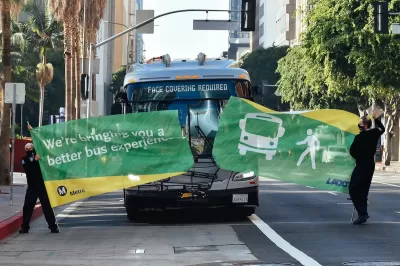
According to a TransitCenter blog post by Eli Lipmen, executive director of Move LA, the Los Angeles County Metropolitan Transportation Authority is adding 30 miles of new bus lanes in 2023, bringing the total bus lane miles in the county to 40.
This accelerating progress on bus lanes in LA has been years in the making, and can be traced to a coordinated advocacy effort that aggressively pushed for both funding and policies that led to better service, infrastructure that speeds up buses and makes routes more reliable, and amenities that benefited current riders.
The growth is part of the agency’s NextGen Bus Plan, which ‘reimagines’ the county’s bus network to ensure better service and equity throughout the system. Recent success is also due to a collaboration between LA Metro and the Los Angeles Department of Transportation, which owns and maintains the city’s streets. The NextGen plan sets ambitious goals, such as providing 80 percent of L.A. bus riders with headways of 10 minutes or less.
For Lipmen, “We still have a long way to go before the majority of LA bus riders are speeding to their destination in a bus lane, but how far we’ve come in a short time is a testament to the power of community organizing, building partnerships with planners, and prioritizing the needs of bus riders.”
Read the full story: LA is (Not-So) Quietly Adding a LOT of Bus Lanes
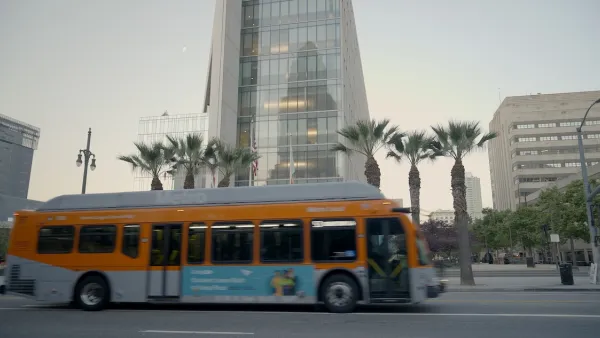
LA to Launch Bus Lane Enforcement Cameras
Bus-mounted cameras will identify vehicles that block designated bus lanes to help prevent delays and maintain reliable transit operations.
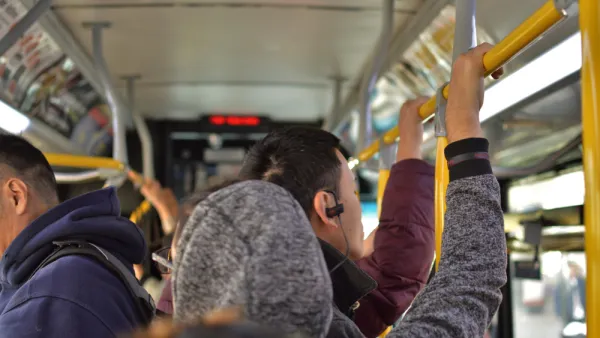
Report: Improved Service Key to Growing Bus Ridership
A NACTO report highlights the importance of bus-friendly policies and infrastructure for boosting ridership numbers and reducing urban congestion and pollution.

Can L.A. Metro Fund its Fareless Transit Pilot?
The Los Angeles County Metropolitan Transportation Authority Board of Directors has approved a program that would eliminate fares for students and low-income riders, but the program's future rests on finding sustainable funding sources.

Planetizen Federal Action Tracker
A weekly monitor of how Trump’s orders and actions are impacting planners and planning in America.

California plans to bury El Niño’s downpour
If the state plays its cards right, it may be able to store a billion acre-feet of El Niño’s water in aquifers.

Desperate measures: Advocates weigh draining Lake Powell to fill Colorado River
Draining the reservoir could reduce evaporation losses by a couple hundred thousand acre-feet.

Mamdani’s pied-à-terre tax survives legal challenge
A panel of judges found that the plaintiffs failed to demonstrate injury as a result of New York City's implementation of the tax.

Eastern Nebraska is running out of electricity
Data centers and electrification are straining eastern Nebraska’s grid, throttling economic development.

Seattle passes record-breaking transit services expansion
Proposition 1 will double the city’s transit tax to add 95,000 more bus trips and preserve 180,000 bus trips annually.

FREE Course: Walkable City 1: Why Walkability?
After describing his path towards focusing on walkability as the essence of good planning, Jeff Speck marches through his five principal reasons for making more walkable places.
Reinventing Malls: Planning Alchemy—Turning Gray Fields Into Gold
The course focuses on the opportunities and imperatives that shape reinvention of mall sites.


City of Rosemead
Rutgers University, Edward J. Bloustein School of Planning and Public Policy
One Hundred Miles
University of Michigan School for Environment and Sustainability (SEAS)
Hunter College, City University of New York (CUNY)
The Architects Foundation
City of Cambridge
Montrose County
The Pocatello Development Authority