The new parking policy creates a new, tiered framework for parking requirements and reduces the required number of parking spots near transit.



Fairfax County officials unanimously voted to reduce parking requirements under a policy known as ‘Parking Reimagined,’ reports Margaret Barthel in DCist.
“The new parking minimums depend on a variety of factors, including whether the project is residential, retail, or office, where it is located, and whether it’s close to transit.” The policy also requires bike and pedestrian infrastructure for large parking lots.
In addition to lowering the cost of housing construction, “County leaders hope the change — while modest — will ultimately mean more space for housing, parks, and other public amenities, instead of large, mostly-empty suburban parking lots that become heat islands in the summer and produce stormwater runoff when it rains.”
According to Barthel, “Most significantly, the new policy imposes a tiered structure for determining parking minimum requirements, cutting them back particularly in mixed-use areas near transit and in places designated by the county’s comprehensive plan for revitalization, such as Annandale and the Route 1 corridor.” The policy also simplifies rules around parking when a building changes hands.
Barthel notes that the policy does not change the amount of parking required for single-family homes or most townhomes, but could add new parking in areas around townhomes due to its requirement for visitor parking.
FULL STORY: Fairfax Supervisors Approve Plan To Reduce Parking Requirements

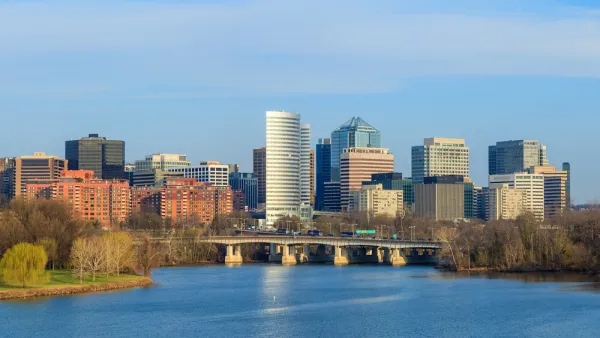
Arlington County Reduces Parking Requirements for Multi-Family Developments on Metro Corridors
In addition to reducing parking requirements to 0.2 to 0.6 spaces per unit for developments "approved by special exception," the board went a step further by requiring mitigations if developers provide more than 1.65 spaces per unit.

Denver Could Eliminate Parking Requirements
The city could remove parking mandates citywide to reduce the cost of housing construction and ease permitting for new projects.
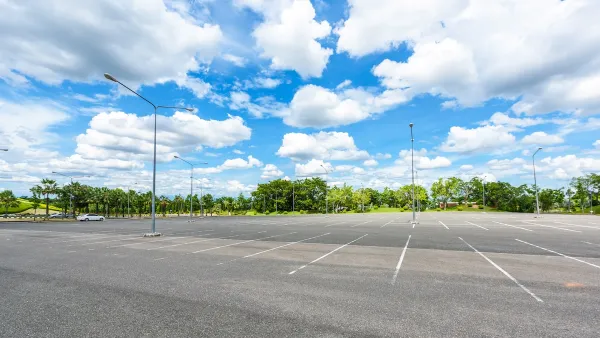
Parking Reform Yields New Housing
As more cities eliminate or reduce their minimum parking requirements, the impact on housing supply is coming into focus.

Planetizen Federal Action Tracker
A weekly monitor of how Trump’s orders and actions are impacting planners and planning in America.

The state-sanctioned urbicide of Austin
People don’t kill cities. Freeways do.

US to reduce Colorado River water deliveries to Mexico
A new Colorado Treaty amendment reduces Mexico’s Colorado River water allocation by 250,000 acre feet.

5 New England states march closer to 800 megawatt wind energy project
Securing federal approval for the project may be complicated under the Trump administration, which has historically been hostile towards domestic wind power.

Baltimore to break ground on $50 million Transit Priority Project
The project will bring faster bus trips, safer streets and better bike connections to Baltimore.

Airbnb launches $250 million 'last-dollar financing' housing accelerator, makes first investment in Austin
The company will put $6.4 million towards affordable housing development in Texas’ capital.

FREE Course: Walkable City 1: Why Walkability?
After describing his path towards focusing on walkability as the essence of good planning, Jeff Speck marches through his five principal reasons for making more walkable places.
Reinventing Malls: Planning Alchemy—Turning Gray Fields Into Gold
The course focuses on the opportunities and imperatives that shape reinvention of mall sites.

Eagle County Government
Harvard University Graduate School of Design
Nashville Planning Department
The Architects Foundation
University of Cincinnati Online
The Pocatello Development Authority
The Urban Renewal Agency of the City of Pocatello
Journal of the American Planning Association