The agency is working on designs for a bus stop shelter with built-in solar-powered fans to keep waiting riders cool.


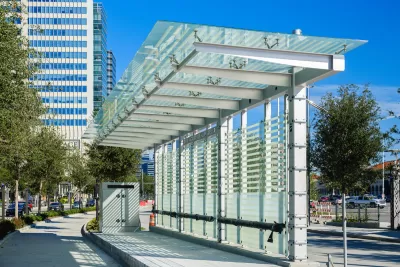
“A prototype shelter aimed at addressing some of Houston’s unique needs, including solar-paneled fans, could evolve into new structures at many Metropolitan Transit Authority bus stops,” reports Dug Begley in the Houston Chronicle.
Protection from sun and heat at transit stops can be crucial in cities like Houston as heat waves grow longer and more intense, but only 3,350 of Houston’s operational bus stops have shelters. “In downtown and many areas funded with management districts, bus shelters can be spacious, shady locations with benches. In tree-line neighborhoods, stops can be shady even if they are uncovered. Along some streets in Denver Harbor, Acres Homes, the bus stop is nothing more than a sign on a stick next to a drainage ditch on the side of the road.”
Now, the agency is developing designs for a bus shelter that will help riders keep cool in the brutal Houston summers. The solar panels used to operate the fans could also power lighting and arrival time screens.
Metropolitan Transit Authority Chief Operating Officer Chuck Berkshire says the agency has been testing one design and is already planning changes. “The focus will be on getting one shelter designed and built, then modify from there, Berkshire said, for situations where a shelter might need to be smaller to fit along a certain sidewalk segment or have two-seat benches instead of three to accommodate a wheelchair user.”
With enough planning, Houston might avoid the derision aimed at L.A.’s Metropolitan Transportation Authority earlier this year, when the agency unveiled a shade structure dubbed ‘La Sombrita,’ widely criticized as a minimally effective effort that highlights the outsized obstacles posed by the city’s building code.
Read the full story: Metro testing solar powered fans in future bus shelters

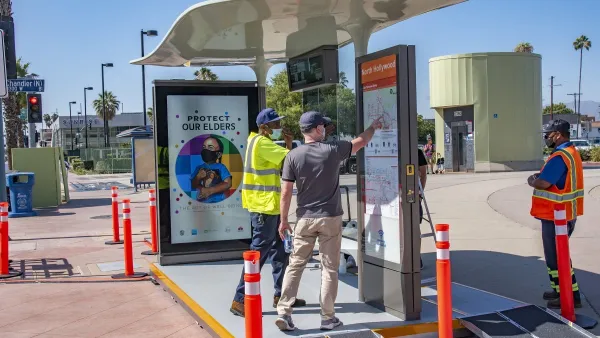
LA Begins Adding New Bus Shelters
The program, years in the works, pledges to add 3,000 new bus shelters and 450 shade structures to protect riders from extreme heat and weather.
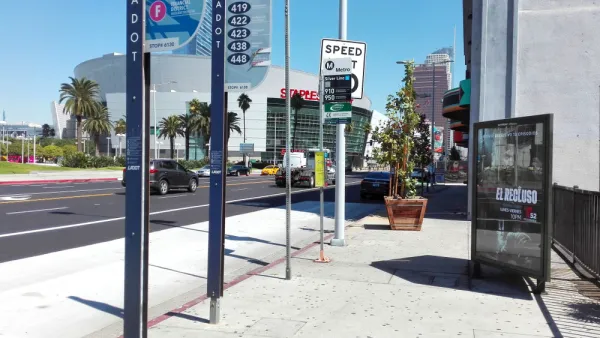
Study: One-Quarter of L.A. County Bus Stops Equipped With Shelters
Bus riders in Los Angeles frequently lack protection from sun and extreme heat, with bus stops in some of the county’s hottest areas having the worst amenities.

Index Measures Impact of Heat on Pedestrian Activity
When heat and humidity are high, people are more likely to opt for cars when possible.

Planetizen Federal Action Tracker
A weekly monitor of how Trump’s orders and actions are impacting planners and planning in America.

California plans to bury El Niño’s downpour
If the state plays its cards right, it may be able to store a billion acre-feet of El Niño’s water in aquifers.

Desperate measures: Advocates weigh draining Lake Powell to fill Colorado River
Draining the reservoir could reduce evaporation losses by a couple hundred thousand acre-feet.

Chicago Avenue bridge construction delays enrages city leaders
The bridge has been closed since 2025. The city originally aimed to re-open it in December, and now expects to finish construction in 2027.

NYC bus network redesign speeds up Queens buses
Rush routes have seen a 4.6% speed increase after the redesign.

California High-Speed Rail Authority picks trainset manufacturer
The California High-Speed Rail Authority aims to start servicing passengers by 2033.

FREE Course: Walkable City 1: Why Walkability?
After describing his path towards focusing on walkability as the essence of good planning, Jeff Speck marches through his five principal reasons for making more walkable places.
Reinventing Malls: Planning Alchemy—Turning Gray Fields Into Gold
The course focuses on the opportunities and imperatives that shape reinvention of mall sites.

City of Rosemead
Rutgers University, Edward J. Bloustein School of Planning and Public Policy
One Hundred Miles
Hunter College, City University of New York (CUNY)
The Architects Foundation
University of Cincinnati Online
City of Cambridge
Montrose County
The Pocatello Development Authority