Almost 1 million acres of land near the Grand Canyon will now be protected from mining and extraction as part of the country’s newest national monument.


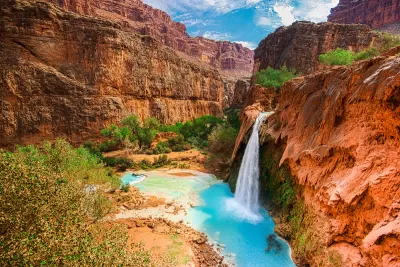
The rumored new national monument near the Grand Canyon was made a reality by President Biden on Tuesday, reports Debra Utacia Krol in Arizona Republic. The new monument encompasses lands sacred to the local Havasu 'Baaja tribe and will be called Baaj Nwaavjo I’tah Kukveni – Ancestral Footprints of the Grand Canyon National Monument.
“These are places of prayer for the Havasupai, who have long fought to regain some control over the places and to protect them from overuse and mineral extraction,” Krol adds. Yet the group has long been barred from stewarding the land. “The lands they once held and cared for were open to anybody, including mineral hunters and recreationists. Several mineral claims were established, as were campgrounds, forest roads and visitor infrastructure.”
Since the U.S. government first appropriated the land, the tribe continued to fight for its protection, advocating for a national monument that would prevent future mining operations. “Interior Secretary Deb Haaland, a member of the Laguna Pueblo, said during a press call Monday that the new Baaj Nwaavjo I’tah Kukveni – Ancestral Footprints of the Grand Canyon National Monument would rectify an injustice committed against Native peoples in the area.”
Baaj Nwaavjo I’tah Kukveni is President Biden’s fifth national monument, joining the Emmett Till and Mamie Till-Mobley National Monument in Illinois and Mississippi, the Castner Range National Monument in Texas, Avi Kwa Ame National Monument in Nevada, and the Camp Hale-Continental Divide National Monument in Colorado.
FULL STORY: President Biden announced new monument at Red Butte. Here's why it is sacred to tribes

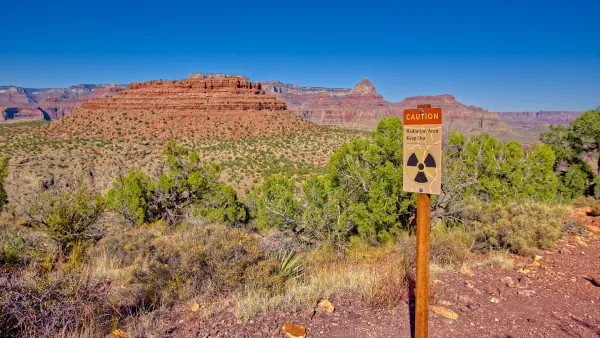
Grand Canyon Area Could Gain New National Monument
The Biden administration has signaled support for a proposed national monument that would protect Native American lands around the Grand Canyon from uranium mining.
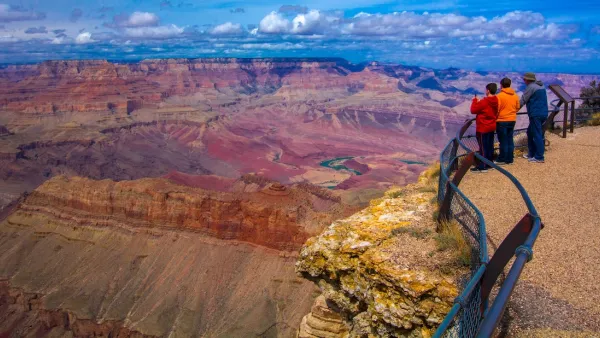
DOJ Says Trump Has Power to Roll Back National Monuments
The opinion sheds light on how the administration may justify its effort to eliminate protected public lands.
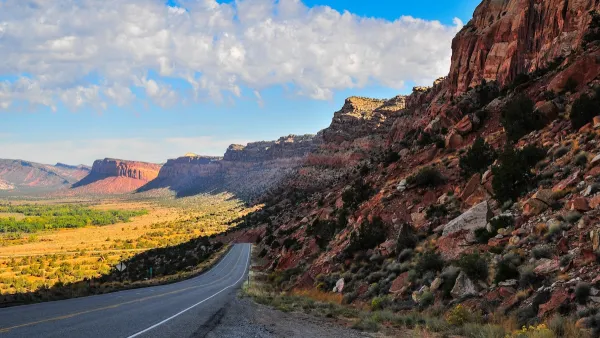
New Executive Order Renews Attack on Public Lands
An order issued late last week pushes for increased mineral extraction on federally owned public lands.

Planetizen Federal Action Tracker
A weekly monitor of how Trump’s orders and actions are impacting planners and planning in America.

The state-sanctioned urbicide of Austin
People don’t kill cities. Freeways do.

US to reduce Colorado River water deliveries to Mexico
A new Colorado Treaty amendment reduces Mexico’s Colorado River water allocation by 250,000 acre feet.

5 New England states march closer to 800 megawatt wind energy project
Securing federal approval for the project may be complicated under the Trump administration, which has historically been hostile towards domestic wind power.

Baltimore to break ground on $50 million Transit Priority Project
The project will bring faster bus trips, safer streets and better bike connections to Baltimore.

Airbnb launches $250 million 'last-dollar financing' housing accelerator, makes first investment in Austin
The company will put $6.4 million towards affordable housing development in Texas’ capital.

FREE Course: Walkable City 1: Why Walkability?
After describing his path towards focusing on walkability as the essence of good planning, Jeff Speck marches through his five principal reasons for making more walkable places.
Reinventing Malls: Planning Alchemy—Turning Gray Fields Into Gold
The course focuses on the opportunities and imperatives that shape reinvention of mall sites.

Eagle County Government
Harvard University Graduate School of Design
Nashville Planning Department
The Architects Foundation
University of Cincinnati Online
The Pocatello Development Authority
The Urban Renewal Agency of the City of Pocatello
Journal of the American Planning Association