Some bus lines will start letting riders board through both front and back doors this fall as part of Metro’s efforts to improve service speed and reliability.


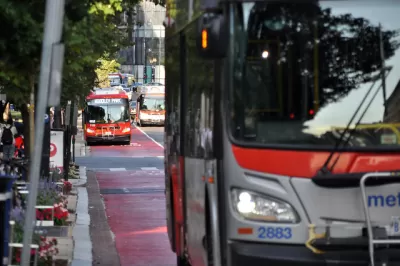
Writing in The Washington Post, Luz Lazo reports on the Washington Metropolitan Area Transit Authority (Metro)’s announcement that, starting in the fall, Metro buses will have all-door boarding to streamline the boarding process and reduce delays.
“The initiative — set to debut in 450 buses, or about a third of the fleet, starting this year — is part of a large-scale effort to improve bus riders’ experience in the capital region,” Lazo explains. As part of the project, the agency is adding new fare collection tech to the front and back doors of buses.
According to the article, “Cities with all-door boarding have seen trip times improve substantially, with savings of up to 30 percent.” Lazo also describes other improvements Metro is making, such as allowing riders to request stops between designated bus stops at night and ticketing drivers who drive or park in bus-only lanes.
As Lazo points out, “The Washington region already experienced rear door boarding in 2020, when Metro closed off front entrances and the first few seats of Metrobuses to protect bus operators from exposure to the coronavirus.” During that time, bus trips were free.
FULL STORY: Metro will roll out all-door bus boarding this fall

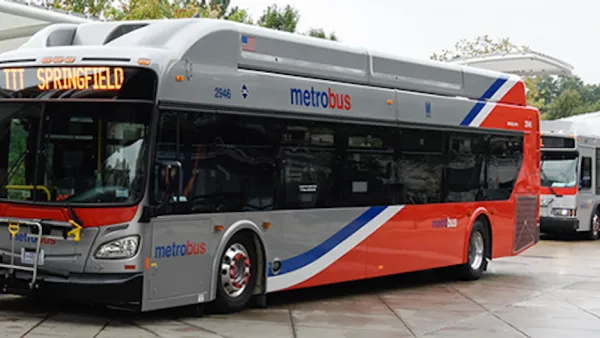
DC Launches 24/7 Bus Service
Starting December 17, 14 Metrobus routes will run around the clock to better serve essential workers and visitors.
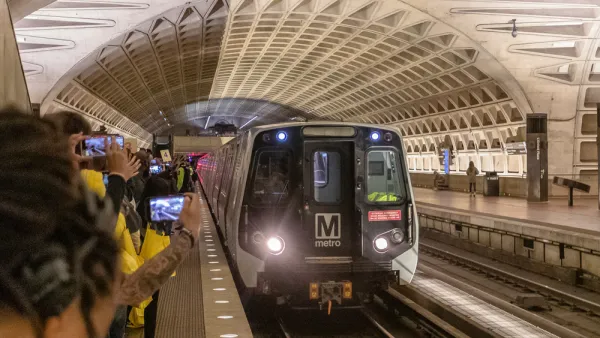
Congressman Proposes Bill to Rename DC Metro “Trump Train”
The Make Autorail Great Again Act would withhold federal funding to the system until the Washington Metropolitan Area Transit Authority (WMATA), rebrands as the Washington Metropolitan Authority for Greater Access (WMAGA).
DC Metro Is Betting on Buses
The agency plans to significantly expand bus service, which can be added faster and at a lower cost than rail projects.

Planetizen Federal Action Tracker
A weekly monitor of how Trump’s orders and actions are impacting planners and planning in America.

The state-sanctioned urbicide of Austin
People don’t kill cities. Freeways do.

US to reduce Colorado River water deliveries to Mexico
A new Colorado Treaty amendment reduces Mexico’s Colorado River water allocation by 250,000 acre feet.

5 New England states march closer to 800 megawatt wind energy project
Securing federal approval for the project may be complicated under the Trump administration, which has historically been hostile towards domestic wind power.

Baltimore to break ground on $50 million Transit Priority Project
The project will bring faster bus trips, safer streets and better bike connections to Baltimore.

Airbnb launches $250 million 'last-dollar financing' housing accelerator, makes first investment in Austin
The company will put $6.4 million towards affordable housing development in Texas’ capital.

FREE Course: Walkable City 1: Why Walkability?
After describing his path towards focusing on walkability as the essence of good planning, Jeff Speck marches through his five principal reasons for making more walkable places.
Reinventing Malls: Planning Alchemy—Turning Gray Fields Into Gold
The course focuses on the opportunities and imperatives that shape reinvention of mall sites.

Eagle County Government
Harvard University Graduate School of Design
Nashville Planning Department
The Architects Foundation
University of Cincinnati Online
The Pocatello Development Authority
The Urban Renewal Agency of the City of Pocatello
Journal of the American Planning Association