The city wants to monitor air quality and measure cancer-causing emissions near two petrochemical plants, one of which announced plans for expansion last year.


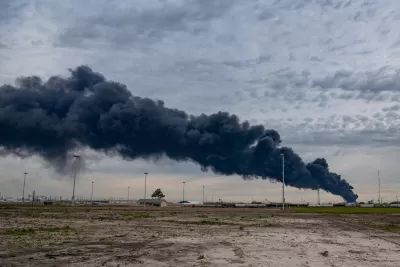
A grant totaling close to half a million dollars from the U.S. Environmental Protection Agency (EPA) will help the city of Houston monitor air pollutants including 1,3-butadiene in neighborhoods at high risk for poor air quality.
As Ysabella Kempe explains in Smart Cities Dive, “Exposure to this air pollutant, which smells like gasoline, can cause cancer and trigger short-term health impacts including eye and throat irritation, headaches and nausea.”
According to Loren Hopkins, the Houston Health Department’s chief environmental science officer, “This air monitoring effort was born out of concerns about ‘amazingly high concentrations’ of 1,3-butadiene the city detected near two adjacent chemical plants.” One of the plants, Texas Petrochemical, announced expansion plans in 2022 in spite of community concerns.
“Much of the grant funding will go toward the ‘very expensive’ equipment and sampling needed to monitor air quality, but the city also will use it to pay community partners helping with the project, Hopkins said.” The city also plans to monitor benzene, formaldehyde, and ethylene oxide.
FULL STORY: ‘Amazingly high’ air pollution near Houston chemical plants gets EPA monitoring support

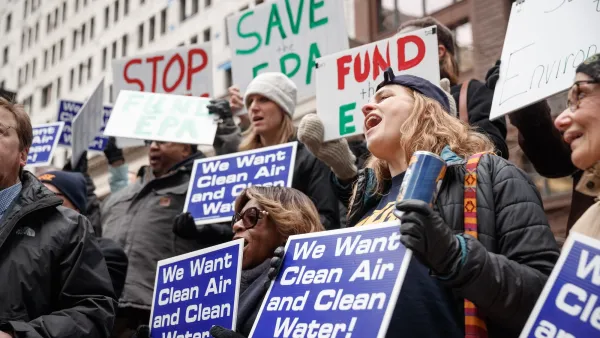
EPA Guts Emissions Regulations
The agency is eliminating the endangerment finding that underpins the agency’s authority to regulate greenhouse gas emissions.
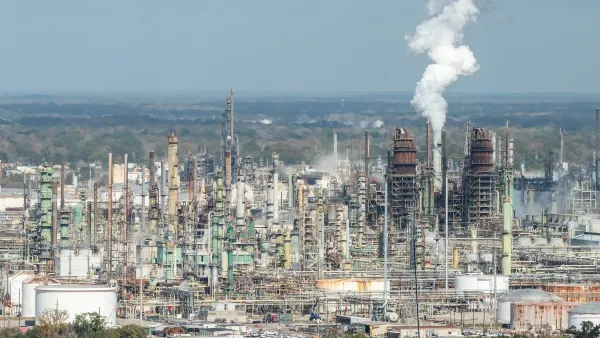
EPA to Stop Considering the Cost of Lives Saved in Setting Pollution Limits
The agency will no longer quantify the monetary gains from health benefits from curbing air pollution.

Comment: EPA Cuts will Send Atlanta Back to Eye-burning Ozone, Lung-damaging Smog, and Raw Sewage in the Chattahoochee River
A veteran political journalist takes stock of the hard-earned ground Georgia stands to lose with slashed environmental protection.

The state-sanctioned urbicide of Austin
People don’t kill cities. Freeways do.

US to reduce Colorado River water deliveries to Mexico
A new Colorado Treaty amendment reduces Mexico’s Colorado River water allocation by 250,000 acre feet.

New Jersey’s second-largest city bans standalone data centers
Jersey City will continue to allow co-location facilities, such as those meant for research institutions that store their own data.

Amtrak not solely to blame for New Jersey commuter rail's unreliability, report finds
A new study from the Garden State Initiative found that NJ Transit’s budget grew 20% across a 4 year period, but reliability declined significantly over the same period.

EPA erases limits on planet-warming pollution from power plants
Under Monday’s plan, power plants would still have some limits on how much mercury, arsenic and other contaminants they can emit.

Phoenix announces new on-demand transit service, more frequent RAPID buses
Both new services will launch in October, and are part of Phoenix's Project Effective Access Solutions for Easing Congestion.

FREE Course: Walkable City 1: Why Walkability?
After describing his path towards focusing on walkability as the essence of good planning, Jeff Speck marches through his five principal reasons for making more walkable places.
Reinventing Malls: Planning Alchemy—Turning Gray Fields Into Gold
The course focuses on the opportunities and imperatives that shape reinvention of mall sites.

Eagle County Government
Harvard University Graduate School of Design
Nashville Planning Department
The Architects Foundation
University of Cincinnati Online
The Pocatello Development Authority
The Urban Renewal Agency of the City of Pocatello
Journal of the American Planning Association