The agency wants to add new lines, improve service, and modernize its fleet as part of a $75 billion plan to revive U.S. train travel.


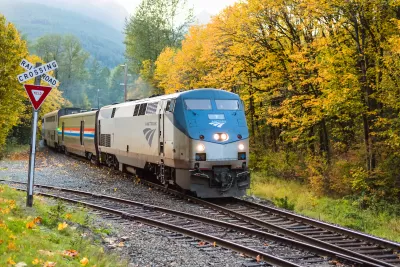
Writing in Bloomberg CityLab, Angie Schmitt outlines what Amtrak’s $75 billion expansion plan could mean for U.S. train travel. “Amtrak’s expansion plan, dubbed Amtrak Connects US, proposes service improvements to 25 existing routes and the addition of 39 entirely new routes. If the vision were to be fully realized, it would bring passenger rail to almost every major city in the US in 15 years.” Today, that number stands at 27 out of 50 largest metro areas served.
Amtrak’s ambitious new plan, Schmitt notes, is “a long way from the giant network of interurban trains that Americans relied on to get around early in the 20th century, but the plan would still mark a dramatic expansion of passenger rail.”
Schmitt describes the proposed expansion, which would include new service in 160 communities in 16 states and restored service in legacy cities like Las Vegas and Columbus. “In Cleveland, Amtrak has proposed turning the Midwest city into a mini-hub, with three daily trips to Detroit; currently, its served just twice daily in the middle of the night.” Schmitt notes, “All US regions would see some improvements, but one of the goals of the plan is to better align service with new population centers in the Sun Belt and US South.”
Funding from the infrastructure bill is also aimed at replacing and modernizing Amtrak’s trains, which will translate into faster and more reliable service as well as conveniences like Wi-Fi and USB ports. “More than delivering truly high-speed rail, Amtrak’s plans focus on improving on-time performance — a chronic challenge given that Amtrak often must share tracks with freight trains — as well as boosting average speeds on the most well-used corridors.”
Ultimately, U.S. train service remains far substandard compared to other countries. “But if a large portion of Amtrak’s plans are realized, it could help return train travel into the mainstream in a way most Americans have never experienced in their lifetimes.”
FULL STORY: What Would an Amtrak Revival Look Like?


Amtrak Breaks All-Time Ridership and Revenue Records in 2025, Projects Profitability in 2028
More Americans than ever rode trains even as future funding for rail projects remains uncertain.
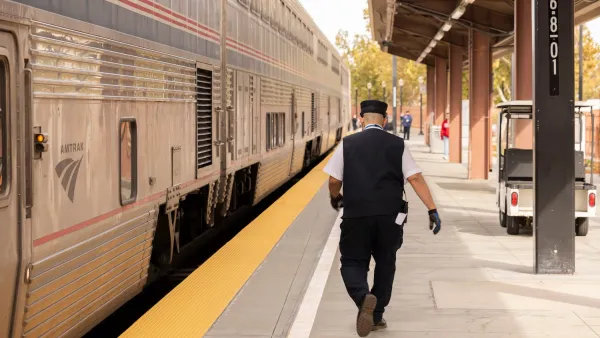
Op-Ed: Why an Effective Passenger Rail Network Needs Government Involvement
An outdated rail network that privileges freight won’t be fixed by privatizing Amtrak.
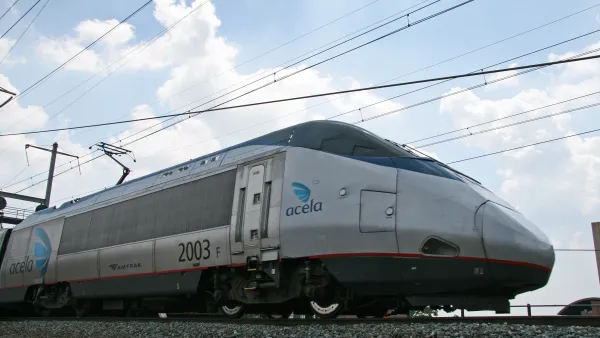
How to Make US Trains Faster
Changes to boarding platforms and a switch to electric trains could improve U.S. passenger rail service without the added cost of high-speed rail.

The state-sanctioned urbicide of Austin
People don’t kill cities. Freeways do.

US to reduce Colorado River water deliveries to Mexico
A new Colorado Treaty amendment reduces Mexico’s Colorado River water allocation by 250,000 acre feet.

New Jersey’s second-largest city bans standalone data centers
Jersey City will continue to allow co-location facilities, such as those meant for research institutions that store their own data.

Amtrak not solely to blame for New Jersey commuter rail's unreliability, report finds
A new study from the Garden State Initiative found that NJ Transit’s budget grew 20% across a 4 year period, but reliability declined significantly over the same period.

EPA erases limits on planet-warming pollution from power plants
Under Monday’s plan, power plants would still have some limits on how much mercury, arsenic and other contaminants they can emit.

Phoenix announces new on-demand transit service, more frequent RAPID buses
Both new services will launch in October, and are part of Phoenix's Project Effective Access Solutions for Easing Congestion.

FREE Course: Walkable City 1: Why Walkability?
After describing his path towards focusing on walkability as the essence of good planning, Jeff Speck marches through his five principal reasons for making more walkable places.
Reinventing Malls: Planning Alchemy—Turning Gray Fields Into Gold
The course focuses on the opportunities and imperatives that shape reinvention of mall sites.

Eagle County Government
Harvard University Graduate School of Design
Nashville Planning Department
The Architects Foundation
University of Cincinnati Online
The Pocatello Development Authority
The Urban Renewal Agency of the City of Pocatello
Journal of the American Planning Association