Will banning lawns and limiting water use be enough as new communities continue to sprout up across the drying west?


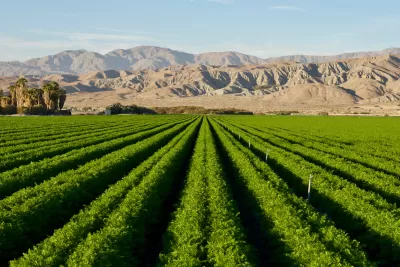
Writing in Circle of Blue, Brett Walton describes the growing water conservation movement in the American Southwest, where booming populations and strained water supplies are bringing the urgency of the water crisis to the forefront.
One by one, cities such as Tucson are banning ‘ornamental grass’ and home lawns, while others are cutting off water supplies to unincorporated communities.
According to John Berggren, a water policy analyst with Western Resource Advocates, “There’s a growing recognition that there are actually ways to allow growth to happen, that don’t really increase the amount of overall water you need” through landscaping regulations, zoning codes, and other policy levers. “We don’t have to restrict growth, we just have to shape it and make sure water efficiency is embedded throughout the entire development process.”
While developers are hanging on to this promise of infinite growth with the right technological and regulatory policies, the cost of water continues to rise. Meanwhile, agriculture remains the biggest user of water in the state.
Read the full story: Say Goodbye to Lawns in Drying U.S. West

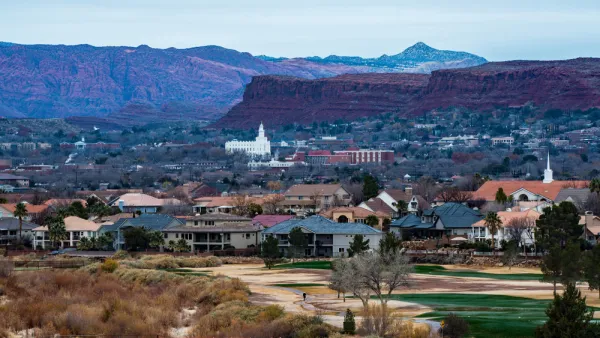
Can Southwest Utah’s Water Supply Handle its Explosive Growth?
A remote corner of the state is the nation’s fastest-growing metro area, but concerns about water supplies across the Southwest signal an uncertain future.
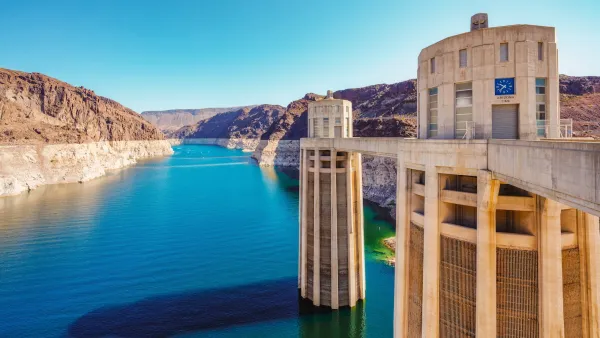
Federal proposal calls for mandatory water cuts to Arizona, California and Nevada
The Bureau of Reclamation stepped in after states failed to come to an agreement over Colorado River water use reductions.
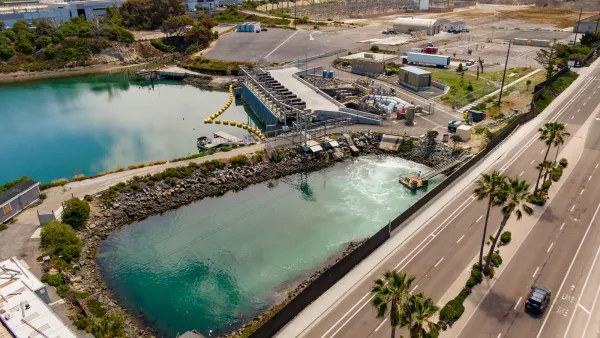
New agreement would let Arizona, Nevada use water from California desalination plant
The plan will help reduce strain on Lake Mead during extreme drought periods.

Planetizen Federal Action Tracker
A weekly monitor of how Trump’s orders and actions are impacting planners and planning in America.

The state-sanctioned urbicide of Austin
People don’t kill cities. Freeways do.

US to reduce Colorado River water deliveries to Mexico
A new Colorado Treaty amendment reduces Mexico’s Colorado River water allocation by 250,000 acre feet.

Nation's most wind-powered state turns to coal as data centers increase energy demand
For the first time in decades, Iowa has increased its generation of coal power.

NYC cools commuters with city's first rain garden above a bus stop
New York City officials say the plants in the rain garden can absorb 16 gallons of rainwater during heavy storms.

Brightline West’s future may rely on $6 billion federal loan
The company has until Nov. 2 to make a $400 million equity investment into its proposed high-speed rail line.

FREE Course: Walkable City 1: Why Walkability?
After describing his path towards focusing on walkability as the essence of good planning, Jeff Speck marches through his five principal reasons for making more walkable places.
Reinventing Malls: Planning Alchemy—Turning Gray Fields Into Gold
The course focuses on the opportunities and imperatives that shape reinvention of mall sites.

Eagle County Government
Harvard University Graduate School of Design
Nashville Planning Department
The Architects Foundation
University of Cincinnati Online
The Pocatello Development Authority
The Urban Renewal Agency of the City of Pocatello
Journal of the American Planning Association