While they may not sound extreme, temperatures over 90 degrees can easily pose fatal risks and could have long-term impacts on public health.


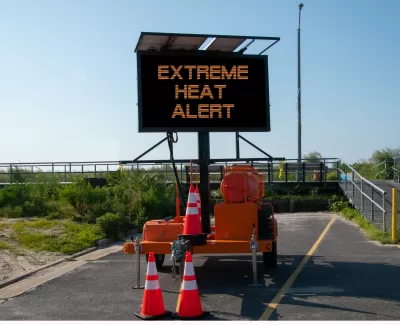
Too often, policymakers overlook extreme heat as a major public health risk, despite heat being the top weather-related killer in the United States. As Sarah Trent warns in an article for High Country News, “Health risks increase when temperatures are higher than locals are used to, not just when they reach triple-digits.”
Trent notes that “In addition to direct health impacts, heat waves are known to increase gun violence, as well as domestic and other violence.” New research is also revealing long-term impacts for pregnant people: “Prolonged heat can cause pre-term births, low birth weight and gestational diabetes.”
In the Pacific Northwest, where hundreds of people died of heat-related causes during a heat wave in 2021, temperatures are now reaching 90 degrees and above earlier in the year, when human bodies and behavior are not yet acclimated to the heat and heat mitigation facilities are not yet open for the summer.
According to Adelle Monteblanco, a public health professor at Pacific University, “We have to prepare our cities for hotter temperatures” with cooling centers and policy changes to protect workers, unhoused people, and other vulnerable groups.
FULL STORY: Yes, 90 degrees can be dangerous


How Extreme Heat Impacts Children
As summers get hotter and more dangerous, parents can take steps to protect kids from heat-related illnesses.

How Hot Will 2024 Get?
Experts predict summer temperatures could surpass 2023’s record heat waves, prompting cities to plan mitigation measures.
How Extreme Heat Impacts Heart Health
A higher number of high heat days correlates with more cardiovascular deaths, according to new research.

Planetizen Federal Action Tracker
A weekly monitor of how Trump’s orders and actions are impacting planners and planning in America.

The state-sanctioned urbicide of Austin
People don’t kill cities. Freeways do.

US to reduce Colorado River water deliveries to Mexico
A new Colorado Treaty amendment reduces Mexico’s Colorado River water allocation by 250,000 acre feet.

5 New England states march closer to 800 megawatt wind energy project
Securing federal approval for the project may be complicated under the Trump administration, which has historically been hostile towards domestic wind power.

Baltimore to break ground on $50 million Transit Priority Project
The project will bring faster bus trips, safer streets and better bike connections to Baltimore.

Airbnb launches $250 million 'last-dollar financing' housing accelerator, makes first investment in Austin
The company will put $6.4 million towards affordable housing development in Texas’ capital.

FREE Course: Walkable City 1: Why Walkability?
After describing his path towards focusing on walkability as the essence of good planning, Jeff Speck marches through his five principal reasons for making more walkable places.
Reinventing Malls: Planning Alchemy—Turning Gray Fields Into Gold
The course focuses on the opportunities and imperatives that shape reinvention of mall sites.

Eagle County Government
Harvard University Graduate School of Design
Nashville Planning Department
The Architects Foundation
University of Cincinnati Online
The Pocatello Development Authority
The Urban Renewal Agency of the City of Pocatello
Journal of the American Planning Association