A pandemic-era program designed to streamline the conversion of hotels into housing stalled, with the first project just now making its way through the pipeline.


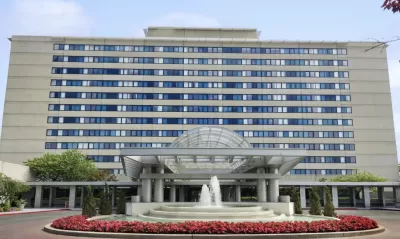
A $150-million proposed conversion of a Hilton hotel near Kennedy International Airport is set to be the first project under the state’s hotel-to-housing conversion program, which was created during the tourism slump of the pandemic as one way to address the city’s growing housing crisis but, one year later, failed to lead to any new housing units.
Although the program was designed to help create more housing quickly, Mihir Zaveri explains in The New York Times, “Developers claimed it would not do enough to help them overcome onerous regulations, and that the $200 million attached to the program was not enough to compensate for development costs on a large scale.”
According to Zaveri, “Of the 318 total units, roughly 60 percent are slated for people struggling with homelessness. The remaining units would target lower-income households — those earning up to $107,000 for a family of four, for example — with rents of about $1,250 for a one-bedroom apartment and $1,500 for a two bedroom.”
The Hilton project is slated for completion in two years, during which the developers will make renovations to rooms, heating systems, and other components. “About $48 million of the $150 million will come from the state program, initially created in 2021 by the Housing Our Neighbors with Dignity Act.”
FULL STORY: New York City Will Finally Turn a Hotel Into Housing


SoCal Hotel to Become 98 Housing Units
A shuttered Carlsbad extended stay hotel offers an opportunity to quickly bring close to 100 new housing units on the market, including 15 affordable apartments.
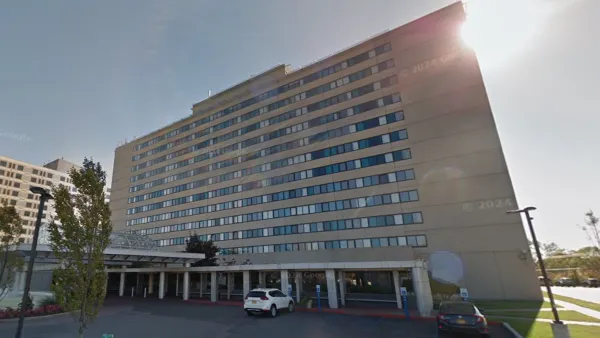
First NYC Hotel Conversion Completes Construction
A 2021 state law aimed at promoting hotel conversions has had a rocky start, only now yielding its first completed project.
‘City of Yes’ Zoning Reform Gains Planning Commission Approval
The proposal to overhaul New York City’s zoning code, popular with voters, to make housing development easier faces opposition in the City Council.

Planetizen Federal Action Tracker
A weekly monitor of how Trump’s orders and actions are impacting planners and planning in America.

The state-sanctioned urbicide of Austin
People don’t kill cities. Freeways do.

US to reduce Colorado River water deliveries to Mexico
A new Colorado Treaty amendment reduces Mexico’s Colorado River water allocation by 250,000 acre feet.

Mamdani overhauls NYC's Vision Zero plan with 100 new policy goals
The overhaul aims to reduce traffic deaths and make streets safer for pedestrians, cyclists and drivers through lower speed limits, new safety infrastructure and more.

Amtrak not solely to blame for New Jersey commuter rail's unreliability, report finds
A new study from the Garden State Initiative found that NJ Transit’s budget grew 20% across a 4 year period, but reliability declined significantly over the same period.

EPA erases limits on planet-warming pollution from power plants
Under Monday’s plan, power plants would still have some limits on how much mercury, arsenic and other contaminants they can emit.

FREE Course: Walkable City 1: Why Walkability?
After describing his path towards focusing on walkability as the essence of good planning, Jeff Speck marches through his five principal reasons for making more walkable places.
Reinventing Malls: Planning Alchemy—Turning Gray Fields Into Gold
The course focuses on the opportunities and imperatives that shape reinvention of mall sites.

Eagle County Government
Harvard University Graduate School of Design
Nashville Planning Department
The Architects Foundation
University of Cincinnati Online
The Pocatello Development Authority
The Urban Renewal Agency of the City of Pocatello
Journal of the American Planning Association