The Denmark-based toy company just broke ground on a new carbon-neutral run factory in Chesterfield County near Richmond, Virginia.



LEGO is well-known for its variously colored interlocking plastic bricks accompanying an array of gears, figurines called minifigures, and various other parts. Soon, it will be recognized for having one of the largest carbon-neutral factories in the world. When completed in 2025, the LEGO factory aims to demonstrate net-zero emissions from electricity and fuel use using on-site or off-site renewable energy.
The 340-acre site will have rooftop and ground solar panels (15,000 to 20,000 roof panels and 35,000 to 40,000 ground panels), and an on-site 35 to 40 megawatt solar plant, targeted to fulfil the total annual energy requirements of the site. The site will be designed to support the company’s sustainability goals, which include reducing its absolute global carbon emissions by 37 percent by 2032. The company will use the latest energy-efficient production equipment, while buildings and manufacturing processes are designed to minimize energy use.
There will be 13 buildings spanning more than 1.7 million square feet, ranging from office spaces, molding, processing, packing buildings, and a high bay warehouse. LEGO aims to secure Leadership in Energy & Environmental Design (LEED) gold certification for the new factory once it is completed.
FULL STORY: LEGO breaks ground on $1B carbon-neutral factory in Virginia


Bipartisan Compromise in Arizona Results in Carbon-Free Energy Plan
The state of Arizona has a plan to eliminate carbon emissions from electricity generation by 2050.

Court unfreezes $20B in federal climate grants
A U.S. Court of Appeals ruled that the Trump administration potentially violated the Inflation Reduction Act by attempting to claw back grants awarded under the Greenhouse Gas Reduction Fund program.
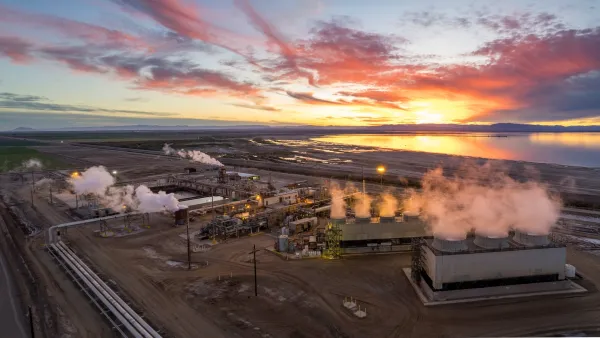
A desolate patch of Southern California desert could become a lithium powerhouse
Plans to develop lithium mines and data centers are dividing residents of a remote Southern California region.

Planetizen Federal Action Tracker
A weekly monitor of how Trump’s orders and actions are impacting planners and planning in America.

The state-sanctioned urbicide of Austin
People don’t kill cities. Freeways do.

US to reduce Colorado River water deliveries to Mexico
A new Colorado Treaty amendment reduces Mexico’s Colorado River water allocation by 250,000 acre feet.

5 New England states march closer to 800 megawatt wind energy project
Securing federal approval for the project may be complicated under the Trump administration, which has historically been hostile towards domestic wind power.

Baltimore to break ground on $50 million Transit Priority Project
The project will bring faster bus trips, safer streets and better bike connections to Baltimore.

Airbnb launches $250 million 'last-dollar financing' housing accelerator, makes first investment in Austin
The company will put $6.4 million towards affordable housing development in Texas’ capital.

FREE Course: Walkable City 1: Why Walkability?
After describing his path towards focusing on walkability as the essence of good planning, Jeff Speck marches through his five principal reasons for making more walkable places.
Reinventing Malls: Planning Alchemy—Turning Gray Fields Into Gold
The course focuses on the opportunities and imperatives that shape reinvention of mall sites.

Eagle County Government
Harvard University Graduate School of Design
Nashville Planning Department
The Architects Foundation
University of Cincinnati Online
The Pocatello Development Authority
The Urban Renewal Agency of the City of Pocatello
Journal of the American Planning Association