A new study by researchers at the Urban Institute finds new evidence that upzoning produces housing supply and reduces costs, while downzoning does the opposite.



A study published recently in the journal Urban Studies has produced “the first cross-city panel dataset of land-use reforms” to quantify the impact on housing supply and rents.
The study is behind a paywall at the journal, but from the study’s abstract, we can see that the study used machine-learning algorithms to search U.S. newspaper articles between 2000 and 2019, merging the data with U.S. Postal Service and Census data.
“We find that reforms that loosen restrictions are associated with a statistically significant 0.8% increase in housing supply within three to nine years of reform passage, accounting for new and existing stock,” according to the abstract.
The Urban Institute also wrote up the study for an article on their own website, providing further insight into the study’s methodology and findings. For example, the resulting increase in housing supply is greater at the higher end of the market, and the research finds “no statistically significant evidence that additional lower-cost units became available or became less expensive in the years following reforms.”
Still, the benefits still manage to spread to other parts of the market, according to the study: “impacts are positive across the affordability spectrum and we cannot rule out that impacts are equivalent across different income segments.”
The study also found the converse to be true: “reforms that increase land-use restrictions and lower allowed densities are associated with increased median rents and a reduction in units affordable to middle-income renters.”
The new research is the latest in an ongoing debate, central to the political debate happening between pro-development political forces (i.e., YIMBYs) and those opposing developments, including both anti-displacement and neighborhood character protection groups.
FULL STORY: Land-Use Reforms and Housing Costs

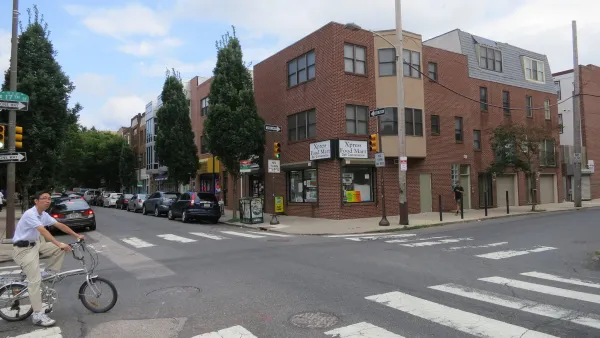
Density Skepticism and Neighborhood Protection
Resistance mounts to the zoning reforms gaining traction in the United States.

A Critical Review of "Sick City: Disease, Race, Inequality and Urban Land"
Patrick Condon's new book, "Sick City: Disease, Race, Inequality and Urban Land" recommends tax reforms and housing subsidies to create more affordable and inclusive communities. It is attractive propaganda that deserves critical analysis.
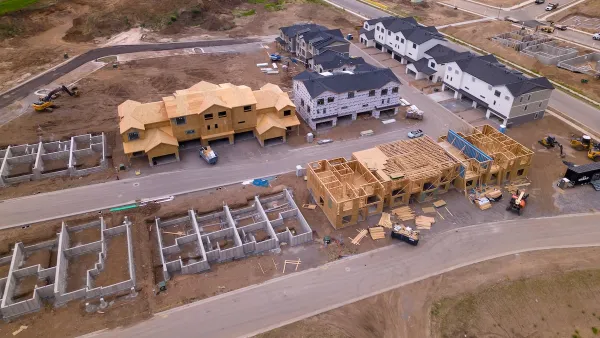
‘Montana Miracle:’ The State Actually Succeeding at Housing Reform
A series of ambitious zoning reforms is having a significant impact on the state’s housing supply.

Planetizen Federal Action Tracker
A weekly monitor of how Trump’s orders and actions are impacting planners and planning in America.

The state-sanctioned urbicide of Austin
People don’t kill cities. Freeways do.

US to reduce Colorado River water deliveries to Mexico
A new Colorado Treaty amendment reduces Mexico’s Colorado River water allocation by 250,000 acre feet.

5 New England states march closer to 800 megawatt wind energy project
Securing federal approval for the project may be complicated under the Trump administration, which has historically been hostile towards domestic wind power.

Baltimore to break ground on $50 million Transit Priority Project
The project will bring faster bus trips, safer streets and better bike connections to Baltimore.

Airbnb launches $250 million 'last-dollar financing' housing accelerator, makes first investment in Austin
The company will put $6.4 million towards affordable housing development in Texas’ capital.

FREE Course: Walkable City 1: Why Walkability?
After describing his path towards focusing on walkability as the essence of good planning, Jeff Speck marches through his five principal reasons for making more walkable places.
Reinventing Malls: Planning Alchemy—Turning Gray Fields Into Gold
The course focuses on the opportunities and imperatives that shape reinvention of mall sites.

Eagle County Government
Harvard University Graduate School of Design
Nashville Planning Department
The Architects Foundation
University of Cincinnati Online
The Pocatello Development Authority
The Urban Renewal Agency of the City of Pocatello
Journal of the American Planning Association