After a recent death on the White Oak Trail, Houston bike advocates say closure markers on the city’s bike trails are often inconsistent and hard to see, posing a danger for cyclists at night.


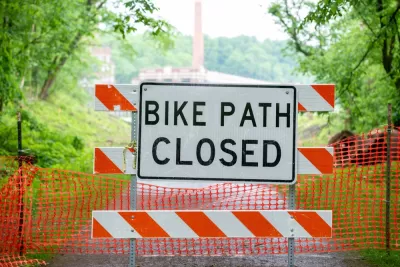
Houston bike activists are calling on the city to improve safety on bike trails, particularly when it comes to marking trail closures and construction areas, after the death of a cyclist last week, reports Dug Begley in the Houston Chronicle. Matthew Ledvina died after being found sprawled in the middle of the White Oak Trail with his bicycle and orange construction netting nearby.
While the cause of Ledvina’s death is as yet unclear, other Houston cyclists say trail closures are often poorly marked and difficult to see at night. “Tuesday evening, five days after the crash, the netting had been adorned with strips of yellow caution tape and a homemade sign warning of the danger.” Local cyclists and walkers were observed ignoring the netting to avoid the detour.
Begley adds that “Wednesday, after cyclists raised concerns and the city and county were asked about the design of the closing, workers placed reflective warning barriers commonly used on streets along the trail as an extra measure where the path is blocked.”
Begley points out that there are no standardized regulations for closures or detours on bike and pedestrian trails, with only a brief mention of signage for bike trail closures in the city’s design manual. “‘There seems to be a complete dearth of regulations for signage, warnings and other laws,’ said Charlie Thomas, a Houston lawyer who often represents cyclists injured in crashes, as part of the national Bike Law Network.”
FULL STORY: White Oak Trail cycling death prompts questions on trail closings

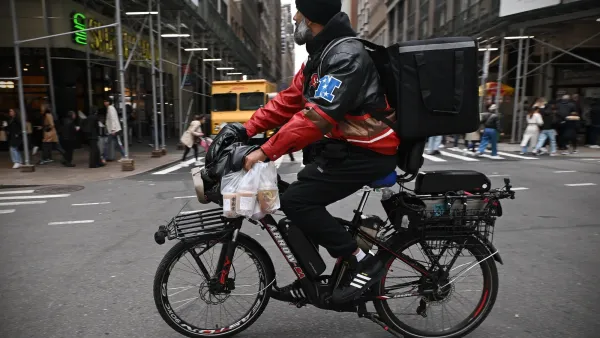
Study: Delivery Workers Are the Safest Cyclists on NYC Roads
A new study shows that delivery workers are more likely to stop at red lights and obey traffic rules than recreational or commuter riders.
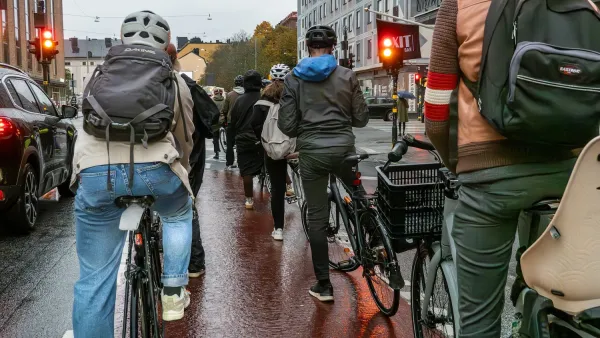
Cyclists may be Right to run Stop Signs and Red Lights. Here’s why
One researcher argues that the Idaho stop might not be such a bad idea after all.

The 5 Safest Cities for Cyclists in America — and What They Have in Common
Cities with low fatality rates for people on bikes have made strong commitments to building safe, protected bike networks and supporting Complete Streets.

Planetizen Federal Action Tracker
A weekly monitor of how Trump’s orders and actions are impacting planners and planning in America.

The state-sanctioned urbicide of Austin
People don’t kill cities. Freeways do.

US to reduce Colorado River water deliveries to Mexico
A new Colorado Treaty amendment reduces Mexico’s Colorado River water allocation by 250,000 acre feet.

5 New England states march closer to 800 megawatt wind energy project
Securing federal approval for the project may be complicated under the Trump administration, which has historically been hostile towards domestic wind power.

Baltimore to break ground on $50 million Transit Priority Project
The project will bring faster bus trips, safer streets and better bike connections to Baltimore.

Airbnb launches $250 million 'last-dollar financing' housing accelerator, makes first investment in Austin
The company will put $6.4 million towards affordable housing development in Texas’ capital.

FREE Course: Walkable City 1: Why Walkability?
After describing his path towards focusing on walkability as the essence of good planning, Jeff Speck marches through his five principal reasons for making more walkable places.
Reinventing Malls: Planning Alchemy—Turning Gray Fields Into Gold
The course focuses on the opportunities and imperatives that shape reinvention of mall sites.

Eagle County Government
Harvard University Graduate School of Design
Nashville Planning Department
The Architects Foundation
University of Cincinnati Online
The Pocatello Development Authority
The Urban Renewal Agency of the City of Pocatello
Journal of the American Planning Association