More cities and states around the country are recognizing the value of eliminating parking requirements.


The movement to eliminate minimum parking requirements and reform land use patterns in American cities—an issue widely covered by Planetizen and passionately championed by Donald Shoup, who pioneered the concept with his book The High Cost of Free Parking—continues to gather momentum as more policymakers and community leaders understand the benefits of reducing parking mandates and encouraging denser, transit-oriented development that reduces sprawl, limits the need for personal vehicles, and puts daily needs within reach of most citizens. Robert Steuteville describes the growing movement in the Congress for New Urbanism’s Public Square.
According to Catie Gould of the Sightline Institute, while the movement began in downtown cores, “We are seeing a rapid rise in the number of cities eliminating all parking mandates, citywide. Some examples in the news lately include Anchorage Alaska, which covers an area larger than Rhode Island, and San Jose, California, home to a million people.”
As parking reform grows to be seen as more than just a local issue that impacts housing costs, climate resilience, and urban development patterns, some states are taking action as well. “California and Oregon adopted statewide reform in the second half of 2022, and a handful other states are considering similar legislation—some in other parts of the US.”
Steuteville draws attention to another key component of parking reform: curb management. “This issue is critical in communities where empty parking spaces at the curb are scarce. Cities should set the price of curbside parking at a level that maintains one or two open parking spaces on every block, at most times,” according to economist and planner Patrick Siegman, who says this type of parking pricing scheme reduced vehicle miles traveled in downtown Berkeley, California by 693,000 miles per year. Siegman also suggests ‘parking benefit districts,’ which keep parking revenue in the community and use it to enhance neighborhood services.
Steuteville points out that developers have not stopped building parking altogether. But eliminating strict, uniform requirements lets developers build based on market demand and reduce their construction costs. “Local officials trying to encourage more housing supply are increasingly seeing parking policy as a means toward that goal—with little cost and substantial benefit.”
FULL STORY: Parking reform is snowballing

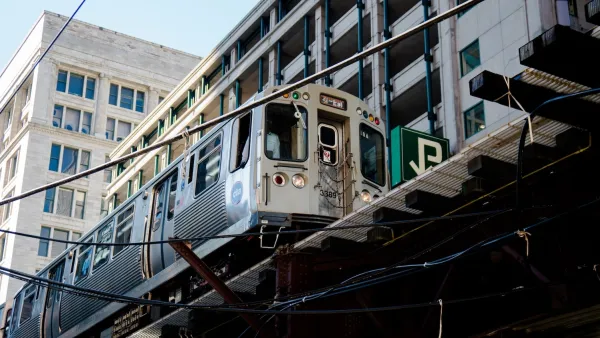
Illinois ‘People Over Parking Act’ Bans Parking Requirements Near Transit
The new law could unlock denser, more affordable housing development near train and bus lines.

Maps: How Much of Your City is Parking?
The percentage of land dedicated to parking in the central districts of major U.S. cities ranges from 4 percent to as much as 42 percent.
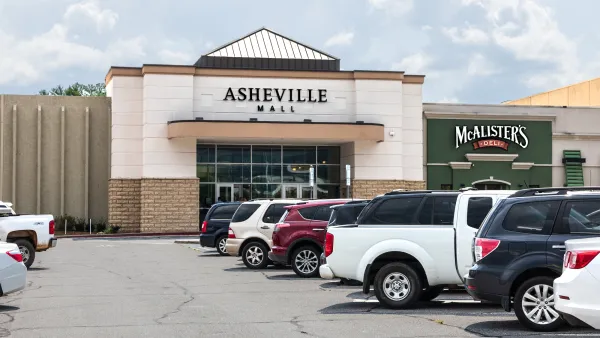
Asheville reconsiders parking minimums as surface parking eats up over a third of downtown real estate
Housing advocates say parking requirements are unnecessary and induce sprawl.

The state-sanctioned urbicide of Austin
People don’t kill cities. Freeways do.

US to reduce Colorado River water deliveries to Mexico
A new Colorado Treaty amendment reduces Mexico’s Colorado River water allocation by 250,000 acre feet.

New Jersey’s second-largest city bans standalone data centers
Jersey City will continue to allow co-location facilities, such as those meant for research institutions that store their own data.

Amtrak not solely to blame for New Jersey commuter rail's unreliability, report finds
A new study from the Garden State Initiative found that NJ Transit’s budget grew 20% across a 4 year period, but reliability declined significantly over the same period.

EPA erases limits on planet-warming pollution from power plants
Under Monday’s plan, power plants would still have some limits on how much mercury, arsenic and other contaminants they can emit.

Phoenix announces new on-demand transit service, more frequent RAPID buses
Both new services will launch in October, and are part of Phoenix's Project Effective Access Solutions for Easing Congestion.

FREE Course: Walkable City 1: Why Walkability?
After describing his path towards focusing on walkability as the essence of good planning, Jeff Speck marches through his five principal reasons for making more walkable places.
Reinventing Malls: Planning Alchemy—Turning Gray Fields Into Gold
The course focuses on the opportunities and imperatives that shape reinvention of mall sites.

Eagle County Government
Harvard University Graduate School of Design
Nashville Planning Department
The Architects Foundation
University of Cincinnati Online
The Pocatello Development Authority
The Urban Renewal Agency of the City of Pocatello
Journal of the American Planning Association