Thanks in part to a state tax credit created in the early 2000s, downtown Dallas is set to create roughly 1,500 new housing units by converting office buildings to residential uses.



The office-to-residential conversion trend continues with a series of adaptive reuse projects in downtown Dallas that will bring roughly 1,500 new housing units to the area, per a story by Tucker Wells in the Dallas Business Journal. The population—and the median income—of the neighborhood is projected to grow from 6,000 to 8,000 people.
For downtown Dallas’ high-rise office buildings, adaptive reuse isn’t a new concept. According to Wells, “Dallas started to ‘stack uses’ into these 1980s-built Texas towers roughly 20 years ago. That was partly because of the stack of empty buildings in the city, but also due to a state historic tax credit that came online at the same time, according to Jennifer Picquet-Reyes, principal at Merriman Anderson Architects.” Developers began introducing hotels, restaurants, and upscale residences as a way to boost the downtown economy.
In addition to creating a mixed economy, “The growth of Downtown Dallas could end up culminating in the preservation of historic buildings through adaptive-reuse projects. ”
Read the full story: Downtown Dallas set to experience renaissance with nearly 1,500 new residential units in the pipeline

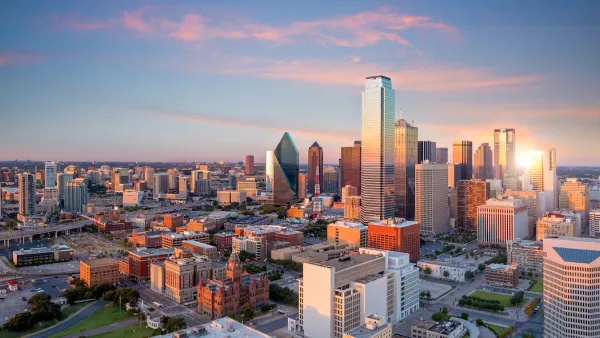
Adaptive Reuse Successes in Dallas
The rise in office vacancies is fueling a boom in adaptive reuse projects.
New Jersey affordable housing requirements spur infill development across the state
A 50-year-old law continues to reshape development around housing goals.
NYC building scare highlights the complexity of adaptive reuse
A near-collapse at the former Pfizer headquarters raised concerns about the office-to-housing project.

Planetizen Federal Action Tracker
A weekly monitor of how Trump’s orders and actions are impacting planners and planning in America.

The state-sanctioned urbicide of Austin
People don’t kill cities. Freeways do.

Colorado’s Largest Data Center Could Rise Next to Homes — Without a Public Hearing
The proposed campus would consume 11 times the power of Denver International Airport; as it has across the country, opposition mounts.
Raised interest rates may kill financially vulnerable construction projects
The chief economist at ConstructConnect warns that if construction project owners are negatively impacted by the raised rates, it could result in delayed payments to contractors.
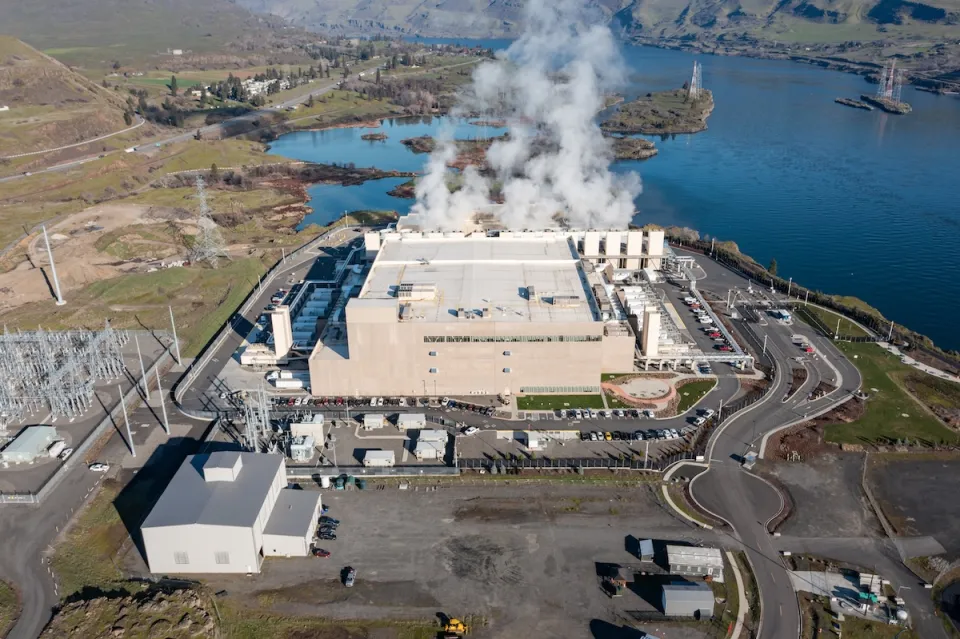
Data centers are consuming nearly 25% of Oregon’s power
The state has 111 data centers, with 32 more either planned or under construction.

A third of Texas cities must update their zoning codes to comply with new housing law
Texas municipalities are now required to allow manufactured housing in at least one residential zoning district.

FREE Course: Walkable City 1: Why Walkability?
After describing his path towards focusing on walkability as the essence of good planning, Jeff Speck marches through his five principal reasons for making more walkable places.
Reinventing Malls: Planning Alchemy—Turning Gray Fields Into Gold
The course focuses on the opportunities and imperatives that shape reinvention of mall sites.

Greater Baltimore Committee
Eagle County Government
Harvard University Graduate School of Design
The Architects Foundation
University of Cincinnati Online
The Pocatello Development Authority
The Urban Renewal Agency of the City of Pocatello
Journal of the American Planning Association