Residents of the Bayview neighborhood say they support new housing, but object to a proposed building that would replace one of the area’s only green spaces.



Tensions over a proposed housing development in the Bayview neighborhood of San Francisco highlights the Bay Area’s conflicting housing and conservation priorities, writes Jessica Wolfrom in the San Francisco Examiner.
With an outsized homeless crisis and dire housing shortage, The City must rapidly increase its affordable housing stock. But as a place that prides itself on its green values and ambitious climate goals, protecting and enhancing the last remaining open spaces is critical for storing carbon, fostering biodiversity and improving the health outcomes of its residents.
An application for a five-story residential building on a now-vacant hillside, which will likely be approved through the state’s SB9 bill, is meeting with resistance from local residents, who say the project would destroy local green space and contribute no affordable housing. Losing one of the only green spaces within miles could contribute to pollution and worsened public health in a neighborhood already plagued by higher air pollution rates than other parts of the city. “Because of its industrial setting, Bayview’s residents can, on average, expect to live 14 years less than their counterparts in Russian Hill, according to The City’s health department, and residents suffer from chronic diseases, including diabetes, asthma and heart failure, at much higher rates than the rest of San Francisco.”
Read the full story: Bayview residents want more housing. Just not on this hillside

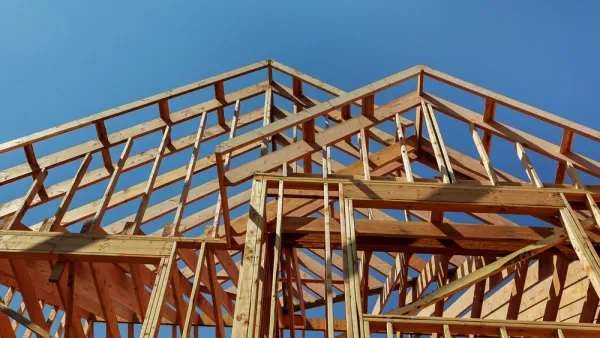
Housing Construction Slowest at Both Ends of Wealth Spectrum
Communities with the slowest rates of new housing construction are either heavily undervalued, leading developers to avoid them, or extremely wealthy, giving residents leverage to employ zoning and land use to block development.
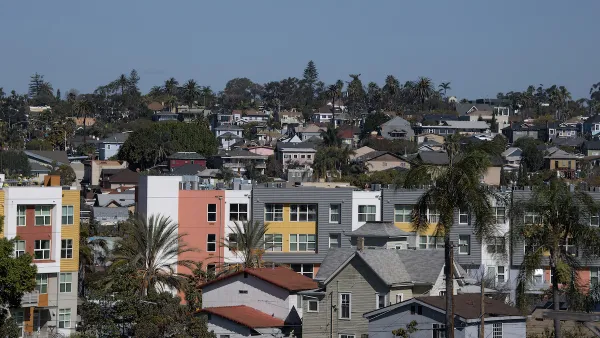
Which San Diego County Cities Are Building New Housing?
Chula Vista permitted the most new housing units per capita, while El Cajon is adding the least.

Robotaxi Charging Lots Could Complicate San Francisco Housing Development
Multiple sites slated for housing development are now being turned into charging and storage lots for autonomous vehicles, making housing an unintended victim of the robotaxi revolution.

Planetizen Federal Action Tracker
A weekly monitor of how Trump’s orders and actions are impacting planners and planning in America.

California plans to bury El Niño’s downpour
If the state plays its cards right, it may be able to store a billion acre-feet of El Niño’s water in aquifers.

Desperate measures: Advocates weigh draining Lake Powell to fill Colorado River
Draining the reservoir could reduce evaporation losses by a couple hundred thousand acre-feet.

California city breaks ground on transit connector
The project includes three mobility hubs and a pedestrian bridge.

After public outcry, Massachusetts city releases housing development tracker
Cambridge’s tracker currently shows 250 housing projects in various stages of development.

40 years after approval, Chicago breaks ground on new park
The park honors Jean Baptiste Point du Sable, the city’s first permanent non-native settler.

FREE Course: Walkable City 1: Why Walkability?
After describing his path towards focusing on walkability as the essence of good planning, Jeff Speck marches through his five principal reasons for making more walkable places.
Reinventing Malls: Planning Alchemy—Turning Gray Fields Into Gold
The course focuses on the opportunities and imperatives that shape reinvention of mall sites.

City of Rosemead
Rutgers University, Edward J. Bloustein School of Planning and Public Policy
One Hundred Miles
Hunter College, City University of New York (CUNY)
The Architects Foundation
University of Cincinnati Online
City of Cambridge
Montrose County
The Pocatello Development Authority