The former headquarters of Humble Oil, a predecessor to Exxon, will be converted to apartments in Houston, after New York-based developers CMI Developers purchased the building with a plan for adaptive reuse.


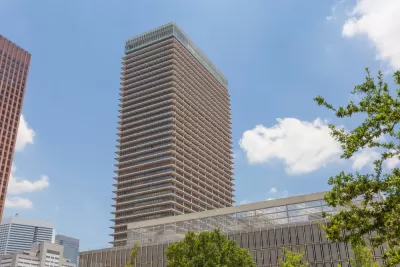
Developers with a track record of adaptive reuse have bought the former home of Exxon and its predecessor company, Humble Oil. If complete, the project could become one of the most high-profile examples of adaptive reuse in the country.
“The 1.2 million-SF building, located at 800 Bell, has been empty since the oil company relocated to its new campus about eight years ago,” according to an article published by Realty News Report.
“The buyer, a New York investment group affiliated with CMI Developers, has experience in historic redevelopment and apartment conversions. The tower was completed in 1962. The age and prominence of the Exxon building might enable the developers to obtain tax credits designated for redeveloping historic buildings,” according to the article.
Adaptive reuse has become a hot topic in commercial centers after the Covid-19 pandemic rearranged work and travel schedules, though not every vacant commercial building is ripe for conversion to residential uses, due to a number of regulatory and physical challenges.
More details of the history of the building, as well its future, are included in the source article below.
Read the full story: Exxon Skyscraper Sold for Apartment Conversion

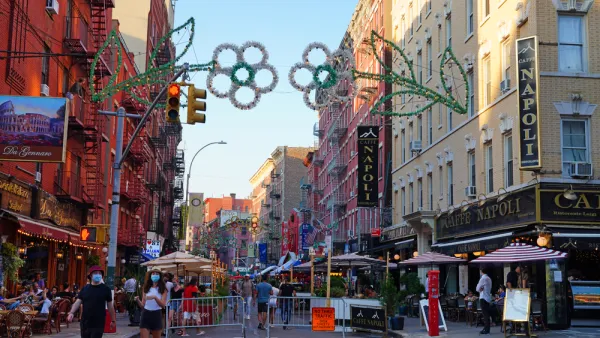
The Once-in-a-Generation Opportunity to Remake Downtown
Urban cores around the country were transforming into live, work, and play destinations before the pandemic. The pandemic was a setback for this transformation, but it could also be a rare opportunity. It’s up to city leadership to seize it.
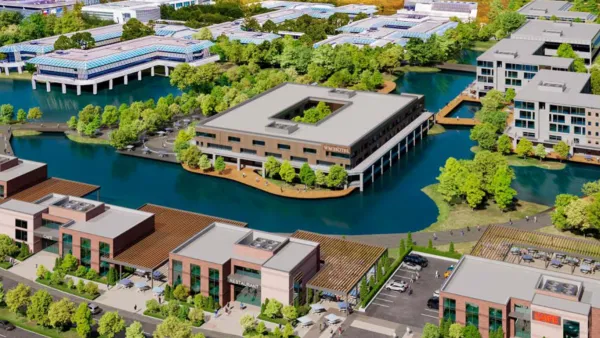
Houston Office Park Continues Adaptive Reuse Trend
The former ConocoPhillips campus, built as a self-sufficient complex complete with a lagoon and fitness center, will be repurposed into a mixed-use waterfront development.
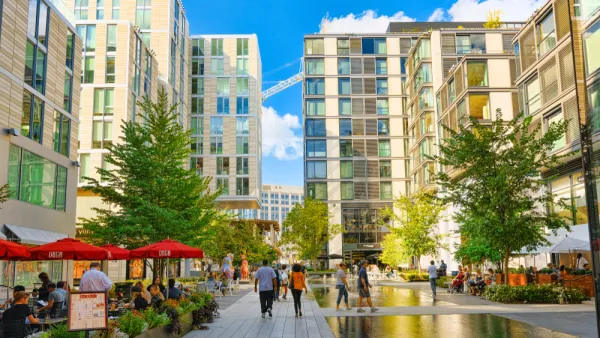
D.C. Could Lead the Downtown Office Conversion Trend
Many urban cores around the country are faced with increasing office vacancies concurrently with a housing affordability crisis caused, at least in part, by a lack of supply. D.C. is particularly primed for a wave of adaptive reuse.

Planetizen Federal Action Tracker
A weekly monitor of how Trump’s orders and actions are impacting planners and planning in America.

The state-sanctioned urbicide of Austin
People don’t kill cities. Freeways do.

Colorado’s Largest Data Center Could Rise Next to Homes — Without a Public Hearing
The proposed campus would consume 11 times the power of Denver International Airport; as it has across the country, opposition mounts.

Nation's most wind-powered state turns to coal as data centers increase energy demand
For the first time in decades, Iowa has increased its generation of coal power.
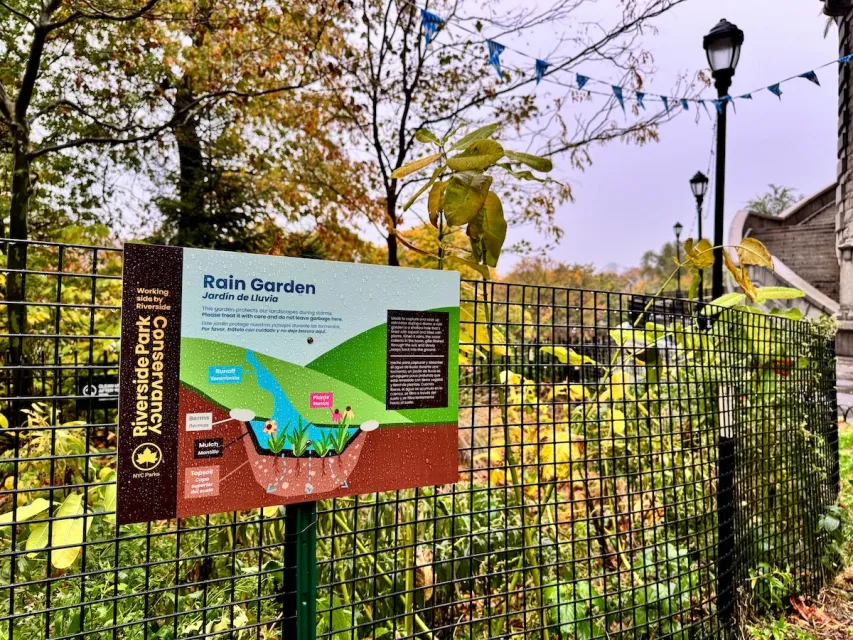
NYC cools commuters with city's first rain garden above a bus stop
New York City officials say the plants in the rain garden can absorb 16 gallons of rainwater during heavy storms.

Brightline West’s future may rely on $6 billion federal loan
The company has until Nov. 2 to make a $400 million equity investment into its proposed high-speed rail line.

FREE Course: Walkable City 1: Why Walkability?
After describing his path towards focusing on walkability as the essence of good planning, Jeff Speck marches through his five principal reasons for making more walkable places.
Reinventing Malls: Planning Alchemy—Turning Gray Fields Into Gold
The course focuses on the opportunities and imperatives that shape reinvention of mall sites.

Greater Baltimore Committee
Eagle County Government
Harvard University Graduate School of Design
The Architects Foundation
University of Cincinnati Online
The Pocatello Development Authority
The Urban Renewal Agency of the City of Pocatello
Journal of the American Planning Association