Urban cores around the country were transforming into live, work, and play destinations before the pandemic. The pandemic was a setback for this transformation, but it could also be a rare opportunity. It’s up to city leadership to seize it.


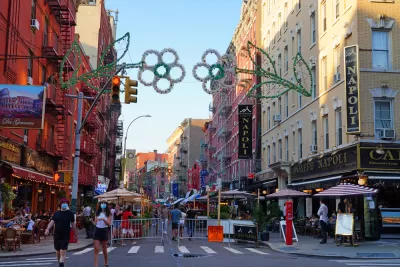
“The nation is in the midst of one of the biggest workforce shifts in generations,” writes the Washington Post Editorial Board, describing the effects of nearly three years of stay-at-home orders, working from home, and hybrid work schedules. “Many now have experienced what it is like to work from home and have discovered they prefer it.”
While much of the discussion in cities has focused on the fiscal distress caused by office vacancies, the loss of demand for retail uses in urban cores, declining transit ridership, and shifting commute patterns, less frequently addressed is the opportunity to, for lack of a better phrase, build back better—to turn the crisis of downtown vacancies into an opportunity to solve some of the challenges facing downtowns and regions since even before the pandemic.
The Washington Post writes to refocus the discussion on the opportunities, identifying two obvious opportunities—to return workers to offices and to convert commercial spaces to residential units and entertainment venues.
“This is a once-in-a-generation opportunity to reshape downtowns for the future. It should be a top priority of mayors and city councils around the country,” according to the editorial. “The goal is a ‘24/7’ downtown with ample work spaces, apartments, parks and entertainment venues that draw people in during the day and have a core of residents who keep the area vibrant after commuters go home.”
While that kind of downtown environment was becoming more common in many U.S. cities before the pandemic, many cities had a long way to go in attracting the residential population required to provide a “24-7” downtown.
According to the editorial, both priorities will face substantial challenges, overcome by political will and creative thinking. On the theme of workers returning to the office, D.C. Mayor Muriel Bowser recently called on President Joe Biden to return federal workers to offices for the sake of D.C.’s downtown. New York Mayor Eric Adams has also been a vocal proponent for returning to the office. According to the editorial, workers are already returning to the office, but it’s unlikely they will ever return to pre-pandemic levels. For the foreseeable future, downtowns will be oversupplied with office uses.
So adaptive reuse will be necessary. The editorial identifies a growing interest by developers to begin conversion projects, but multiple hurdles remain. The Washington Post suggests specific actions that can make the most of the opportunity, including setting clear goals for new residents in downtown, speeding up permitting for adaptive reuse projects, creating new financing mechanisms, and thinking beyond housing. More detail on each of these suggestions are available in the source article below.
FULL STORY: Downtowns are lifeless. It’s a once-in-a-generation chance to revive them.

Surveying the Rising Trend of Office-to-Residential Conversions
With office vacancies climbing and a stubborn supply crunch driving up the cost of housing, some downtowns have emerged at the forefront of a new wave of adaptive reuse.
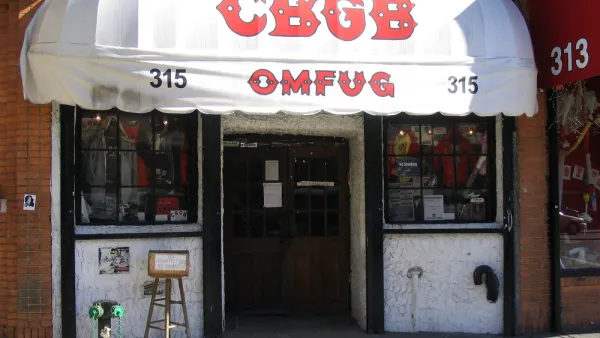
Opinion: Lower Rents Will Give Downtown Spaces Back to the ‘Weirdos’
Introducing the “CBGB theory of city planning.”
Downtown San Francisco Still Looking for a Post-Pandemic Comeback
“Downtown on the Brink” reads the headline of a recent San Francisco Chronicle feature.

Planetizen Federal Action Tracker
A weekly monitor of how Trump’s orders and actions are impacting planners and planning in America.

The state-sanctioned urbicide of Austin
People don’t kill cities. Freeways do.

US to reduce Colorado River water deliveries to Mexico
A new Colorado Treaty amendment reduces Mexico’s Colorado River water allocation by 250,000 acre feet.

Mamdani overhauls NYC's Vision Zero plan with 100 new policy goals
The overhaul aims to reduce traffic deaths and make streets safer for pedestrians, cyclists and drivers through lower speed limits, new safety infrastructure and more.

Amtrak not solely to blame for New Jersey commuter rail's unreliability, report finds
A new study from the Garden State Initiative found that NJ Transit’s budget grew 20% across a 4 year period, but reliability declined significantly over the same period.

EPA erases limits on planet-warming pollution from power plants
Under Monday’s plan, power plants would still have some limits on how much mercury, arsenic and other contaminants they can emit.

FREE Course: Walkable City 1: Why Walkability?
After describing his path towards focusing on walkability as the essence of good planning, Jeff Speck marches through his five principal reasons for making more walkable places.
Reinventing Malls: Planning Alchemy—Turning Gray Fields Into Gold
The course focuses on the opportunities and imperatives that shape reinvention of mall sites.

Eagle County Government
Harvard University Graduate School of Design
Nashville Planning Department
The Architects Foundation
University of Cincinnati Online
The Pocatello Development Authority
The Urban Renewal Agency of the City of Pocatello
Journal of the American Planning Association