The legislation requires cars to keep four feet away from cyclists and other “vulnerable” road users and eases the process for lowering speed limits on state-owned roads.


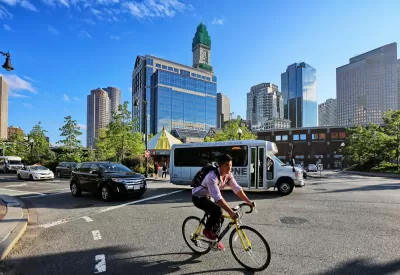
A new Massachusetts law requires drivers to remain four feet away from pedestrians, cyclists, and other “vulnerable users,” reports Taylor Dolven in the Boston Globe. In 2022, 10 cyclists and 99 pedestrians were killed by vehicles in Massachusetts, Dolven points out.
The law was signed by Governor Charlie Baker on Monday. Advocates say defining vulnerable road users sets “a standard of how motorists need to behave when they’re sharing public space.” The law also requires large state vehicles to install safety devices and gives cities the right to ask for speed limit changes on state-owned roads in their municipality.
As Dolven explains, “Trucks owned or leased by the state will be required to install devices to make it easier for drivers to see vulnerable road users and side guards to prevent cyclists and others from being run over by 2023. Trucks contracted by the state must have the same safety features by 2025.”
Read the full story: Pedestrians, cyclists gain protections with new law meant to reduce traffic deaths

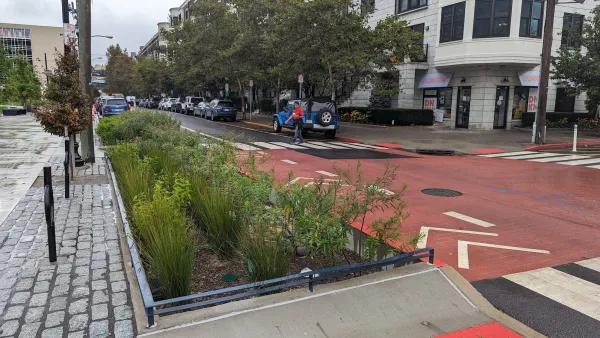
Hoboken's $20 Vision Zero fix
The New Jersey city eliminated traffic deaths for the last nine years in a row.
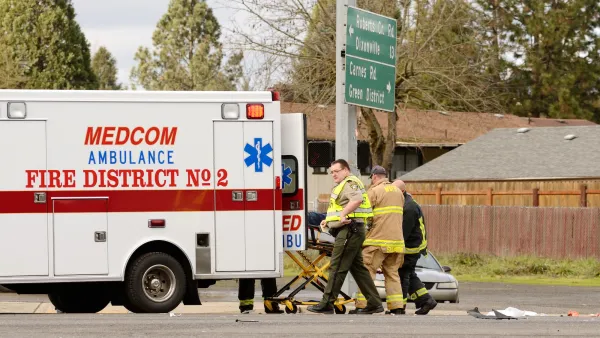
'Dangerous by Design' 2026 report highlights 72% increase in pedestrian deaths since 2009
Although US traffic deaths dropped in the last two years, the number of people killed on US roads remains much higher than two decades ago.
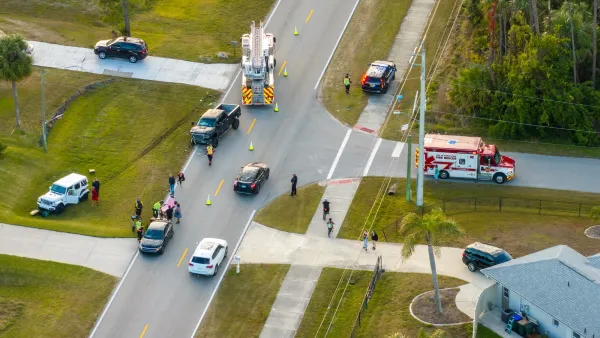
Pedestrian Deaths Fell by Largest Percentage in 15 Years, but Remain Above Pre-Pandemic Levels
After a spike in deaths during the Covid-19 years, road deaths fell to 3,024 in the first half of 2025.

Planetizen Federal Action Tracker
A weekly monitor of how Trump’s orders and actions are impacting planners and planning in America.

California plans to bury El Niño’s downpour
If the state plays its cards right, it may be able to store a billion acre-feet of El Niño’s water in aquifers.

Chicago breaks ground on $3 billion megadevelopment
The new neighborhood, titled Foundry Park, will one day host 3,700 residences.

Satanic Place Names
From streams and lakes to valleys and canyons, I mapped more than 1,000 places named after the Devil.

California High-Speed Rail Authority CEO resigns after $600,000 scandal
Under Ian Choudri, the authority used taxpayer dollars to fund first class flights and trips to nightclubs.

Want to study the Missouri River? Soon, you may need unanimous approval from 10 states
Legislation would require 10 governors’ permission to study or build projects moving water outside the basin.

FREE Course: Walkable City 1: Why Walkability?
After describing his path towards focusing on walkability as the essence of good planning, Jeff Speck marches through his five principal reasons for making more walkable places.
Reinventing Malls: Planning Alchemy—Turning Gray Fields Into Gold
The course focuses on the opportunities and imperatives that shape reinvention of mall sites.

City of Rosemead
Rutgers University, Edward J. Bloustein School of Planning and Public Policy
One Hundred Miles
Hunter College, City University of New York (CUNY)
The Architects Foundation
University of Cincinnati Online
City of Cambridge
Montrose County
The Pocatello Development Authority