The city could ban the planting of “nonfunctional” grass in new developments, but would stop short of regulating lawns and golf courses.


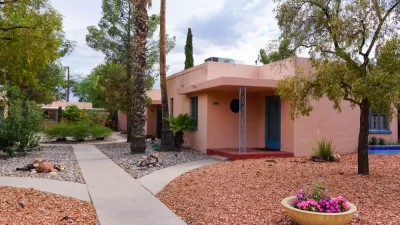
A Tucson proposal could ban “nonfunctional” grass planting in some developments, reports Tony Davis in the Arizona Daily Star, following in the footsteps of cities like Las Vegas as the West’s water shortage continues.
Councilman Kevin Dahl, who supports the legislation, defined nonfunctional grass as “any irrigated grass area not providing functional use, such as grass along streets in strip malls, shopping centers, and businesses, and also turf managed by an HOA (a homeowners association) that does not provide recreational value for people or pets.”
Davis notes that the ban would not extend to new single-family neighborhoods, parks, school playgrounds, or golf courses, which some critics say doesn’t go far enough. Others worry that the vague and subjective definition of “nonfunctional” could make the ban difficult to enforce.
Tucson officials are working with other cities in the region to come up with a water conservation plan by November 15, but have not signed on to the current plan yet. “Among other things, the proposal now calls for a program ‘to reduce the quantity of nonfunctional turf grass by 30% through replacement with drought- and climate-resilient landscaping, while maintaining vital urban landscapes and tree canopies that benefit our communities, wildlife, and the environment.’”
In Southern Nevada, in the water district that includes Las Vegas, development codes prohibit “any grass in new construction of commercial developments and the front yards of new single-family home developments.” In Colorado, the Castle Rock town council voted to ban grass lawns in the front yards of new homes and limit grass turf lawns to 500 square feet in backyards, just a month after Aurora passed a similar law.
Read the full story: "Ornamental"grass could soon be banned in some Tucson developments

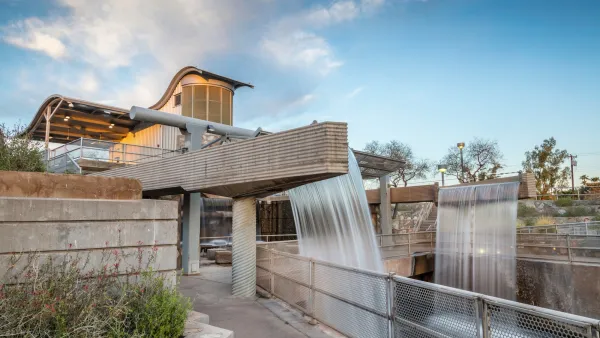
Arizona prepares to tap into emergency water supply as it braces for Colorado River cuts
The Salt River Project has been collecting nearly 4 million acre-feet of water since the mid-1990s.
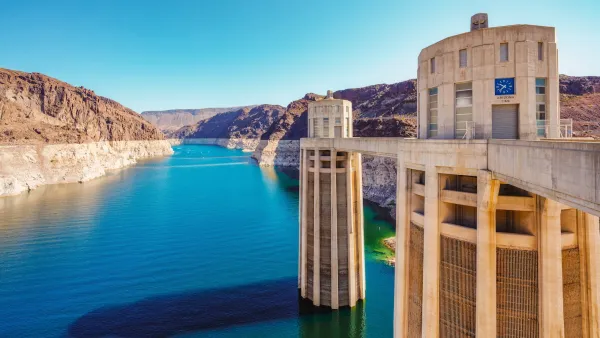
Federal proposal calls for mandatory water cuts to Arizona, California and Nevada
The Bureau of Reclamation stepped in after states failed to come to an agreement over Colorado River water use reductions.
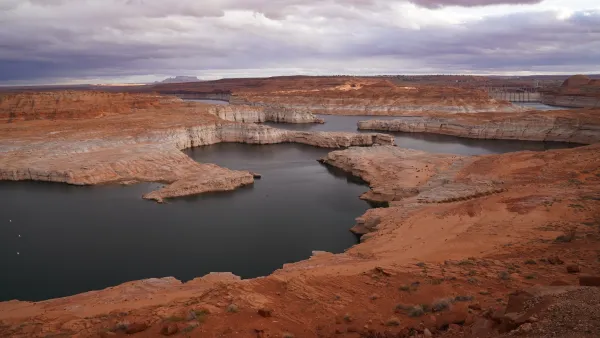
Lake Powell reaches lowest water level on record
Reservoirs along the Colorado River are seeing some of the lowest water flows ever, prompting questions about the future of communities in the basin.

Planetizen Federal Action Tracker
A weekly monitor of how Trump’s orders and actions are impacting planners and planning in America.

The state-sanctioned urbicide of Austin
People don’t kill cities. Freeways do.

US to reduce Colorado River water deliveries to Mexico
A new Colorado Treaty amendment reduces Mexico’s Colorado River water allocation by 250,000 acre feet.

Nation's most wind-powered state turns to coal as data centers increase energy demand
For the first time in decades, Iowa has increased its generation of coal power.

NYC cools commuters with city's first rain garden above a bus stop
New York City officials say the plants in the rain garden can absorb 16 gallons of rainwater during heavy storms.

Brightline West’s future may rely on $6 billion federal loan
The company has until Nov. 2 to make a $400 million equity investment into its proposed high-speed rail line.

FREE Course: Walkable City 1: Why Walkability?
After describing his path towards focusing on walkability as the essence of good planning, Jeff Speck marches through his five principal reasons for making more walkable places.
Reinventing Malls: Planning Alchemy—Turning Gray Fields Into Gold
The course focuses on the opportunities and imperatives that shape reinvention of mall sites.

Eagle County Government
Harvard University Graduate School of Design
Nashville Planning Department
The Architects Foundation
University of Cincinnati Online
The Pocatello Development Authority
The Urban Renewal Agency of the City of Pocatello
Journal of the American Planning Association