The builder is relying on demand for lower-cost, transit-oriented housing units for residents who don’t own private cars, opting to provide only seven parking spaces for a 37-unit building.



A development planned for downtown Fresno will include less parking than would normally be expected, following the recent trend to reduce the amount of parking mandated and built into new construction. As Danielle Bergstrom reports for Fresnoland, the project is remarkable even for Fresno, where parking requirements are lax but many developers fear that potential residents will lose interest without parking included with their units.
“Pro-housing activists have long pushed for cities to reduce or eliminate parking requirements on housing projects near transit or in walking distance to major amenities for the added cost it can bring to a project, making some infeasible to finance.” Now, a new state law bars cities from enforcing parking requirements near transit stations, letting developers choose how much parking to build based on their own estimates of market conditions.
“The Fresno Planning Commission approved a 37-unit housing development on Broadway and Stanislaus streets – sandwiched between the Mayflower Lofts and Kepler School’s recess yard – with just seven parking spaces,” Bergstrom writes. The decision was appealed by a neighboring property owner who cited concerns about added pressure on local street parking.
Read the full story: New downtown Fresno housing development tests parking expectations

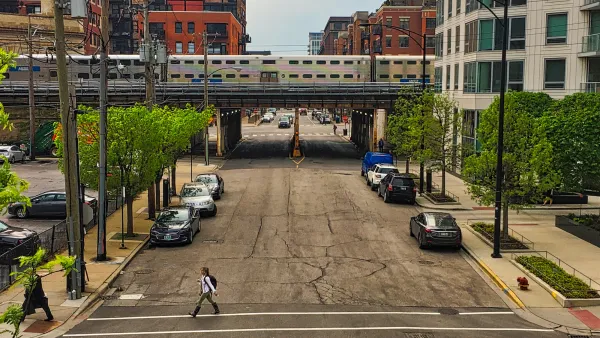
Chicago eliminates parking requirements near transit
In 2025, Illinois barred cities from mandating parking near train and bus stations.
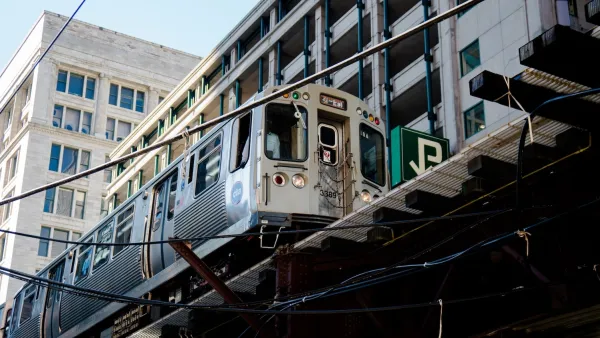
Illinois ‘People Over Parking Act’ Bans Parking Requirements Near Transit
The new law could unlock denser, more affordable housing development near train and bus lines.
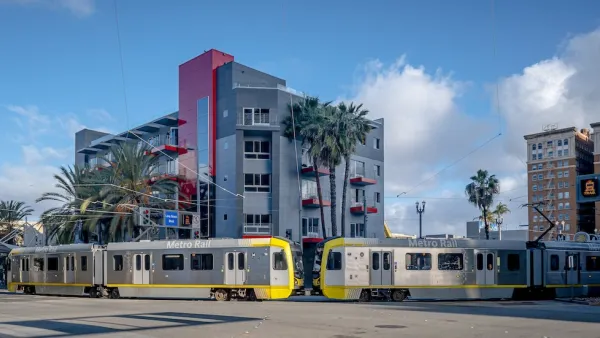
California Law Bars Parking Mandates Near Transit
Local governments are prohibited from requiring parking spaces at new developments where transit is readily available.

Planetizen Federal Action Tracker
A weekly monitor of how Trump’s orders and actions are impacting planners and planning in America.

The state-sanctioned urbicide of Austin
People don’t kill cities. Freeways do.

Colorado’s Largest Data Center Could Rise Next to Homes — Without a Public Hearing
The proposed campus would consume 11 times the power of Denver International Airport; as it has across the country, opposition mounts.

Judges permit Denver to divert 77,000 acre feet from the Colorado River for reservoir expansion
Overuse and climate change have caused the Colorado River’s water levels to plummet.

Amtrak, CN end decades-long dispute with eight-year agreement
The new operating agreement establishes an updated framework for the companies to work together, including processes to resolve disputes.

Raised interest rates may kill financially vulnerable construction projects
The chief economist at ConstructConnect warns that if construction project owners are negatively impacted by the raised rates, it could result in delayed payments to contractors.

FREE Course: Walkable City 1: Why Walkability?
After describing his path towards focusing on walkability as the essence of good planning, Jeff Speck marches through his five principal reasons for making more walkable places.
Reinventing Malls: Planning Alchemy—Turning Gray Fields Into Gold
The course focuses on the opportunities and imperatives that shape reinvention of mall sites.

KFH Group Inc.
Greater Baltimore Committee
Eagle County Government
The Architects Foundation
University of Cincinnati Online
The Pocatello Development Authority
The Urban Renewal Agency of the City of Pocatello