An analysis of city-issued permits shows that homeowners in gentrified wards are building accessory dwelling units at much higher rates than those in less well-off communities.



In an evaluation of Chicago’s accessory dwelling unit (ADU) program, “The city’s Housing Department ran the data and found, at this early stage, the program is working in some ways but is challenged in others. It might just be adding expensive units in already expensive neighborhoods.”
As David Roeder reports for the Chicago Sun-Times, The program began as an experiment in “gently” expanding the housing supply to lower rents and create a revenue source for families. The city found that the program has not made an impact in neighborhoods with many vacant lots, nor are ADUs technically permitted to operate as short-term rental units to assuage concerns about transient occupancy.
According to the analysis, “83% of the approved units are slated to go in zones on the North or Northwest sides,” the more affluent parts of the city. This means that “In places plagued by crime and disinvestment, little is happening with ADUs.”
According to Housing Commissioner Marisa Novara, the discrepancy comes as no surprise. “By itself, the program can’t do much about longstanding inequity in real estate. Owners with greater disposable incomes are investing in the units while being in a high-rent area creates an incentive to build.” And while the city has made some grants available for ADU projects, Steven Vance of the Chicago Cityscape real estate information service says it could do more to support ADU construction for homeowners who can’t afford the upfront costs.
Read the full story: City’s test of additional dwelling units finds most takers in gentrified wards

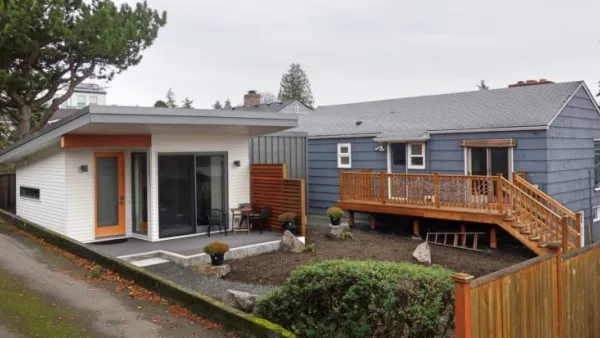
ADUs for Sale? San Diego Could Legalize Backyard Condos
As one of 25 proposed amendments, San Diego may soon allow accessory dwelling units to be bought and sold as individual homes.

Montana Judge Blocks Zoning Reforms
The decision reverses new laws once dubbed the ‘Montana Miracle.’
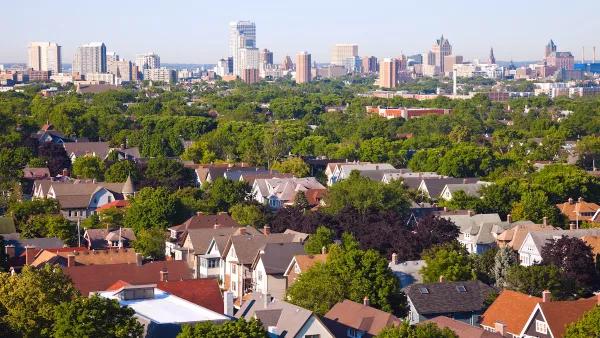
A Look at Milwaukee’s Zoning Reform Proposal
The ‘Growing MKE’ plan calls for allowing ADUs, reducing barriers to new construction, and expanding the types of housing available in the city’s residential areas.

Planetizen Federal Action Tracker
A weekly monitor of how Trump’s orders and actions are impacting planners and planning in America.

The state-sanctioned urbicide of Austin
People don’t kill cities. Freeways do.

US to reduce Colorado River water deliveries to Mexico
A new Colorado Treaty amendment reduces Mexico’s Colorado River water allocation by 250,000 acre feet.

Brightline West’s future may rely on $6 billion federal loan
The company has until Nov. 2 to make a $400 million equity investment into its proposed high-speed rail line.

LA Metro’s ultimatum: no extra buses for LA28 if federal funding isn’t imminently secured
If Metro does not provide additional buses, LA28 organizers will have to find a new way to manage Olympic traffic. LA28’s budget does not include a line item for transit.

Colorado’s Largest Data Center Could Rise Next to Homes — Without a Public Hearing
The proposed campus would consume 11 times the power of Denver International Airport; as it has across the country, opposition mounts.

FREE Course: Walkable City 1: Why Walkability?
After describing his path towards focusing on walkability as the essence of good planning, Jeff Speck marches through his five principal reasons for making more walkable places.
Reinventing Malls: Planning Alchemy—Turning Gray Fields Into Gold
The course focuses on the opportunities and imperatives that shape reinvention of mall sites.

Eagle County Government
Harvard University Graduate School of Design
Nashville Planning Department
The Architects Foundation
University of Cincinnati Online
The Pocatello Development Authority
The Urban Renewal Agency of the City of Pocatello
Journal of the American Planning Association