In Las Vegas, Denver, Philadelphia, and more, out of town newcomers have been driving up real estate prices by moving in from more expensive locations with the resources to outspend locals, according to analysis by the Business Journals.


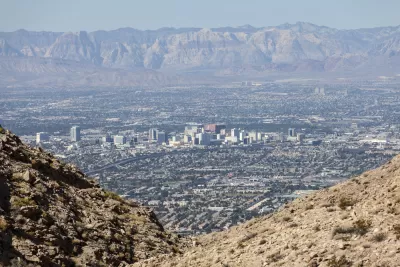
In a paywalled article for the Business Journals, Ashley Fahey shares data that reveals trends in domestic migration—namely from more expensive to less expensive metropolitan areas.
Fahey starts with the example of Las Vegas, and a pandemic influx of residents from the Los Angeles area:
Between Dec. 31, 2020, and July 31, 2022, the median home value of Clark County, Nevada, where Las Vegas is located, increased 44.6%, from $313,778 to $453,764, according to Zillow Group Inc. (Nasdaq: ZG) data.
Heading into (and during the first year of) the pandemic, Clark County saw the largest number of out-of-state relocations from a single county — Los Angeles County, California — than any other in the U.S., with 6,856 tax filers moving from Los Angeles to Clark counties in 2019 and 2020, according to an analysis of U.S. Census and Internal Revenue Service data by The Business Journals.
The data behind those paragraphs allows for more national analysis that might be worth the price of admission for some readers. While the Las Vegas to Los Angeles leads the list of largest out of state migration patterns in 2019 and 2020, next up are Prince George’s County, Maryland and Washington, D.C., followed by Lake County, Indiana and Cook County, Illinois; Hudson County, New Jersey and New York County, New York; and Maricopa County, Arizona and Los Angeles County.
Fahey’s conclusion after parsing all this data: the trends I migration seen in the early months of the pandemic might not have been new, but the pandemic did press pass forward—the counties and cities on the receiving end of these population shifts might have had more time to prepare if these changes had happened at a more normal pace.
FULL STORY: Tracking the housing impact of households moving from pricey coastal markets to boom cities


Measuring the Urban Exodus
New data reveals truths about one of the biggest questions to emerge from the pandemic: Did the public health risks and economic disruptions of 2020 and 2021 spur an urban exodus away from the urban cores of large metropolitan areas?
An Urbanist Agenda for Education
An opinion article by Angie Schmitt addresses the neglect of education policy in the urbanist political platform, and proposes two specific education policy goals for urbanists to get behind.
Comparing Downtown Recovery Across U.S. Cities
The Downtown Vitality Index measures how central cities are adjusting to post-pandemic conditions.

The state-sanctioned urbicide of Austin
People don’t kill cities. Freeways do.

US to reduce Colorado River water deliveries to Mexico
A new Colorado Treaty amendment reduces Mexico’s Colorado River water allocation by 250,000 acre feet.

New Jersey’s second-largest city bans standalone data centers
Jersey City will continue to allow co-location facilities, such as those meant for research institutions that store their own data.

Amtrak not solely to blame for New Jersey commuter rail's unreliability, report finds
A new study from the Garden State Initiative found that NJ Transit’s budget grew 20% across a 4 year period, but reliability declined significantly over the same period.

EPA erases limits on planet-warming pollution from power plants
Under Monday’s plan, power plants would still have some limits on how much mercury, arsenic and other contaminants they can emit.

Phoenix announces new on-demand transit service, more frequent RAPID buses
Both new services will launch in October, and are part of Phoenix's Project Effective Access Solutions for Easing Congestion.

FREE Course: Walkable City 1: Why Walkability?
After describing his path towards focusing on walkability as the essence of good planning, Jeff Speck marches through his five principal reasons for making more walkable places.
Reinventing Malls: Planning Alchemy—Turning Gray Fields Into Gold
The course focuses on the opportunities and imperatives that shape reinvention of mall sites.

Eagle County Government
Harvard University Graduate School of Design
Nashville Planning Department
The Architects Foundation
University of Cincinnati Online
The Pocatello Development Authority
The Urban Renewal Agency of the City of Pocatello
Journal of the American Planning Association