The new legislation will promote more development near transit in the city’s underserved neighborhoods and improve safety for pedestrians and other road users.



A press release from the Chicago mayor’s office announces the passage of the city’s Connected Communities Ordinance, which updates Chicago’s Transit-Oriented Development (TOD) ordinance to promote more equitable outcomes. “Designed to stimulate equitable development near public transit, the ordinance creates jobs by catalyzing investment near transit, makes streets safer for all Chicagoans who walk, bike, drive or roll their wheelchair, and promotes affordable housing options near transit.
Calling it “the most comprehensive and equity-focused update to the City’s transit-oriented development policy yet,” the release states that “Key goals of the Connected Communities Ordinance [include] facilitating more investment near transit on the South and West sides of the City and preventing displacement and promoting affordable housing options in transit-rich communities on the North and Northwest sides – all while making sidewalks and streets safer everywhere.”
The city first passed a transit-oriented development (TOD) policy in 2016, but an analysis found that 90 percent of projects that took advantage of TOD incentives were located in Chicago’s wealthier neighborhoods. The new ordinance implements the recommendations made in the 2021 Equitable Transit-Oriented Development (ETOD) Policy Plan. One key component of the policy is expanding incentives to more areas of the city, including more bus corridors.

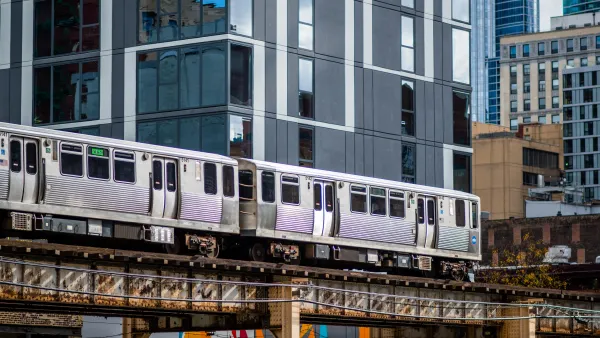
Expanding Chicago TOD Zones Could Boost Transit Ridership
Data indicates broadening the definition of transit-oriented zones to include more of the city would put housing within easy reach of transit for more residents and increase ridership.
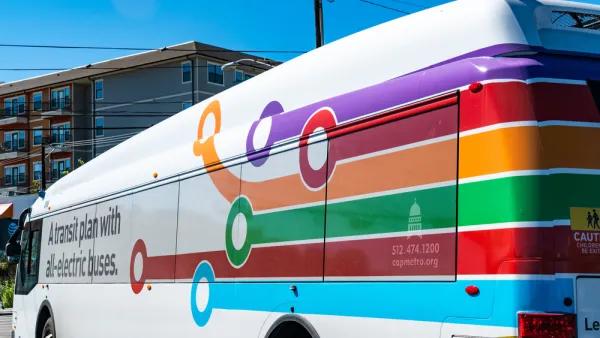
Austin Debates Parking Reforms Near TOD Projects
City officials are deciding how to change parking requirements for transit-oriented developments that are meant to discourage private car ownership.
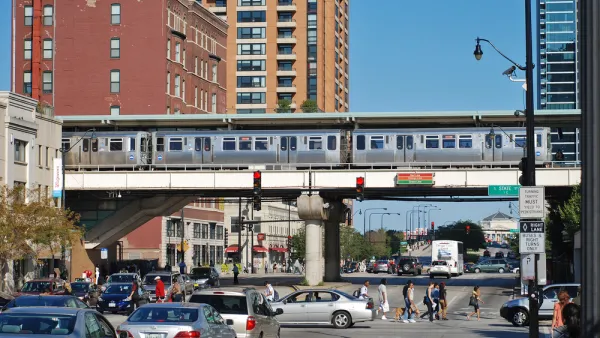
Proposed Chicago Ordinance Would Promote Affordable Housing Near Transit
The Equitable Transit-Oriented Development ordinance could advance equity and reduce car dependency, but the legislation faces resistance from some city council members.

Planetizen Federal Action Tracker
A weekly monitor of how Trump’s orders and actions are impacting planners and planning in America.

The state-sanctioned urbicide of Austin
People don’t kill cities. Freeways do.

US to reduce Colorado River water deliveries to Mexico
A new Colorado Treaty amendment reduces Mexico’s Colorado River water allocation by 250,000 acre feet.

LA Metro’s ultimatum: no extra buses for LA28 if federal funding isn’t imminently secured
If Metro does not provide additional buses, LA28 organizers will have to find a new way to manage Olympic traffic. LA28’s budget does not include a line item for transit.

Colorado’s Largest Data Center Could Rise Next to Homes — Without a Public Hearing
The proposed campus would consume 11 times the power of Denver International Airport; as it has across the country, opposition mounts.

5 New England states march closer to 800 megawatt wind energy project
Securing federal approval for the project may be complicated under the Trump administration, which has historically been hostile towards domestic wind power.

FREE Course: Walkable City 1: Why Walkability?
After describing his path towards focusing on walkability as the essence of good planning, Jeff Speck marches through his five principal reasons for making more walkable places.
Reinventing Malls: Planning Alchemy—Turning Gray Fields Into Gold
The course focuses on the opportunities and imperatives that shape reinvention of mall sites.

Eagle County Government
Harvard University Graduate School of Design
Nashville Planning Department
The Architects Foundation
University of Cincinnati Online
The Pocatello Development Authority
The Urban Renewal Agency of the City of Pocatello
Journal of the American Planning Association