Cargo bikes have proven an effective transport mode in cities around the world, but American women still hesitate to use them, citing safety concerns.


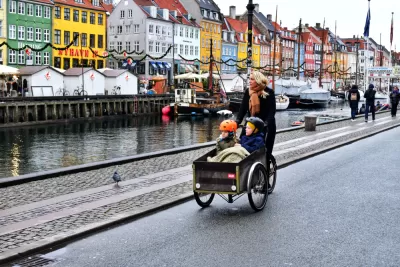
An article from Women Mobilize Women asks, “can cargo bikes close the gender mobility gap?”
“With vast gender differences impacting mobility choices, urban planners and researchers have been working to uncover workable solutions for closing the gap and ensuring women have the same transport opportunities as men.” Because women are more likely to ‘trip chain,’ cargo bikes can provide a useful option for transporting children, groceries, and other other household needs.
As the article explains, “The bikes’ added capacity for carrying kids, pets, or groceries makes trip chaining by bike easier, especially with newer bikes outfitted with e-motor capabilities. As their use has spread, they’ve proven to be an effective means of closing the gender mobility gap for women.”
The article provides examples from Zambia and Ghana, where cargo bikes have become an effective transportation tool for women. “Still, safety concerns and limited infrastructure has hindered uptake in the US, leaving cities there well behind the rapid growth seen in European cities. As much as cargo bikes can make trips via pedals a viable alternative to cars, women’s safety concerns especially around cars drove hesitancy.”
The article attributes this to a lack of comprehensive, safe bike infrastructure. “Women have shown themselves interested in alternative forms of mobility; now it’s up to officials to integrate them into the community.”
Read the full story: Can Cargo Bikes Close the Gender Mobility Gap?

New Uber Feature Lets Riders Request Women Drivers — and Vice Versa
The feature debuted in Saudi Arabia in 2019 and is now available in 41 countries where Uber operates.
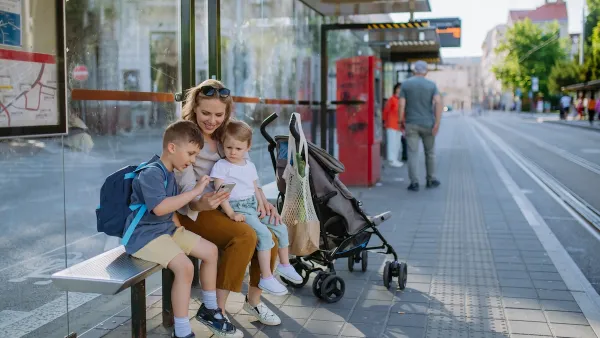
Are Mobility Hubs Child-Friendly?
‘Mobility hubs’ aim to make urban travel easier by connecting travel modes. Adding more services could make them more accessible and useful to women and families.

Turning a Gendered Lens on Transportation
People of different genders, ages, and abilities experience transportation differently. But policies aren’t designed that way.

Planetizen Federal Action Tracker
A weekly monitor of how Trump’s orders and actions are impacting planners and planning in America.

California plans to bury El Niño’s downpour
If the state plays its cards right, it may be able to store a billion acre-feet of El Niño’s water in aquifers.

Desperate measures: Advocates weigh draining Lake Powell to fill Colorado River
Draining the reservoir could reduce evaporation losses by a couple hundred thousand acre-feet.

Chicago voters approve permanent festival grounds, penalty for vacant property owners
Currently, major summer and fall festivals take over public parks for weeks at a time, drawing criticism from nearby residents

NYC votes to cut outdoor dining red tape, speed up permitting
New York City also voted to allow the Department of Transportation to begin work on urgent projects before notifying elected officials.

California appears to reject Prop. 45
The proposition would have expanded the projects that qualify for a streamlined environmental review, effectively paring down the California Environmental Quality Act.

FREE Course: Walkable City 1: Why Walkability?
After describing his path towards focusing on walkability as the essence of good planning, Jeff Speck marches through his five principal reasons for making more walkable places.
Reinventing Malls: Planning Alchemy—Turning Gray Fields Into Gold
The course focuses on the opportunities and imperatives that shape reinvention of mall sites.

City of Rosemead
Rutgers University, Edward J. Bloustein School of Planning and Public Policy
One Hundred Miles
Hunter College, City University of New York (CUNY)
The Architects Foundation
University of Cincinnati Online
City of Cambridge
Montrose County
The Pocatello Development Authority