A Burlington program is using grocery trolleys to remind residents that, for many of them, a grocery store is less than a mile away.



Pointing to the fact that 90 percent of Burlington residents live within 1,500 steps from a grocery store, Net Zero Vermont is encouraging people to walk, rather than drive, when making short grocery trips, according to a Burlington Free Press article by Kate O’Farrell.
To promote this concept, a program called Walk to Shop sells rolling trolleys designed to bring groceries home more efficiently. “Walk To Shop is working to show that many people live close to grocery stores and want to raise awareness and make walking to shop a possibility through their grocery trollies.”
O’Farrell describes the program, which started in 2021 with funding from the Vermont Agency of Transportation's 2020 Mobility and Transportation Innovation Grant. “The program sells two versions of trollies, a medium-sized trolley for $40 with a 40 pound capacity, and a larger size for $50 that can handle 50 pounds,” solving a key issue for shoppers. “The trollies encourage people to walk because even if you live close to a grocery store, lugging heavy bags is a roadblock that stops people from walking.”
Considering that “The U.S. Environmental Protection Agency reports that 10 billion miles are driven each year in the United States for trips under a mile,” Reducing the number of short trips taken by car can have a significant collective impact on greenhouse gas emissions, pollution, and congestion.
Read the full story: How a trip to the grocery store can be a tool for sustainability

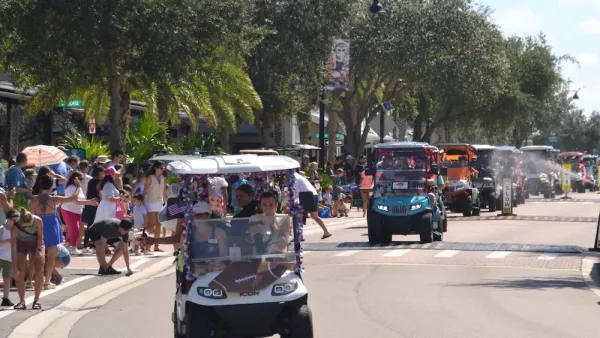
This Florida town gives residents a free golf cart with each new home
Babcock Ranch discourages driving with ample walking and rolling infrastructure and dense development that offers many of the services residents need within a short walk or ride.

“Nobody Walks Here. It’s Too Hot or Cold or Wet or Dry.”
How much does weather actually play into the choices people make about their travel behaviors?
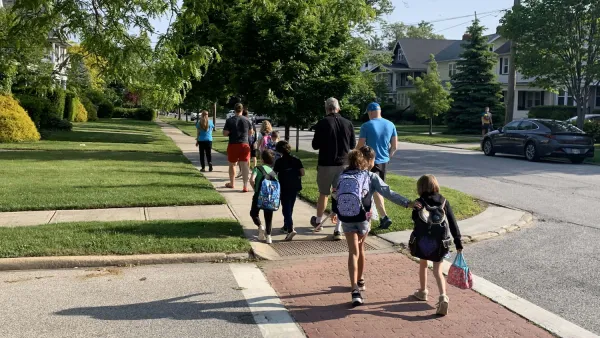
An Ohio School District is Known for its Walkability. A District Overhaul is Jeopardizing That.
Lakewood plans to close some schools and consolidate students to a centralized early education center, eliminating years of work that created safe walking routes to neighborhood schools.

Planetizen Federal Action Tracker
A weekly monitor of how Trump’s orders and actions are impacting planners and planning in America.
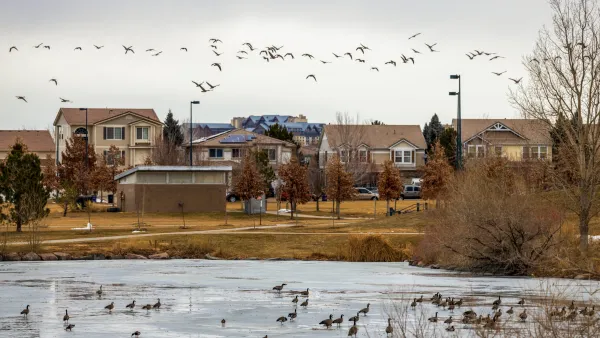
Colorado’s Largest Data Center Could Rise Next to Homes — Without a Public Hearing
The proposed campus would consume 11 times the power of Denver International Airport; as it has across the country, opposition mounts.

US to reduce Colorado River water deliveries to Mexico
A new Colorado Treaty amendment reduces Mexico’s Colorado River water allocation by 250,000 acre feet.

'This is going to be painful:’ Virginia stares down $1.7 billion funding gap for highway maintenance
The state may address the deficit by shifting $290 million from its construction budget to maintenance projects.
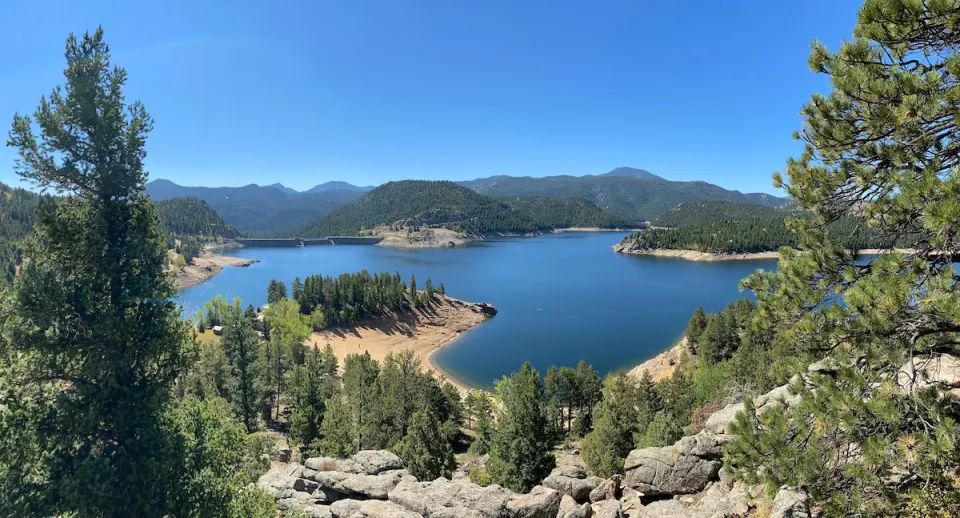
Judges permit Denver to divert 77,000 acre feet from the Colorado River for reservoir expansion
Overuse and climate change have caused the Colorado River’s water levels to plummet.
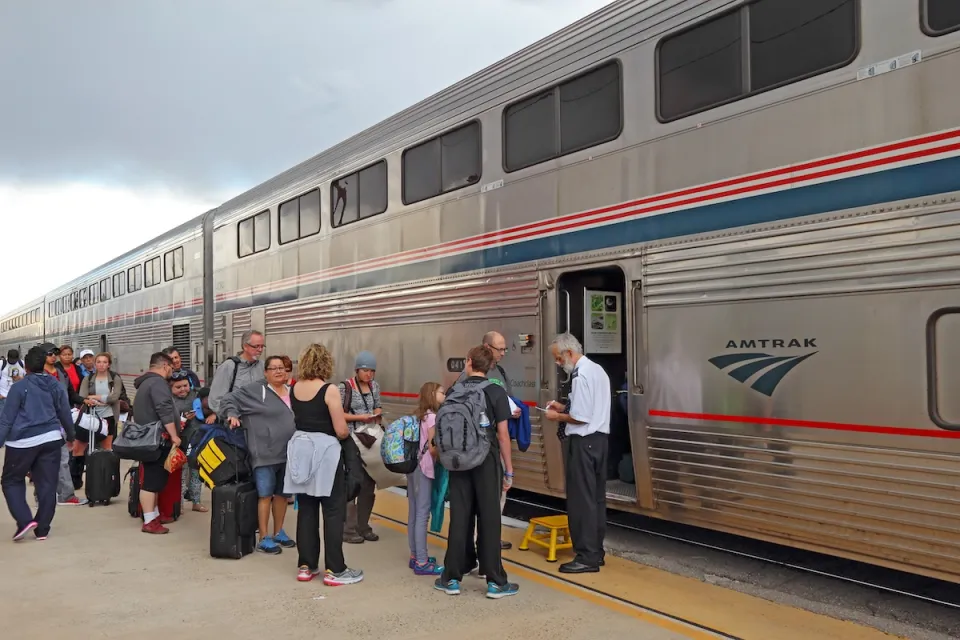
Amtrak, CN end decades-long dispute with eight-year agreement
The new operating agreement establishes an updated framework for the companies to work together, including processes to resolve disputes.

FREE Course: Walkable City 1: Why Walkability?
After describing his path towards focusing on walkability as the essence of good planning, Jeff Speck marches through his five principal reasons for making more walkable places.
Reinventing Malls: Planning Alchemy—Turning Gray Fields Into Gold
The course focuses on the opportunities and imperatives that shape reinvention of mall sites.

KFH Group Inc.
Greater Baltimore Committee
Eagle County Government
The Architects Foundation
University of Cincinnati Online
The Pocatello Development Authority
The Urban Renewal Agency of the City of Pocatello