More than nine in 10 U.S. transit agencies face operator shortages. A new report sheds light on the reasons why they’re having such a hard time attracting new hires.



A new report from Transit Center describes the operator shortage facing more than 90 percent of American transit agencies, which are struggling to fill bus driver positions. As Kea Wilson reports in Streetsblog, “those shortfalls are forcing a staggering 71 percent of providers to either cut or delay service, while others, like Los Angeles, are postponing service upgrades that would increase shared mobility access in the Black and brown neighborhoods that need it most.”
Wilson outlines the four reasons TransitCenter gives for the operator shortage. These include low starting pay and high retirement rates, workplace assault, “punishing” schedules, and an overall lack of respect and dignity—and restrooms. “A stunning 80 percent of transit workers say that not enough time is built into their schedules for them to simply use the bathroom — if they can even find one, given the dearth of public restrooms in most US cities, particularly during the pandemic — and 67 percent report that they’ve experienced health problems as a consequence.”
In addition to establishing channels for operators to voice their concerns to agency officials, report author and TransitCenter program manager Chris Van Eyken “emphasizes that agencies must take systemic approaches to making drivers feel valued and heard, starting with strong pay, strong safety protections, and schedules that they and their families can sustain.” Agencies must recognize the crucial role of operators in making transit systems function—and treat them accordingly.
FULL STORY: Four Factors Driving the Bus Operator Shortage (And What to Do About Them)


FTA Issues Draft Directive on Transit Worker Safety
The agency says assaults on transit workers are at ‘unacceptable’ levels.

How Inequality Impacts Transit Safety
Transit workers are being assaulted by riders at alarming rates, and inequity may be partly to blame.
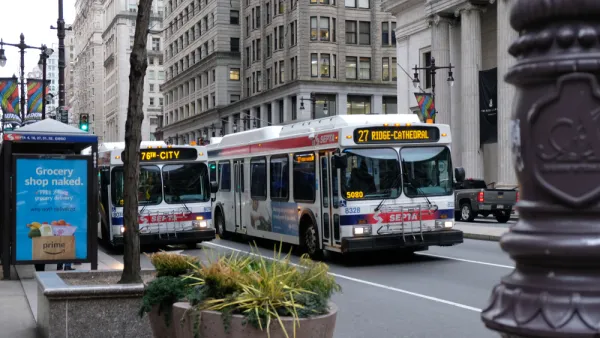
SEPTA’s Strategy for Easing Its Staffing Shortage
The agency is taking multiple steps to recruit and retain more transit operators, but it likely won’t be enough to prevent the agency from having to cut service on some of its bus lines.

Planetizen Federal Action Tracker
A weekly monitor of how Trump’s orders and actions are impacting planners and planning in America.

The state-sanctioned urbicide of Austin
People don’t kill cities. Freeways do.

US to reduce Colorado River water deliveries to Mexico
A new Colorado Treaty amendment reduces Mexico’s Colorado River water allocation by 250,000 acre feet.

5 New England states march closer to 800 megawatt wind energy project
Securing federal approval for the project may be complicated under the Trump administration, which has historically been hostile towards domestic wind power.

Baltimore to break ground on $50 million Transit Priority Project
The project will bring faster bus trips, safer streets and better bike connections to Baltimore.

Airbnb launches $250 million 'last-dollar financing' housing accelerator, makes first investment in Austin
The company will put $6.4 million towards affordable housing development in Texas’ capital.

FREE Course: Walkable City 1: Why Walkability?
After describing his path towards focusing on walkability as the essence of good planning, Jeff Speck marches through his five principal reasons for making more walkable places.
Reinventing Malls: Planning Alchemy—Turning Gray Fields Into Gold
The course focuses on the opportunities and imperatives that shape reinvention of mall sites.

Eagle County Government
Harvard University Graduate School of Design
Nashville Planning Department
The Architects Foundation
University of Cincinnati Online
The Pocatello Development Authority
The Urban Renewal Agency of the City of Pocatello
Journal of the American Planning Association