After the passage of a contentious zoning reform law that encourages ‘light infill’ in single-family neighborhoods, few California households have submitted applications to build extra units, largely due to onerous restrictions imposed by local laws.



A recent California law aimed at boosting housing construction by easing the process for building additional units caused major backlash as critics worried about the ‘death of single-family neighborhoods’ and loss of local control. However, since its passage, few property owners have applied for permits under the law.
As Dustin Gardiner reports in a paywalled article in the San Francisco Chronicle, “Under SB9, homeowners with large enough lots are supposed to have an expedited path to build more units on their property by either splitting their lot and building another home or converting their home into a duplex — or both.” But as one Bay Area family found out, the process still includes onerous fees (in the case of their 1,500 square foot proposed project, $95,832) that prohibit homeowners from moving forward with their plans. “The fee, ostensibly to help pay for new parks, is the same amount that Sunnyvale charges developers to build a new seven-home subdivision.” In this case, the family secured a permit for a smaller ADU with no fee.
“The case is an example of how housing advocates say SB9, which aims to address the state’s dire housing shortage by allowing more density in neighborhoods zoned for single-family homes, has been hamstrung in its impact.” According to Gardiner, “In San Francisco, 14 property owners have applied to build SB9 projects, all of which are still being reviewed by the Planning Department.” To date, “The Chronicle couldn’t find an example of a project that has broken ground in the Bay Area.”
Planetizen has previously covered some of the ‘creative’ measures cities have attempted to take to block SB9 development. “YIMBY Law is tracking at least 80 cities that have adopted — or are considering — policies that it deems hostile to the law, from San Francisco to Sunnyvale. It has asked Bonta to investigate around 50 cities that it says are out of compliance.”
“Annie Fryman, a former legislative adviser on housing policy who now works for a company that builds ADUs, said SB9 needs to be revised to remove the ability cities have to impose exorbitant fees and create dubious historic districts to block construction.” Fryman also recommends changing the law to require that cities review permits within a reasonable time frame and calls on the state to provide support and resources to homeowners who don’t have the same expertise in housing construction as developers do.
Read the full story: Despite uproar, few seek to use California’s new housing-density law. What’s stopping them?
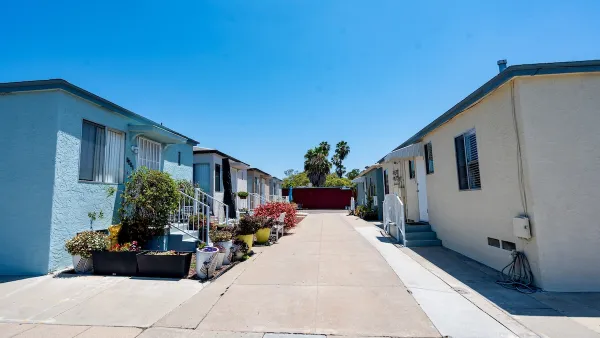
San Diego Begins to See Results of State Housing Law
Homeowners in Southern California are starting to take advantage of a state law that allows lot splitting and higher density in residential areas in an effort to increase housing supply and affordability.
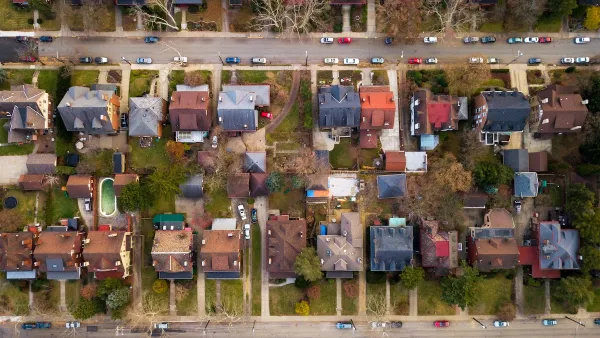
Can Zoning Reform Save Pittsburgh’s Affordable Housing?
With home sale prices growing faster than anywhere in the country, the Steel City could enact major reforms to boost density and lower housing costs.

Arizona Legalizes ADUs and Higher Downtown Density Statewide
Two new laws require cities to permit ‘missing middle housing’ near city centers and ADUs on all single-family lots.

Planetizen Federal Action Tracker
A weekly monitor of how Trump’s orders and actions are impacting planners and planning in America.

California plans to bury El Niño’s downpour
If the state plays its cards right, it may be able to store a billion acre-feet of El Niño’s water in aquifers.

Desperate measures: Advocates weigh draining Lake Powell to fill Colorado River
Draining the reservoir could reduce evaporation losses by a couple hundred thousand acre-feet.

Chicago voters approve permanent festival grounds, penalty for vacant property owners
Currently, major summer and fall festivals take over public parks for weeks at a time, drawing criticism from nearby residents

NYC votes to cut outdoor dining red tape, speed up permitting
New York City also voted to allow the Department of Transportation to begin work on urgent projects before notifying elected officials.

California appears to reject Prop. 45
The proposition would have expanded the projects that qualify for a streamlined environmental review, effectively paring down the California Environmental Quality Act.

FREE Course: Walkable City 1: Why Walkability?
After describing his path towards focusing on walkability as the essence of good planning, Jeff Speck marches through his five principal reasons for making more walkable places.
Reinventing Malls: Planning Alchemy—Turning Gray Fields Into Gold
The course focuses on the opportunities and imperatives that shape reinvention of mall sites.

City of Rosemead
Rutgers University, Edward J. Bloustein School of Planning and Public Policy
One Hundred Miles
Hunter College, City University of New York (CUNY)
The Architects Foundation
University of Cincinnati Online
City of Cambridge
Montrose County
The Pocatello Development Authority